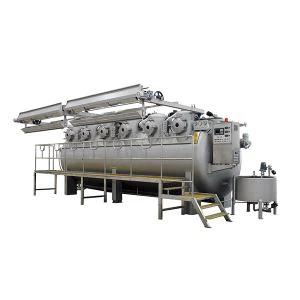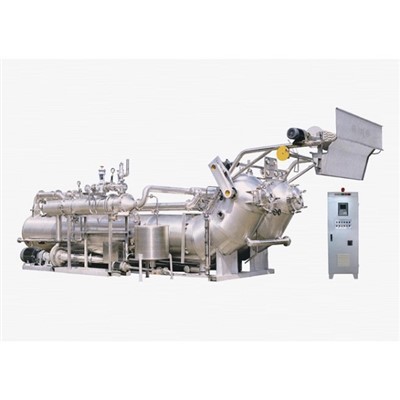
Hey there! As a supplier of Soft Flow Fabric Dyeing Machines, I often get asked if these machines can be customized. The short answer is yes, they can! But let's dive deeper into this topic and explore all the ins and outs.
Why Customization Matters
First off, let's talk about why customization is such a big deal in the fabric dyeing industry. Every textile manufacturer has unique needs. Some might be working with delicate silk fabrics that require a gentle touch, while others could be dealing with heavy-duty denim that needs a more robust dyeing process. A one-size-fits-all approach just doesn't cut it in this business.
Customization allows manufacturers to optimize their dyeing processes for maximum efficiency and quality. By tailoring a Soft Flow Fabric Dyeing Machine to specific requirements, companies can reduce waste, improve color consistency, and increase overall productivity. It's a win-win situation for everyone involved.
What Can Be Customized?
So, what exactly can you customize when it comes to a Soft Flow Fabric Dyeing Machine? Well, there are several key areas that can be adjusted to meet your specific needs.
Capacity
One of the most common customizations is the machine's capacity. Depending on the size of your production facility and the volume of fabric you need to dye, you can choose a machine with a larger or smaller capacity. For example, if you're a small-scale artisanal textile producer, you might opt for a compact machine with a lower capacity. On the other hand, a large industrial manufacturer might require a high-capacity machine to keep up with demand.
Temperature and Pressure Control
Another important aspect of customization is temperature and pressure control. Different fabrics require different dyeing temperatures and pressures to achieve the desired results. A customized Soft Flow Fabric Dyeing Machine can be equipped with advanced temperature and pressure sensors and controllers to ensure precise and consistent dyeing. This is especially crucial when working with sensitive fabrics that can be easily damaged by excessive heat or pressure.
Dyeing Process
The dyeing process itself can also be customized. Some machines offer multiple dyeing modes, such as overflow, jet, or foam dyeing, which can be adjusted depending on the type of fabric and the desired effect. You can also customize the dyeing time, speed, and agitation to optimize the process for your specific needs.
Automation and Control Systems
In today's digital age, automation and control systems are becoming increasingly important in the textile industry. A customized Soft Flow Fabric Dyeing Machine can be equipped with advanced automation features, such as programmable logic controllers (PLCs) and human-machine interfaces (HMIs), to streamline the dyeing process and reduce the need for manual intervention. This not only improves efficiency but also reduces the risk of human error.
Our Customization Options
As a leading supplier of Soft Flow Fabric Dyeing Machines, we offer a wide range of customization options to meet the diverse needs of our customers. Our team of experienced engineers and technicians can work closely with you to understand your specific requirements and design a machine that is tailored to your needs.
We have several popular models that can be customized, including the TH-LV High Temperature Overflow Jet Dyeing Machine, the HTHP Fabric Soft Flow Dyeing Machine, and the HTHP Soft Flow Fabric Dyeing Machine. These machines are known for their high performance, reliability, and energy efficiency, and can be customized with a variety of features and options.
The Customization Process
So, how does the customization process work? It's actually quite simple. Here's a step-by-step guide:


- Consultation: The first step is to schedule a consultation with our team. During this consultation, we'll discuss your specific requirements, including the type of fabric you'll be dyeing, the volume of production, and any other special needs you might have.
- Design: Based on the information gathered during the consultation, our engineers will design a customized Soft Flow Fabric Dyeing Machine that meets your exact specifications. We'll provide you with detailed drawings and specifications for your review and approval.
- Manufacturing: Once the design is approved, our manufacturing team will start building your machine. We use only the highest-quality materials and components to ensure the durability and reliability of our machines.
- Testing and Commissioning: Before the machine is shipped to your facility, it will undergo rigorous testing and commissioning to ensure that it meets all of your requirements. Our technicians will also provide you with training on how to operate and maintain the machine.
- Installation and Support: Once the machine is delivered to your facility, our installation team will install and commission the machine for you. We also offer ongoing technical support and maintenance services to ensure that your machine continues to perform at its best.
Conclusion
In conclusion, a Soft Flow Fabric Dyeing Machine can definitely be customized to meet your specific needs. Whether you're a small-scale artisanal producer or a large industrial manufacturer, customization can help you optimize your dyeing process and improve the quality and efficiency of your production.
If you're interested in learning more about our customization options or would like to discuss your specific requirements, please don't hesitate to contact us. Our team of experts is always ready to help you find the perfect solution for your business. Let's work together to take your textile dyeing operations to the next level!
References
- Textile Dyeing Machinery Handbook, Third Edition, by M. Lewis and P. McNaughton
- Handbook of Textile and Industrial Dyeing, Volume 1: Principles, Processes and Types of Dyes, edited by M. M. Rahman