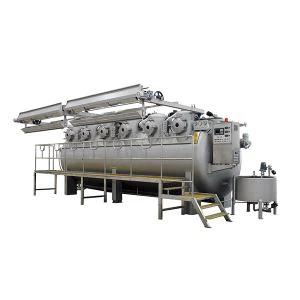
As a reputable supplier of cloth dyeing machines, I've witnessed firsthand the crucial role that the liquor ratio plays in the fabric dyeing process. The liquor ratio, defined as the ratio of the weight of the dye liquor to the weight of the fabric being dyed, significantly impacts the quality, efficiency, and cost - effectiveness of the dyeing operation. In this blog, I'll delve into how our advanced cloth dyeing machines effectively control the liquor ratio.
Understanding the Importance of Liquor Ratio
Before we explore the control mechanisms, it's essential to understand why the liquor ratio is so important. A proper liquor ratio ensures uniform dye penetration and color fastness. If the liquor ratio is too high, the dye concentration in the liquor will be low, leading to insufficient dye uptake by the fabric and potentially uneven coloration. On the other hand, an extremely low liquor ratio can cause poor liquor circulation, resulting in dye aggregation and uneven dyeing. Moreover, the liquor ratio also affects the consumption of water, dyes, and chemicals, which in turn impacts the overall cost and environmental footprint of the dyeing process.
Precise Measurement Systems
Our cloth dyeing machines are equipped with state - of - the - art measurement systems to accurately determine the weight of the fabric and the volume of the dye liquor. High - precision load cells are used to measure the fabric weight before it is loaded into the dyeing chamber. These load cells can detect even the slightest changes in weight, ensuring that the initial data for calculating the liquor ratio is as accurate as possible.
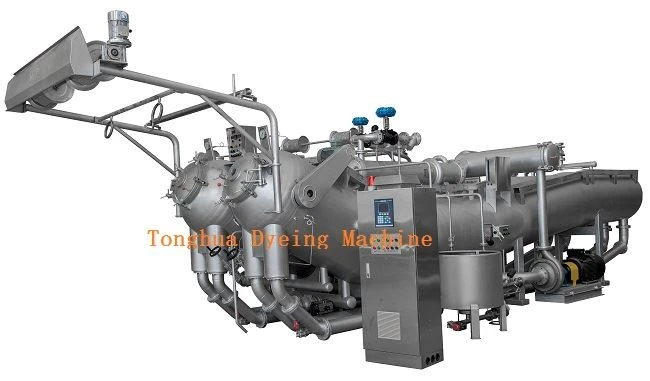

For measuring the volume of the dye liquor, we use advanced flow meters. These flow meters are designed to provide real - time and highly accurate volume readings. They can measure the flow rate of the dye liquor as it is being pumped into the dyeing machine, and integrate this data over time to calculate the total volume. By having precise measurements of both the fabric weight and the dye liquor volume, our machines can calculate the liquor ratio with great accuracy.
Automatic Liquor Ratio Control
Once the initial measurements are obtained, our cloth dyeing machines use sophisticated control algorithms to adjust the liquor ratio to the desired value. The control system is based on a feedback loop mechanism. It continuously monitors the actual liquor ratio and compares it with the pre - set target ratio.
If the actual liquor ratio is higher than the target, the machine can reduce the amount of dye liquor being added. This is achieved by adjusting the speed of the liquor pump or closing the inlet valves for a certain period. Conversely, if the actual liquor ratio is lower than the target, the machine will increase the amount of dye liquor by increasing the pump speed or opening the inlet valves wider.
This automatic control system ensures that the liquor ratio remains stable throughout the dyeing process. Even if there are small variations in the fabric weight or the flow rate of the dye liquor, the machine can quickly compensate for these changes and maintain the optimal liquor ratio.
Adaptive Control for Different Fabrics
Different types of fabrics have different dyeing requirements, and thus, different optimal liquor ratios. Our cloth dyeing machines are designed to be adaptable to a wide range of fabrics. For example, lightweight and porous fabrics may require a relatively higher liquor ratio to ensure proper dye penetration, while heavy - duty and tightly woven fabrics may need a lower liquor ratio.
The machine's control system can be programmed with different sets of parameters for various fabric types. When the operator selects the type of fabric to be dyed, the machine automatically adjusts the target liquor ratio and the control settings accordingly. This adaptive control feature not only improves the dyeing quality but also enhances the versatility of our machines.
The Role of Machine Design in Liquor Ratio Control
The physical design of our cloth dyeing machines also contributes to effective liquor ratio control. For instance, the internal structure of the dyeing chamber is designed to promote uniform liquor circulation. A well - designed circulation system ensures that the dye liquor is evenly distributed around the fabric, which is crucial for maintaining a consistent liquor ratio throughout the dyeing process.
The shape and size of the dyeing chamber are optimized to minimize dead zones where the dye liquor may not flow properly. Additionally, the placement of the inlet and outlet ports for the dye liquor is carefully engineered to ensure efficient flow and mixing. This design approach helps to prevent the formation of areas with different liquor ratios within the dyeing chamber, thereby improving the overall dyeing quality.
Case Studies: Our Machines in Action
Let's take a look at some real - world examples of how our cloth dyeing machines control the liquor ratio. In a textile factory that specializes in dyeing crepe fabric, our Dyeing Machine For Crepe Fabric High Pressure Rapid Dyeing Machine was installed. Crepe fabric is delicate and requires a specific liquor ratio for optimal dyeing. The machine's precise measurement and control systems were able to maintain the ideal liquor ratio, resulting in uniform coloration and excellent color fastness. The factory also reported a significant reduction in water and dye consumption due to the accurate liquor ratio control.
Another example is a factory that dyes taslon fabric. Our Jet Dyeing Machine For Taslon Fabric was used in this case. Taslon fabric has a different structure compared to crepe fabric, and thus, a different optimal liquor ratio. The machine's adaptive control system adjusted the liquor ratio according to the characteristics of the taslon fabric, leading to high - quality dyeing results and improved production efficiency.
In addition, our HTHP Soft Flow Dyeing Machine has been widely used in various textile dyeing operations. Its advanced liquor ratio control capabilities have enabled textile manufacturers to achieve consistent dyeing quality while reducing costs and environmental impact.
Conclusion and Call to Action
In conclusion, controlling the liquor ratio is a critical aspect of the fabric dyeing process, and our cloth dyeing machines are designed to excel in this area. With precise measurement systems, automatic control algorithms, adaptive control for different fabrics, and well - engineered machine designs, our machines can ensure optimal liquor ratio control, leading to high - quality dyeing results, cost savings, and environmental benefits.
If you are in the textile industry and are looking for reliable and efficient cloth dyeing machines with excellent liquor ratio control capabilities, we invite you to contact us for further discussions. Our team of experts is ready to provide you with detailed information and customized solutions to meet your specific dyeing needs.
References
- Textile Dyeing Technology Handbook, Second Edition.
- Journal of Textile Research on Dyeing Process Optimization.
- Proceedings of the International Conference on Textile Machinery and Technology.