The dyeing process is a critical step in the textile industry, where achieving uniform color and high - quality results is of utmost importance. Among the various dyeing machines available, the Atmospheric Soft Flow Dyeing Machine stands out for its ability to handle different types of fabrics with gentle treatment. One of the key factors that significantly influence the dyeing outcome in this machine is the dye concentration. In this blog, as a supplier of Atmospheric Soft Flow Dyeing Machines, I will delve into how dye concentration impacts the dyeing process in these machines.
The Basics of Atmospheric Soft Flow Dyeing Machines
Atmospheric Soft Flow Dyeing Machines are designed to provide a gentle and efficient dyeing process for fabrics. They operate at atmospheric pressure, which is less harsh on the fabric compared to high - pressure dyeing methods. The soft flow technology ensures that the fabric moves smoothly through the dye liquor, reducing mechanical stress and minimizing the risk of fabric damage. These machines are suitable for a wide range of fabrics, including natural fibers like cotton and silk, as well as synthetic fibers such as polyester and nylon.
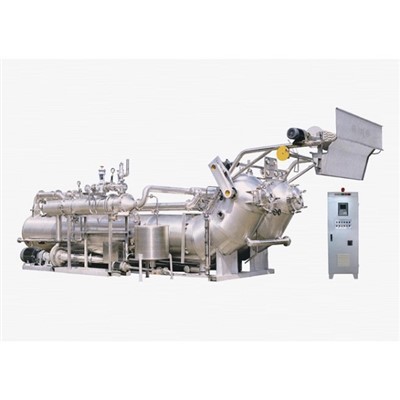
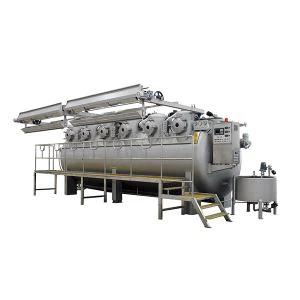
Our company offers a variety of Atmospheric Soft Flow Dyeing Machines, such as the TH-VA-B Low Bath Ratio Fabric Dyeing Machine Enviromental Friendly, Ecofriendly Energy Saving Soft Flow Fabric Dyeing Machine, and High Temperature Overflow Dyeing Machine. These machines are equipped with advanced features to ensure optimal dyeing performance.
Influence of Dye Concentration on Dye Uptake
Dye uptake is a crucial aspect of the dyeing process, referring to the amount of dye that is absorbed by the fabric. The dye concentration in the dye liquor has a direct impact on dye uptake. Generally, as the dye concentration increases, the initial rate of dye uptake also increases. This is because a higher dye concentration provides a greater driving force for the dye molecules to move from the dye liquor to the fabric surface.
However, there is a limit to this relationship. At very high dye concentrations, the dye molecules may start to aggregate in the dye liquor. Aggregated dye molecules have a larger size and lower mobility, which can hinder their diffusion into the fabric. As a result, the dye uptake may not increase proportionally with the increase in dye concentration, and in some cases, it may even reach a plateau.
For example, when dyeing cotton fabric in an Atmospheric Soft Flow Dyeing Machine, a moderate increase in dye concentration can lead to a significant improvement in color depth. But if the dye concentration is too high, the excess dye may remain on the fabric surface, resulting in poor color fastness and a sticky feel.
Impact on Color Uniformity
Color uniformity is another important factor in the dyeing process. A uniform color across the fabric surface is desirable for high - quality textile products. Dye concentration plays a vital role in achieving color uniformity.
At low dye concentrations, it may be more difficult to achieve uniform color. This is because the dye molecules are more sparsely distributed in the dye liquor, and there is a higher chance of uneven dye distribution on the fabric. The fabric may show patchy or streaky colors.
On the other hand, at high dye concentrations, although the initial dye uptake is faster, it also increases the risk of uneven dyeing. The rapid deposition of dye on the fabric surface can lead to a phenomenon called "surface dyeing," where the dye is concentrated on the outer layer of the fabric rather than being evenly distributed throughout the fabric structure.
To achieve optimal color uniformity, a balanced dye concentration needs to be selected. Our Atmospheric Soft Flow Dyeing Machines are designed to help in this regard. They have a well - designed circulation system that ensures the uniform distribution of the dye liquor around the fabric, reducing the impact of uneven dye concentration on color uniformity.
Effect on Color Fastness
Color fastness refers to the ability of the dyed fabric to retain its color under various conditions, such as washing, rubbing, and exposure to light. Dye concentration can have a significant impact on color fastness.
At low dye concentrations, the amount of dye adsorbed onto the fabric is relatively small. This may result in poor color fastness, as there is less dye available to withstand the external forces during washing or rubbing.
At high dye concentrations, as mentioned earlier, the excess dye may not be properly fixed to the fabric. This loose dye can easily be removed during washing or other treatments, leading to a decrease in color fastness.
A proper dye concentration is essential for good color fastness. By using our Ecofriendly Energy Saving Soft Flow Fabric Dyeing Machine, which has precise control over the dyeing process, it is possible to select the appropriate dye concentration and ensure that the dye is properly fixed to the fabric, thereby improving color fastness.
Influence on Dyeing Time
Dyeing time is an important consideration in the textile industry, as it affects production efficiency and cost. Dye concentration can influence the dyeing time in an Atmospheric Soft Flow Dyeing Machine.
At higher dye concentrations, the initial dye uptake is faster, which can potentially reduce the overall dyeing time. However, as the dyeing process progresses, the rate of dye uptake slows down, and it may still take a certain amount of time for the dye to reach equilibrium within the fabric.
At lower dye concentrations, the dyeing process is generally slower because the driving force for dye diffusion is lower. This means that a longer dyeing time is required to achieve the desired color depth.


Our High Temperature Overflow Dyeing Machine can be adjusted to optimize the dyeing time based on the dye concentration. By controlling the temperature and flow rate of the dye liquor, it is possible to balance the dyeing time and color quality.
Environmental and Economic Considerations
In addition to the technical aspects, dye concentration also has environmental and economic implications. High dye concentrations usually require more dye, which increases the cost of raw materials. Moreover, the excess dye that is not absorbed by the fabric needs to be treated in the wastewater, which can put a burden on the environment and increase the cost of wastewater treatment.
Low dye concentrations, on the other hand, may require longer dyeing times and more energy to achieve the desired color. This can also increase the overall production cost.
Therefore, finding the optimal dye concentration is a balance between achieving the desired dyeing results, reducing environmental impact, and minimizing production costs. Our TH-VA-B Low Bath Ratio Fabric Dyeing Machine Enviromental Friendly is designed to operate with a low bath ratio, which can help reduce the amount of dye and water used, thereby being more environmentally friendly and cost - effective.
Conclusion
In conclusion, dye concentration has a profound influence on the dyeing process in an Atmospheric Soft Flow Dyeing Machine. It affects dye uptake, color uniformity, color fastness, dyeing time, as well as environmental and economic aspects. As a supplier of Atmospheric Soft Flow Dyeing Machines, we understand the importance of these factors and offer a range of machines with advanced features to help our customers achieve optimal dyeing results.
If you are in the textile industry and are looking for high - quality Atmospheric Soft Flow Dyeing Machines, we invite you to contact us for more information and to discuss your specific requirements. We are committed to providing you with the best solutions for your dyeing needs.
References
- Lewis, D. M. (2007). The Theory of Colouration of Textiles. Society of Dyers and Colourists.
- Shore, J. (1995). Chemical Principles of Textile Coloration. Society of Dyers and Colourists.
- Trotman, E. R. (1993). Dyeing and Chemical Technology of Textile Fibres. Blackwell Science.