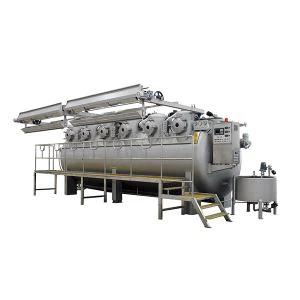
Hey there! I'm a supplier of Soft Flow Dyeing Machines, and today I wanna chat about whether a Soft Flow Dyeing Machine can be integrated with other textile processing equipment. It's a question that comes up a lot in the textile industry, and I'm here to share my thoughts and experiences.
First off, let's talk about what a Soft Flow Dyeing Machine is. It's a key piece of equipment in textile dyeing. This machine uses a soft - flow technology to ensure that the fabric is dyed evenly and gently. It's great for all kinds of fabrics, from delicate silks to sturdy cottons. We have some really cool models, like the Ecofriendly Energy Saving Soft Flow Fabric Dyeing Machine. This one is not only good at dyeing but also saves energy, which is a big plus in today's environmentally - conscious world.
Now, can it be integrated with other textile processing equipment? The short answer is yes! And there are several reasons why integration is a smart move.
Advantages of Integration
1. Streamlined Production Process
When you integrate a Soft Flow Dyeing Machine with other equipment, like a pre - treatment machine or a post - treatment machine, you can create a more seamless production line. For example, after the fabric goes through the pre - treatment process to remove impurities, it can directly enter the Soft Flow Dyeing Machine without any delay. This cuts down on the time between different processing steps and increases overall production efficiency.
2. Consistent Quality
Integration allows for better control over the entire textile processing chain. When all the equipment is working in harmony, it's easier to maintain consistent quality in the final product. For instance, if the Soft Flow Dyeing Machine is integrated with a high - precision measuring device, it can ensure that the right amount of dye is used every time, resulting in more uniform color across all the dyed fabrics.
3. Cost Savings
By integrating different pieces of equipment, you can reduce labor costs. Instead of having separate operators for each machine, one or a few workers can oversee the entire integrated system. Also, since the production process is more efficient, there's less waste, which means lower material costs in the long run.
Types of Textile Processing Equipment for Integration
1. Pre - treatment Equipment
Pre - treatment is an important step before dyeing. Machines like desizing machines, scouring machines, and bleaching machines can be integrated with the Soft Flow Dyeing Machine. For example, a desizing machine removes the sizing agents from the fabric, making it more receptive to dyes. Once the fabric is desized, it can be directly transferred to the Soft Flow Dyeing Machine, ensuring that the dyeing process starts with a clean and well - prepared fabric.
2. Post - treatment Equipment
After dyeing, the fabric often needs post - treatment to improve its properties. Equipment such as washing machines, drying machines, and finishing machines can be integrated with the Soft Flow Dyeing Machine. A washing machine can remove any excess dye from the fabric, and a drying machine can quickly dry it. Then, a finishing machine can add special effects like softness or water - repellency. Our High - Temperature And High - Pressure Jet Dyeing Machine can work well in an integrated system with post - treatment equipment to ensure high - quality finished products.
3. Weaving and Knitting Equipment
In some cases, it might be beneficial to integrate the Soft Flow Dyeing Machine with weaving or knitting equipment. This is especially useful for manufacturers who produce their own fabric and then dye it. After the fabric is woven or knitted, it can be directly sent to the dyeing machine, eliminating the need for extra handling and storage.
Challenges of Integration
Of course, integrating a Soft Flow Dyeing Machine with other textile processing equipment isn't always a walk in the park. There are some challenges that you need to be aware of.
1. Compatibility Issues
Different machines may have different operating parameters, such as temperature, pressure, and speed. Ensuring that all the equipment can work together smoothly requires careful planning and sometimes, modifications to the machines. For example, if the pre - treatment machine operates at a lower temperature than the Soft Flow Dyeing Machine, you may need to adjust the transfer process to avoid any sudden temperature changes that could affect the fabric quality.


2. Technical Expertise
Integrating complex equipment requires a certain level of technical knowledge. You need technicians who understand how each machine works and how to make them communicate with each other. Training your staff or hiring experienced technicians can be a significant investment, but it's essential for a successful integration.
3. Initial Investment
Setting up an integrated system often requires a higher initial investment. You may need to purchase additional equipment, make modifications to existing machines, and invest in software or control systems to manage the integration. However, as mentioned earlier, the long - term cost savings and efficiency gains can outweigh the initial costs.
How to Overcome the Challenges
1. Consult with Experts
Before starting the integration process, it's a good idea to consult with equipment manufacturers or industry experts. They can provide valuable advice on compatibility, technical requirements, and the best way to set up the integrated system. At our company, we have a team of experts who can help you plan the integration of our High Temperature Low Tension Evenflow Dyeing Machine with your existing equipment.
2. Conduct Tests
Before fully implementing the integrated system, conduct small - scale tests. This allows you to identify any potential issues and make adjustments before large - scale production. You can test different combinations of equipment and operating parameters to find the optimal setup for your specific production needs.
3. Invest in Training
Make sure your staff is well - trained to operate and maintain the integrated system. Provide them with training programs that cover the operation of each machine, the integration process, and troubleshooting techniques. This will ensure that your production line runs smoothly and that any problems can be quickly resolved.
In conclusion, integrating a Soft Flow Dyeing Machine with other textile processing equipment is definitely possible and offers many benefits. While there are challenges, with the right approach, these can be overcome. If you're in the textile industry and are thinking about improving your production process, consider integrating your Soft Flow Dyeing Machine. It could be a game - changer for your business.
If you're interested in learning more about our Soft Flow Dyeing Machines or discussing how they can be integrated with your existing equipment, don't hesitate to reach out. We're here to help you take your textile production to the next level.
References
- Textile Processing Handbook, 3rd Edition
- Journal of Textile Engineering and Technology, various issues