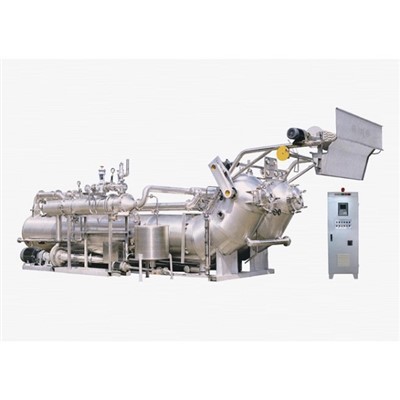
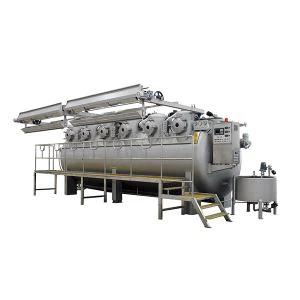
Hey there! I'm a supplier of Atmospheric Soft Flow Dyeing Machines, and today I wanna chat about how fabric thickness affects dyeing in these machines.
Understanding the Basics of Atmospheric Soft Flow Dyeing Machines
Before we dive into the impact of fabric thickness, let's quickly go over what an Atmospheric Soft Flow Dyeing Machine is. It's a key piece of equipment in the textile industry. This machine uses a soft - flow system to ensure that the fabric moves smoothly through the dyeing process. Unlike some other dyeing machines, it operates at atmospheric pressure, which is great for a wide range of fabrics as it reduces the risk of damage.
The dyeing process in an Atmospheric Soft Flow Dyeing Machine involves the fabric being circulated through a dye bath. The dye liquor is pumped around, and the fabric is gently carried along by the flow. This allows for even distribution of the dye on the fabric surface.
How Fabric Thickness Comes into Play
Penetration of Dye
One of the most significant ways fabric thickness affects dyeing is in the penetration of the dye. Thicker fabrics present a greater challenge for the dye to penetrate fully. In a thinner fabric, the dye can easily reach all the fibers within a short period. The molecules of the dye can quickly diffuse through the fabric structure.


However, when dealing with thick fabrics, the dye has to travel a longer distance to reach the inner fibers. This means that the dyeing process takes longer. If the dyeing time is not adjusted properly, the outer layers of the thick fabric may be over - dyed while the inner layers remain under - dyed. For example, a thin cotton fabric might achieve full dye penetration in 30 minutes, but a thick woolen fabric could take several hours.
Flow Resistance
Thicker fabrics also create more flow resistance in the dyeing machine. In an Atmospheric Soft Flow Dyeing Machine, the fabric is moved by the flow of the dye liquor. A thick fabric can slow down this flow, which disrupts the normal circulation pattern. This can lead to uneven dye distribution.
When the flow is restricted, some parts of the fabric may not receive enough contact with the dye. The areas where the flow is blocked may end up with a lighter color compared to the areas where the dye liquor can freely flow. To counter this, the machine may need to increase the flow rate of the dye liquor. But this also has its limits, as too high a flow rate can cause mechanical damage to the fabric.
Heat Transfer
Heat is an important factor in the dyeing process. It helps to activate the dye and speed up the dye - fiber bonding. Thicker fabrics have a higher heat capacity, which means they take longer to heat up and cool down.
In an Atmospheric Soft Flow Dyeing Machine, if the heating and cooling times are not adjusted according to the fabric thickness, it can affect the dyeing quality. For instance, if the machine cools down too quickly after dyeing a thick fabric, the dye may not have enough time to fully bond with the fibers. On the other hand, over - heating can cause damage to the fabric, especially if it's a sensitive material.
Dealing with Different Fabric Thicknesses in the Machine
Adjusting Dyeing Parameters
To achieve good dyeing results for different fabric thicknesses, it's crucial to adjust the dyeing parameters. For thick fabrics, we need to increase the dyeing time to ensure full penetration. We also may need to use a higher temperature, but this has to be carefully controlled to avoid fabric damage.
The flow rate of the dye liquor should be optimized. For thick fabrics, a slightly higher flow rate can help overcome the flow resistance, but as mentioned earlier, it needs to be within a safe range.
Pre - Treatment
Pre - treatment can also play a big role in dyeing thick fabrics. Processes like scouring and bleaching can help open up the fabric structure, making it easier for the dye to penetrate. For example, pre - treating a thick synthetic fabric with a special chemical can reduce the surface tension and improve dye uptake.
Real - World Examples and Solutions
Let's take a look at some real - world scenarios. Say you're dyeing a thick denim fabric. Denim is known for its thickness and durability. In an Atmospheric Soft Flow Dyeing Machine, you'll notice that the dyeing process takes much longer compared to a thin cotton poplin.
To deal with this, we can use a combination of longer dyeing times and pre - treatment. We can also adjust the flow rate of the dye liquor to ensure that the denim moves smoothly through the machine.
Another example is a thick velvet fabric. Velvet has a dense pile, which makes it difficult for the dye to penetrate. By increasing the temperature slightly and using a special leveling agent in the dye bath, we can improve the dye distribution on the velvet surface.
Related Machines in the Market
If you're dealing with different fabric thicknesses and need more options, there are other types of dyeing machines available. You can check out the High - Temperature And High - Pressure Jet Dyeing Machine. This machine can handle a wide range of fabric thicknesses, especially those that require high - temperature dyeing processes.
The Jet Dyeing Machine For Taslon Fabric is also a great option. Taslon fabric has its own unique properties, and this machine is designed to optimize the dyeing process for it.
And for tricot dyeing, the High Temperatre Rapid Dyeing Machine For Tricot Dyeing can offer fast and efficient dyeing solutions.
Conclusion
In conclusion, fabric thickness has a significant impact on the dyeing process in an Atmospheric Soft Flow Dyeing Machine. From dye penetration to flow resistance and heat transfer, every aspect of the dyeing process is affected. But with the right adjustments to the dyeing parameters and proper pre - treatment, we can achieve excellent dyeing results for fabrics of all thicknesses.
If you're in the textile industry and looking for a reliable Atmospheric Soft Flow Dyeing Machine or want to discuss how to optimize your dyeing process for different fabric thicknesses, don't hesitate to reach out. We're here to help you get the best results from your dyeing operations.
References
- "Textile Dyeing and Finishing Technology" by X. Zhao
- "Dyeing Processes and Machines" by J. Smith
- Industry reports on textile dyeing technology