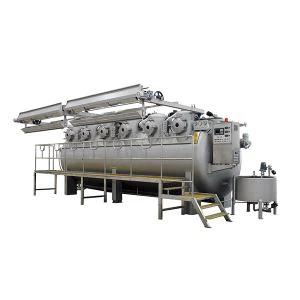
As a supplier of Jet Dyeing Machines, I've encountered numerous customers facing the issue of poor dye penetration. This problem can lead to uneven color distribution, reduced color fastness, and ultimately, lower product quality. In this blog, I'll delve into the possible reasons for poor dye penetration in a Jet Dyeing Machine and offer some insights on how to address them.
1. Dye Selection and Preparation
- Incompatible Dyes: Different fabrics require specific types of dyes. Using the wrong dye can result in poor penetration. For example, reactive dyes are commonly used for cellulosic fibers like cotton, while disperse dyes are suitable for synthetic fibers such as polyester. If a disperse dye is used on cotton, it may not penetrate the fiber effectively, leading to a weak color yield.
- Dye Aggregation: Dyes can form aggregates during storage or preparation. These aggregates are too large to penetrate the fabric pores, causing uneven dyeing. Aggregation can be caused by factors such as improper mixing, high dye concentration, or the presence of impurities in the dye solution. To prevent this, it's essential to follow the manufacturer's instructions for dye preparation, including proper dissolving and filtering.
2. Fabric Characteristics
- Fiber Structure: The structure of the fiber plays a crucial role in dye penetration. Fibers with a dense or compact structure, such as polyester, may be more difficult to dye compared to fibers with a looser structure, like cotton. Additionally, fibers with a high degree of crystallinity have fewer amorphous regions, which are the areas where dyes can penetrate. For example, high-tenacity polyester fibers have a more crystalline structure, making them less receptive to dyes.
- Fabric Construction: The way the fabric is constructed can also affect dye penetration. Fabrics with a tight weave or a high thread count may impede the flow of the dye solution, resulting in poor penetration. On the other hand, fabrics with an open or porous structure allow the dye solution to penetrate more easily. For instance, a plain weave fabric may have better dye penetration than a twill weave fabric of the same fiber type.
- Fabric Pretreatment: Proper pretreatment of the fabric is essential for good dye penetration. Pretreatment processes such as scouring, bleaching, and mercerizing can remove impurities, waxes, and natural pigments from the fabric surface, making it more receptive to dyes. If the fabric is not properly pretreated, the dye may not be able to penetrate the fiber effectively.
3. Machine Parameters
- Temperature: Temperature is a critical factor in dye penetration. Different dyes have different optimal dyeing temperatures. If the temperature is too low, the dye molecules may not have enough energy to penetrate the fiber. Conversely, if the temperature is too high, the dye may degrade or the fabric may be damaged. For example, disperse dyes typically require a high temperature (around 130°C) for optimal dyeing, while reactive dyes are usually dyed at a lower temperature (around 60 - 80°C).
- Pressure: Pressure can also affect dye penetration. In a Jet Dyeing Machine, the pressure helps to force the dye solution into the fabric. If the pressure is too low, the dye solution may not be able to penetrate the fabric effectively. However, if the pressure is too high, it may cause damage to the fabric or the machine. The optimal pressure depends on the type of fabric and the dyeing process.
- Flow Rate: The flow rate of the dye solution is another important parameter. A sufficient flow rate is necessary to ensure that the dye solution is evenly distributed throughout the fabric and to prevent the formation of dye gradients. If the flow rate is too low, the dye solution may not be able to reach all parts of the fabric, resulting in uneven dyeing. On the other hand, if the flow rate is too high, it may cause excessive agitation and damage to the fabric.
4. Chemical Additives
- Leveling Agents: Leveling agents are used to ensure uniform dyeing by controlling the rate of dye uptake. If the leveling agent is not used correctly or if the wrong type of leveling agent is used, it can affect dye penetration. For example, some leveling agents may form a film on the fabric surface, preventing the dye from penetrating the fiber.
- Carriers: Carriers are used to enhance the dyeing of synthetic fibers by swelling the fiber and increasing the solubility of the dye. However, if the carrier is not compatible with the dye or the fabric, it can cause problems such as poor dye penetration or staining. It's important to choose the right carrier for the specific dyeing process.
- pH Adjusters: The pH of the dye solution can significantly affect dye penetration. Different dyes have different optimal pH ranges for dyeing. If the pH is not within the appropriate range, the dye may not be able to react with the fiber effectively, leading to poor dye penetration. For example, reactive dyes require an alkaline pH for dyeing, while acid dyes are dyed in an acidic medium.
5. Machine Maintenance and Operation
- Nozzle Blockage: The nozzles in a Jet Dyeing Machine are responsible for spraying the dye solution onto the fabric. If the nozzles are blocked, the dye solution may not be evenly distributed, resulting in poor dye penetration. Regular cleaning and maintenance of the nozzles are essential to prevent blockage.
- Pump Malfunction: The pump is used to circulate the dye solution in the machine. If the pump is not working properly, the flow rate of the dye solution may be affected, leading to uneven dyeing. It's important to regularly check and maintain the pump to ensure its proper operation.
- Operator Error: Improper operation of the Jet Dyeing Machine can also cause poor dye penetration. For example, incorrect loading of the fabric, improper setting of the machine parameters, or failure to follow the dyeing process instructions can all lead to problems. Training the operators on the correct operation of the machine is crucial to ensure consistent and high-quality dyeing results.
Solutions and Recommendations
- Dye Selection and Preparation: Choose the appropriate dye for the fabric type and follow the manufacturer's instructions for dye preparation. Use high-quality dyes and ensure proper dissolving and filtering to prevent dye aggregation.
- Fabric Pretreatment: Ensure that the fabric is properly pretreated before dyeing to remove impurities and improve its receptivity to dyes.
- Machine Parameter Optimization: Adjust the temperature, pressure, and flow rate according to the fabric type, dye type, and dyeing process. Conduct trials to determine the optimal parameters for each specific application.
- Chemical Additives: Use the right type and amount of chemical additives, such as leveling agents, carriers, and pH adjusters, to ensure uniform dyeing and good dye penetration.
- Machine Maintenance and Operation: Regularly clean and maintain the machine, including the nozzles and pumps, to prevent blockage and malfunction. Train the operators on the correct operation of the machine and ensure that they follow the dyeing process instructions.
If you're facing issues with poor dye penetration in your Jet Dyeing Machine, or if you're looking to upgrade your dyeing equipment, we're here to help. We offer a range of high-quality Jet Dyeing Machines, including the High Temperature Fabric Dyeing Machine, HTHP Rapid Dyeing Machine, and Overflow Jet Dyeing Machine For Acetate Dyeing. Our machines are designed to provide efficient and uniform dyeing results, helping you to improve the quality of your products and increase your productivity.
Contact us today to discuss your specific requirements and let's work together to find the best solution for your dyeing needs.


References
- Lewis, D. M. (Ed.). (2007). The dyeing of synthetic fibres. Society of Dyers and Colourists.
- Shore, J. (2003). Chemical principles of textile colouration. Society of Dyers and Colourists.
- Trotman, E. R. (1993). Dyeing and chemical technology of textile fibres. Society of Dyers and Colourists.