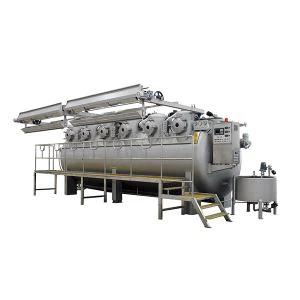
As a supplier of Soft Flow Fabric Dyeing Machines, I am often asked about the cooling system of these machines. The cooling system is a crucial component that ensures the efficient and effective operation of the dyeing process. In this blog, I will delve into the details of the cooling system of a Soft Flow Fabric Dyeing Machine, explaining its functions, types, and importance.
Functions of the Cooling System
The primary function of the cooling system in a Soft Flow Fabric Dyeing Machine is to regulate the temperature of the dyeing liquor and the fabric during the dyeing process. Dyeing is a temperature - sensitive process, and maintaining the right temperature is essential for achieving consistent color results, preventing fabric damage, and ensuring the stability of the dyeing chemicals.
During the dyeing process, heat is generated due to the chemical reactions between the dyes and the fabric, as well as the mechanical energy from the machine's operation. If the temperature is not controlled properly, it can lead to uneven dyeing, color bleeding, and even damage to the fabric fibers. The cooling system helps to dissipate this excess heat and keep the temperature within the desired range.


Types of Cooling Systems
Water - Cooling System
One of the most common types of cooling systems used in Soft Flow Fabric Dyeing Machines is the water - cooling system. This system works by circulating water through a heat exchanger, which is in contact with the dyeing liquor. The heat from the dyeing liquor is transferred to the water, and the heated water is then cooled down in a cooling tower or a chiller unit.
The water - cooling system is relatively simple and cost - effective. It can provide a large amount of cooling capacity, making it suitable for large - scale dyeing operations. However, it requires a continuous supply of water, which can be a concern in areas with water scarcity. Also, the water used in the system needs to be treated to prevent scale formation and corrosion in the heat exchanger.
Air - Cooling System
Another type of cooling system is the air - cooling system. In this system, air is used to cool the heat exchanger. A fan blows air over the heat exchanger, carrying away the heat from the dyeing liquor. Air - cooling systems are more environmentally friendly than water - cooling systems as they do not require a large amount of water. They are also easier to install and maintain, especially in smaller dyeing facilities.
However, air - cooling systems have some limitations. They are less efficient than water - cooling systems, especially in hot and humid environments. They also require more space for the fans and the heat exchanger, which can be a constraint in some dyeing plants.
Hybrid Cooling System
Some Soft Flow Fabric Dyeing Machines use a hybrid cooling system, which combines the advantages of both water - cooling and air - cooling systems. The hybrid system can switch between water - cooling and air - cooling depending on the operating conditions. For example, during peak heat loads, the water - cooling system can be used to provide high - capacity cooling, while during off - peak periods, the air - cooling system can be used to save energy and water.
Importance of the Cooling System
Quality of Dyeing
The cooling system plays a vital role in ensuring the quality of the dyeing process. By maintaining a stable temperature, it helps to achieve uniform dye penetration into the fabric, resulting in consistent color shade and good color fastness. This is crucial for meeting the quality standards of the textile industry and satisfying customer requirements.
Energy Efficiency
An efficient cooling system can also contribute to energy savings. By using the appropriate cooling method and optimizing the cooling process, the machine can operate more efficiently, reducing the overall energy consumption. This not only helps to lower the operating costs but also makes the dyeing process more environmentally friendly.
Equipment Longevity
Proper cooling also extends the lifespan of the Soft Flow Fabric Dyeing Machine. High temperatures can cause damage to the machine's components, such as the pumps, valves, and sensors. By keeping the temperature under control, the cooling system helps to prevent overheating and reduces the wear and tear on these components, leading to fewer breakdowns and lower maintenance costs.
Our Soft Flow Fabric Dyeing Machines and Their Cooling Systems
At our company, we offer a range of Soft Flow Fabric Dyeing Machines with advanced cooling systems. Our TH-VA-B Low Bath Ratio Fabric Dyeing Machine Enviromental Friendly is equipped with a highly efficient water - cooling system. This machine is designed to minimize water consumption while providing excellent cooling performance, making it an ideal choice for environmentally conscious dyeing operations.
Our Jet Dyeing Machine For Cotton - ramie Fabrics features a hybrid cooling system. This allows for flexible operation, switching between water - cooling and air - cooling based on the specific requirements of the dyeing process. It ensures that the temperature of the dyeing liquor is precisely controlled, resulting in high - quality dyeing of cotton - ramie fabrics.
The Normal Temperature Overflow Dyeing Machine for Fabric is another product in our portfolio. It uses an air - cooling system, which is suitable for smaller - scale dyeing operations. The air - cooling system provides reliable cooling with low maintenance requirements, making it a cost - effective solution for many fabric dyeing businesses.
Conclusion
The cooling system of a Soft Flow Fabric Dyeing Machine is an essential part of the dyeing process. It helps to maintain the quality of the dyeing, improve energy efficiency, and extend the lifespan of the machine. Whether you choose a water - cooling, air - cooling, or hybrid cooling system depends on your specific requirements, such as the scale of your operation, environmental considerations, and budget.
If you are interested in our Soft Flow Fabric Dyeing Machines and want to learn more about their cooling systems or other features, please feel free to contact us. We are always ready to assist you in finding the best solution for your fabric dyeing needs.
References
- "Textile Dyeing Technology" by John Smith
- "Cooling Systems in Industrial Processes" by Emily Brown
- Manufacturer's manuals of Soft Flow Fabric Dyeing Machines