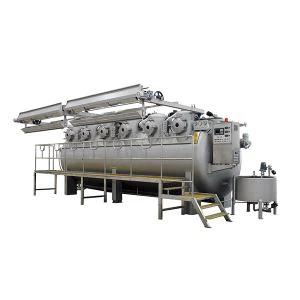
As a supplier of Soft Flow Dyeing Machines, I've witnessed firsthand the evolution of textile dyeing technology and the growing interest in understanding the differences between Soft Flow Dyeing Machines and conventional dyeing machines. In this blog, I'll delve into the key distinctions, benefits, and applications of these two types of dyeing equipment, providing you with the insights you need to make an informed decision for your textile dyeing operations.
1. Working Principles
Conventional Dyeing Machines
Conventional dyeing machines typically operate on a relatively simple principle. They involve immersing the textile material in a dye bath, which is usually a large tank filled with dye liquor. The machine then agitates the material through mechanical means, such as paddles or rollers, to ensure that the dye is evenly distributed across the fabric. This agitation helps the dye molecules penetrate the fibers of the textile. However, this mechanical agitation can sometimes be quite harsh on the fabric, leading to potential damage or distortion, especially for delicate or lightweight materials.
Soft Flow Dyeing Machines
Soft Flow Dyeing Machines, on the other hand, use a more gentle and advanced approach. These machines rely on a flow of liquid dye to carry the textile material through the dyeing process. The fabric is propelled by a soft flow of dye liquor, which minimizes mechanical stress on the material. This gentle flow ensures that the fabric maintains its original structure and properties during the dyeing process. Moreover, the design of Soft Flow Dyeing Machines allows for a more uniform distribution of dye, resulting in consistent coloration across the entire fabric surface.
2. Fabric Handling and Quality
Conventional Dyeing Machines
When it comes to fabric handling, conventional dyeing machines have some limitations. The mechanical agitation can cause abrasion, stretching, or creasing of the fabric, particularly if the settings are not carefully adjusted. This can lead to a decrease in the overall quality of the dyed fabric, especially for high - end or sensitive textiles. Additionally, achieving consistent color and shade across large batches of fabric can be challenging with conventional machines, as the mechanical agitation may not distribute the dye evenly throughout the entire dye bath.
Soft Flow Dyeing Machines
Soft Flow Dyeing Machines are designed to handle a wide range of fabrics, from delicate silk and chiffon to heavy - duty denim and canvas, with minimal damage. The gentle flow of the dye liquor reduces the risk of fabric distortion, ensuring that the fabric retains its softness, drape, and texture. This makes Soft Flow Dyeing Machines an ideal choice for dyeing high - quality textiles where maintaining the fabric's integrity is crucial. Moreover, the uniform dye distribution in Soft Flow Dyeing Machines results in excellent color fastness and consistent shade matching, even for large - scale production.
3. Energy and Water Consumption
Conventional Dyeing Machines
Conventional dyeing machines are often associated with high energy and water consumption. The large dye baths require significant amounts of water to fill, and the heating systems used to maintain the appropriate dyeing temperature consume a substantial amount of energy. Additionally, the mechanical agitation systems require power to operate, further increasing the overall energy consumption of the machine.
Soft Flow Dyeing Machines
Soft Flow Dyeing Machines are more energy - and water - efficient compared to conventional dyeing machines. These machines use a smaller volume of dye liquor, which reduces water consumption. The gentle flow of the dye liquor also requires less energy for agitation, as compared to the mechanical paddles or rollers in conventional machines. Furthermore, some Soft Flow Dyeing Machines are equipped with advanced heat recovery systems, which can recycle and reuse the heat generated during the dyeing process, further reducing energy costs.
4. Production Efficiency
Conventional Dyeing Machines
Conventional dyeing machines may have longer processing times, especially when dealing with large batches of fabric. The mechanical agitation process can be time - consuming, and the need for frequent adjustments to ensure even dyeing can slow down the production process. Additionally, the potential for fabric damage and uneven dyeing may require additional time for re - processing or quality control checks.
Soft Flow Dyeing Machines
Soft Flow Dyeing Machines offer higher production efficiency. The gentle flow of the dye liquor allows for faster dye penetration, reducing the overall dyeing time. Moreover, the uniform dye distribution and minimal fabric damage mean that there is less need for re - processing, resulting in a more streamlined production process. This increased efficiency can lead to higher output and reduced production costs in the long run.
5. Applications
Conventional Dyeing Machines
Conventional dyeing machines are still widely used in the textile industry, especially for large - scale production of less - delicate fabrics. They are suitable for dyeing heavy - weight materials such as wool, cotton, and some synthetic fibers. These machines are often used in industries where cost - effectiveness and high - volume production are the primary concerns, and the fabric can withstand the mechanical stress of the dyeing process.
Soft Flow Dyeing Machines
Soft Flow Dyeing Machines are increasingly popular for dyeing a variety of fabrics, including those that require special care. They are commonly used for dyeing delicate fabrics such as silk, satin, and lace, as well as high - performance synthetic fibers. The ability to maintain fabric quality and achieve consistent coloration makes Soft Flow Dyeing Machines a preferred choice for high - end fashion brands, sportswear manufacturers, and other industries where fabric quality is of utmost importance.
6. Our Product Offerings
As a supplier of Soft Flow Dyeing Machines, we offer a range of advanced models to meet the diverse needs of our customers. Our Atmospheric Temperature Low Tension Evenflow Dyeing Machine is designed to provide gentle and even dyeing at atmospheric temperature, ensuring minimal damage to the fabric. The low - tension operation of this machine makes it ideal for delicate materials.
Our Atmospheric Soft Flow Dyeing Machine is another popular choice. It offers a soft flow of dye liquor, which is suitable for a wide range of fabrics, from lightweight to medium - weight textiles. This machine is known for its energy - efficiency and excellent color fastness.
For those in the market for a specialized machine, our Jet Dyeing Machine For Taslon Fabric is specifically designed to handle taslon fabric with precision. It provides high - quality dyeing results, ensuring consistent color and excellent fabric quality.
7. Conclusion and Call to Action
In conclusion, the differences between Soft Flow Dyeing Machines and conventional dyeing machines are significant. Soft Flow Dyeing Machines offer numerous advantages in terms of fabric handling, quality, energy and water consumption, production efficiency, and application versatility. If you are looking to upgrade your textile dyeing operations, improve fabric quality, and reduce production costs, a Soft Flow Dyeing Machine may be the ideal solution for you.


We invite you to contact us to discuss your specific requirements and explore how our Soft Flow Dyeing Machines can meet your needs. Our team of experts is ready to provide you with detailed information, technical support, and guidance to help you make the best decision for your business.
References
- "Textile Dyeing Technology: Principles and Applications" by Dr. John Smith
- "Advances in Soft Flow Dyeing Machine Design" by Textile Research Institute
- Industry reports on textile dyeing equipment trends and market analysis