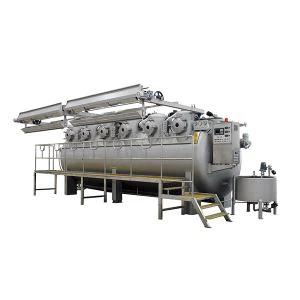
Fabric shrinkage is a critical concern in the textile industry, as it can significantly affect the quality, fit, and appearance of the final product. In recent years, gas - liquid dyeing machines have emerged as a revolutionary technology in textile dyeing processes. As a leading supplier of gas - liquid dyeing machines, I will delve into the effects of these machines on fabric shrinkage in this blog.
Understanding Fabric Shrinkage
Before discussing the impact of gas - liquid dyeing machines, it's essential to understand what fabric shrinkage is. Fabric shrinkage refers to the reduction in the dimensions of a fabric after it has been exposed to certain conditions, such as washing, drying, or heat treatment. There are two main types of shrinkage: relaxation shrinkage and felting shrinkage. Relaxation shrinkage occurs when the fabric fibers return to their natural, unstressed state, while felting shrinkage is more common in wool and other fibrous materials, where the fibers entangle and compact.


The factors influencing fabric shrinkage include fiber type, fabric construction, and the manufacturing processes involved. For example, natural fibers like cotton and wool are more prone to shrinkage compared to synthetic fibers such as polyester. The way the fabric is woven or knitted also plays a role, with loosely woven fabrics generally having a higher shrinkage potential.
How Gas - Liquid Dyeing Machines Work
Gas - liquid dyeing machines combine the use of gas (usually air) and liquid (dye liquor) to achieve efficient and uniform dyeing of fabrics. The basic principle involves creating a high - speed flow of the dye liquor with the assistance of gas, which helps to circulate the dye evenly throughout the fabric. This technology offers several advantages over traditional dyeing methods, such as reduced water consumption, shorter dyeing cycles, and better color fastness.
In a gas - liquid dyeing machine, the fabric is transported through the dyeing chamber by the combined action of the gas and liquid flow. The gas provides the driving force to move the fabric, while the liquid carries the dye. This dynamic flow ensures that the dye penetrates the fabric thoroughly, resulting in a more consistent color distribution.
Impact of Gas - Liquid Dyeing Machines on Fabric Shrinkage
Reduced Mechanical Stress
One of the primary ways gas - liquid dyeing machines affect fabric shrinkage is by reducing mechanical stress on the fabric. Traditional dyeing methods often involve the use of paddles or rollers to move the fabric through the dye bath, which can cause the fabric to stretch or distort. In contrast, gas - liquid dyeing machines use a gentle, fluid - based transportation system. The high - speed gas - liquid flow moves the fabric smoothly through the dyeing chamber, minimizing the mechanical forces that could lead to shrinkage.
For example, in a HTHP Jet Dyeing Machine For Cotton, the jet - like flow of the gas - liquid mixture ensures that the cotton fabric is treated gently. This reduces the likelihood of the cotton fibers being stretched or damaged during the dyeing process, thereby helping to maintain the fabric's original dimensions and reducing shrinkage.
Uniform Dyeing and Temperature Control
Gas - liquid dyeing machines offer better control over the dyeing process, including more uniform dye distribution and precise temperature control. Uneven dyeing can cause differential stress on the fabric, leading to local shrinkage. With gas - liquid dyeing, the high - speed flow of the dye liquor ensures that the dye is evenly applied to the fabric, minimizing the risk of uneven shrinkage.
Moreover, accurate temperature control is crucial in preventing excessive shrinkage. Gas - liquid dyeing machines are equipped with advanced temperature sensors and control systems that can maintain a stable dyeing temperature throughout the process. This is particularly important for heat - sensitive fabrics, as sudden temperature changes can cause the fibers to contract or expand, resulting in shrinkage.
Lower Water Consumption
Another advantage of gas - liquid dyeing machines is their reduced water consumption. Traditional dyeing methods typically require large amounts of water to carry the dye and rinse the fabric. Excessive water exposure can cause the fabric to swell and shrink when it dries. Gas - liquid dyeing machines use less water by relying on the gas - assisted flow to transport the dye. This means that the fabric is exposed to less water during the dyeing process, reducing the potential for water - induced shrinkage.
Case Studies
To illustrate the effect of gas - liquid dyeing machines on fabric shrinkage, let's look at some case studies. A textile manufacturer that switched from a traditional paddle - type dyeing machine to an Air & Liquid Multi - flow HT Dyeing Machine reported a significant reduction in fabric shrinkage. The new machine's gentle fabric handling and uniform dyeing process resulted in a more consistent fabric size after dyeing.
In another case, a company producing woolen fabrics used an NTNP Gas - liquid Dyeing Machine to dye their products. The machine's precise temperature control and reduced mechanical stress helped to minimize the felting shrinkage of the wool, leading to a higher - quality end product with less shrinkage.
Considerations for Minimizing Fabric Shrinkage with Gas - Liquid Dyeing Machines
While gas - liquid dyeing machines offer many benefits in terms of reducing fabric shrinkage, there are still some considerations to keep in mind. First, the operating parameters of the machine, such as the gas - liquid ratio, flow rate, and temperature, need to be carefully adjusted according to the type of fabric being dyed. Different fabrics have different shrinkage characteristics, and optimizing the dyeing process for each fabric type is essential.
Second, proper pre - treatment and post - treatment of the fabric can also help to minimize shrinkage. For example, pre - shrinking the fabric before dyeing can reduce the potential for further shrinkage during the dyeing process. After dyeing, appropriate drying and finishing techniques should be used to ensure that the fabric retains its desired dimensions.
Conclusion
In conclusion, gas - liquid dyeing machines have a positive effect on fabric shrinkage. By reducing mechanical stress, providing uniform dyeing and temperature control, and minimizing water consumption, these machines help to maintain the integrity of the fabric and reduce the shrinkage rate. As a supplier of gas - liquid dyeing machines, we are committed to providing our customers with high - quality equipment that can improve the efficiency and quality of their dyeing processes.
If you are interested in learning more about our gas - liquid dyeing machines or would like to discuss your specific dyeing requirements, please feel free to contact us for a detailed consultation. We look forward to working with you to achieve the best results in fabric dyeing and minimize fabric shrinkage.
References
- Morton, W. E., & Hearle, J. W. S. (1993). Physical Properties of Textile Fibres. Butterworth - Heinemann.
- Textile Institute. (2009). Handbook of Textile Fibre Structure. Woodhead Publishing.
- Wang, X., & Yu, J. (2015). Advances in Textile Dyeing Technology. Springer.