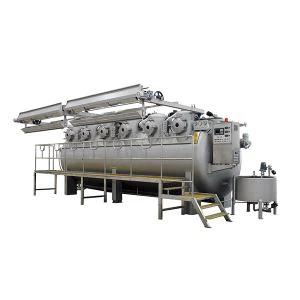
Hey there! As a supplier of HTHP Soft Flow Fabric Dyeing Machines, I often get asked about the maximum capacity of these machines. So, I thought I'd write this blog to share some insights on this topic.


First off, let's understand what an HTHP Soft Flow Fabric Dyeing Machine is. It's a high - tech piece of equipment used in the textile industry for dyeing fabrics. The "HTHP" stands for High Temperature and High Pressure, which means the machine can operate under extreme conditions to achieve better dyeing results. The "Soft Flow" feature ensures that the fabric is treated gently during the dyeing process, reducing damage and ensuring a high - quality finish.
Now, onto the big question: what's the maximum capacity of an HTHP Soft Flow Fabric Dyeing Machine? Well, it's not a one - size - fits - all answer. The capacity can vary depending on several factors.
Factors Affecting the Maximum Capacity
1. Machine Design and Model
Different models of HTHP Soft Flow Fabric Dyeing Machines are designed with different capacities in mind. Some smaller, entry - level machines might have a maximum capacity of around 100 - 200 kilograms of fabric per batch. These are great for small - scale textile manufacturers or for testing new dyeing processes.
On the other hand, larger, industrial - grade machines can handle much more. Some of the top - of - the - line models can have a maximum capacity of up to 1000 kilograms or even more per batch. These are the workhorses of the textile industry, used by large factories that need to dye large volumes of fabric quickly and efficiently.
2. Fabric Type
The type of fabric being dyed also plays a huge role in determining the maximum capacity. Lightweight fabrics like silk or chiffon take up less space and are less dense, so you can fit more of them in the machine. You might be able to load a larger quantity of these fabrics compared to heavier fabrics like denim or wool.
For example, if you're dyeing a lightweight polyester fabric, you could potentially load more of it into the machine compared to a thick cotton twill fabric of the same weight. The reason is that the lightweight fabric is more compressible and takes up less physical space inside the dyeing chamber.
3. Dyeing Process Requirements
The specific dyeing process you're using can affect the capacity as well. Some dyeing processes require more space for the fabric to move freely within the machine to ensure even dye penetration. For instance, if you're using a complex multi - color dyeing process or a process that involves a lot of agitation, you might need to reduce the fabric load to allow for proper movement.
In contrast, a simple single - color dyeing process might allow you to load more fabric as there's less need for extensive movement and agitation.
Our Product Range and Capacities
At our company, we offer a wide range of HTHP Soft Flow Fabric Dyeing Machines to meet different needs. We have Multi Nozzle Soft Flow Dyeing Machine, which is known for its excellent dyeing uniformity and relatively high capacity. These machines can handle anywhere from 200 to 800 kilograms of fabric per batch, depending on the model and the fabric type.
Our Normal Temperature Overflow Dyeing Machine for Fabric is another great option. It's more suitable for fabrics that can't withstand high temperatures. The capacity of these machines ranges from 150 to 600 kilograms per batch.
And then there's our High Temperature Soft Flow Dyeing Machine. These are designed for high - performance dyeing at elevated temperatures. They can handle larger batches, with capacities starting from 300 kilograms and going up to 1000 kilograms or more.
Why Capacity Matters
Understanding the maximum capacity of an HTHP Soft Flow Fabric Dyeing Machine is crucial for textile manufacturers. If you choose a machine with a capacity that's too small for your production needs, you'll have to run multiple batches, which can be time - consuming and increase your production costs.
On the other hand, if you go for a machine with a capacity that's much larger than what you actually need, you'll be paying more for the machine upfront and also using more energy and dye for each batch, even if you're not filling the machine to its full capacity.
So, it's all about finding the right balance. You need to assess your production volume, the types of fabrics you'll be dyeing, and your specific dyeing processes to choose a machine with the appropriate maximum capacity.
How to Determine the Right Capacity for Your Business
If you're in the market for an HTHP Soft Flow Fabric Dyeing Machine, here are some steps to help you determine the right capacity:
- Analyze Your Production Volume: Look at your current and projected production volume. How many kilograms of fabric do you need to dye per day, week, or month? This will give you a rough idea of the batch size you need.
- Consider Future Growth: Think about your business's growth plans. If you expect to expand your production in the future, it might be a good idea to choose a machine with a slightly larger capacity than your current needs.
- Evaluate Fabric Types: Make a list of the different types of fabrics you'll be dyeing. Consider their weights, densities, and how they'll behave in the dyeing process. This will help you account for any differences in capacity based on fabric type.
Conclusion
In conclusion, the maximum capacity of an HTHP Soft Flow Fabric Dyeing Machine can vary widely depending on machine design, fabric type, and dyeing process requirements. As a supplier, we're here to help you find the perfect machine for your needs. Whether you're a small - scale textile producer or a large industrial factory, we have a range of machines with different capacities to choose from.
If you're interested in learning more about our HTHP Soft Flow Fabric Dyeing Machines or need help in selecting the right machine with the appropriate maximum capacity for your business, don't hesitate to reach out. We're always happy to have a chat and assist you in making the best decision for your textile dyeing operations. Contact us to start a discussion about your requirements and let's find the ideal solution together.
References
- Textile Machinery Handbook, 3rd Edition
- Journal of Textile Dyeing and Finishing Research Papers