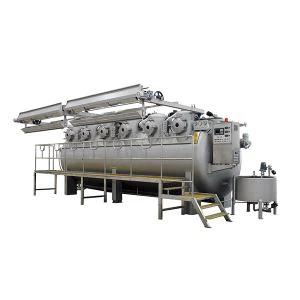
What is the water consumption of a Soft Flow Fabric Dyeing Machine?
As a supplier of Soft Flow Fabric Dyeing Machines, I often receive inquiries from customers about the water consumption of these machines. Understanding the water consumption of a Soft Flow Fabric Dyeing Machine is crucial for textile manufacturers, as it not only affects the production cost but also has significant implications for environmental sustainability. In this blog post, I will delve into the factors that influence the water consumption of Soft Flow Fabric Dyeing Machines and provide some insights on how to optimize water usage.
Factors Affecting Water Consumption
-
Machine Design and Capacity
The design and capacity of a Soft Flow Fabric Dyeing Machine play a significant role in determining its water consumption. Machines with larger capacities generally require more water to operate effectively. For instance, a large - scale industrial Soft Flow Fabric Dyeing Machine designed to handle high volumes of fabric per batch will need a greater amount of water to ensure proper circulation and dye penetration. Additionally, the internal structure of the machine, such as the size and shape of the dye bath, can also impact water usage. Some advanced designs are engineered to minimize water volume while maintaining efficient dyeing processes. -
Fabric Type and Characteristics
Different types of fabrics have varying water absorption rates and dyeing requirements, which directly affect water consumption. For example, fabrics made from natural fibers like cotton tend to absorb more water compared to synthetic fibers such as polyester. This means that when dyeing cotton fabrics, more water is needed to ensure that the fabric is fully saturated with the dye solution. Moreover, the thickness, density, and surface area of the fabric also matter. A thicker or more densely woven fabric may require additional water to achieve uniform dyeing. -
Dyeing Process and Recipe
The specific dyeing process and recipe used can have a substantial impact on water consumption. Some dyeing processes, such as high - temperature and high - pressure dyeing, may require more water to maintain the appropriate conditions for dye fixation. The type and amount of dyes and chemicals used in the recipe also play a role. Certain dyes may require multiple rinsing steps with water to remove excess dye and chemicals, increasing the overall water consumption. For example, reactive dyes often need thorough rinsing to prevent color bleeding, which can lead to higher water usage. -
Operating Conditions
The operating conditions of the Soft Flow Fabric Dyeing Machine, including the temperature, pressure, and flow rate of the dye solution, can influence water consumption. Higher temperatures and pressures may require more water to maintain stability and prevent overheating or excessive evaporation. Similarly, a higher flow rate of the dye solution may demand more water to ensure proper circulation and distribution throughout the fabric.
Measuring Water Consumption
To accurately measure the water consumption of a Soft Flow Fabric Dyeing Machine, several methods can be employed. One common approach is to install water meters at the inlet and outlet of the machine. These meters can record the amount of water entering and leaving the machine during each dyeing cycle. By comparing the inlet and outlet readings, the actual water consumption for a specific batch of fabric can be determined.
Another method is to calculate the water - to - fabric ratio. This ratio is defined as the volume of water used in the dyeing process divided by the weight of the fabric being dyed. For example, a water - to - fabric ratio of 10:1 means that 10 liters of water are used for every 1 kilogram of fabric. By monitoring this ratio over time, textile manufacturers can assess the efficiency of their dyeing processes and identify opportunities for water conservation.
Strategies to Reduce Water Consumption
-
Optimized Machine Operation
Proper operation of the Soft Flow Fabric Dyeing Machine can significantly reduce water consumption. This includes ensuring that the machine is running at the optimal temperature, pressure, and flow rate. Regular maintenance of the machine, such as cleaning the filters and pumps, can also improve its efficiency and reduce water waste. Additionally, using automated control systems can help to precisely regulate the amount of water used in each dyeing cycle. -
Recycling and Reusing Water
Implementing a water recycling system is an effective way to reduce water consumption. After the dyeing process, the water can be treated to remove impurities and dyes, and then reused in subsequent dyeing cycles. This not only reduces the demand for fresh water but also minimizes the environmental impact of textile dyeing. Some advanced Soft Flow Fabric Dyeing Machines are equipped with built - in water recycling systems, which can significantly improve water efficiency.

-
Adopting Advanced Dyeing Technologies
New dyeing technologies, such as low - liquor ratio dyeing, can greatly reduce water consumption. Low - liquor ratio dyeing uses a smaller amount of water relative to the weight of the fabric, while still achieving high - quality dyeing results. By investing in these advanced technologies, textile manufacturers can not only save water but also reduce energy consumption and chemical usage.
Examples of Our Soft Flow Fabric Dyeing Machines and Their Water Consumption
We offer a range of Soft Flow Fabric Dyeing Machines, each designed to meet different production needs. For example, our Taffeta Fabric Dyeing Machine High - Pressure Rapid Dyeing Machine is specifically engineered for taffeta fabric dyeing. This machine has a relatively low water - to - fabric ratio, thanks to its advanced design and efficient circulation system.
Our Jet Dyeing Machine For Satin Fabric is another popular model. It uses a jet - flow technology to ensure uniform dyeing of satin fabrics. With proper operation and water management, this machine can achieve significant water savings.
The Normal Temperature Overflow Dyeing Machine for Fabric is suitable for a wide range of fabric types at normal temperatures. It is designed to minimize water consumption while providing excellent dyeing quality.
Conclusion
In conclusion, the water consumption of a Soft Flow Fabric Dyeing Machine is influenced by multiple factors, including machine design, fabric type, dyeing process, and operating conditions. By understanding these factors and implementing effective water - saving strategies, textile manufacturers can reduce their water usage, lower production costs, and contribute to environmental sustainability.
If you are interested in our Soft Flow Fabric Dyeing Machines and would like to learn more about their water consumption and other features, please feel free to contact us for a detailed discussion. We are committed to providing you with the most suitable dyeing solutions to meet your production needs.
References
- Textile Dyeing Technology Handbook, Third Edition.
- Journal of Textile Engineering and Technology, various issues on fabric dyeing and water management.