


If you've ever spent time in a textile processing plant, you've probably seen overflow jet dyeing machines hard at work-they're the workhorses for batch dyeing of all kinds of fabrics, from cotton blends to synthetics. But if you're looking to boost your plant's throughput, you might've wondered: Can an overflow jet dyeing machine actually be used for continuous dyeing? Short answer: It's not a direct swap, but with the right model and a few process tweaks, you can get close to the continuous gains you're chasing, without ditching the jet system you already know works. As a supplier of jet dyeing equipment, I get this question all the time-let me break it down like I would for a plant manager walking through our showroom.
First, let's get on the same page about what each term means, because there's a lot of mix-up here. Overflow jet dyeing machines, which I've been selling for years, are traditional batch systems. You load a set amount of fabric (say, 100 to 500 kg) into the machine, seal it up, run the dye liquor through it, rinse, and then unload. Each batch is a separate run-you can't feed fabric in nonstop without stopping for loading and unloading. Continuous dyeing, on the other hand, is a line: fabric goes in one end, processes through pre-treatment, dye application, fixation, and finishing all in one nonstop pass, with constant throughput, fewer labor hands, and less water waste.
So why would anyone even ask if overflow jets can do continuous? Because a lot of people think "jet dyeing = batch dyeing" is a hard rule. And for most traditional overflow jets, that's true. The batch design-limited fabric load, fixed processing time per unit, built for discrete lots-was never made for nonstop flow. But here's the thing: modern jet dyeing tech has evolved a lot over the last decade, and some specialized jet models blur the line between batch and continuous. Let's talk about how that works, and which of our machines can help if you're looking to bridge that gap.
Wait, let's step back. When plant managers ask this question, they're usually facing a common pain point: their current batch process (including standard overflow jets) has downtime between batches, high water and energy use per kg of fabric, and they can't keep up with orders that need consistent dye shade across large runs. Continuous dyeing solves those problems, but it works best for woven fabrics that can handle the tension of a continuous line-think denim, cotton broadcloth, poplin. For knits, loose fabrics, or delicate synthetics (like spandex blends that can't take tension), continuous lines often cause stretching or creasing, which ruins the fabric quality. That's where jets come in, and where "semi-continuous" or continuous jet processing starts to make sense.
Traditional overflow jets move fabric through a stream of dye liquor at low tension, which is perfect for delicate stretch fabrics or loose knits that would get damaged on a standard continuous line. But if you can adapt the jet's flow system to run with a steady, uninterrupted fabric feed instead of discrete batches, you get the best of both worlds: low tension (great for quality) and consistent throughput (close to continuous). That's the sweet spot a lot of plants are missing, and it's why I've had so many conversations about modifying jet setups for semi-continuous runs.
Now, not all jet machines are cut out for this. Let's go over a few of our models that we regularly recommend for these kinds of applications, because their design makes them adaptable for steady flow. First, the HTHP Dual Flow Dyeing Machine is a big one-its dual liquor flow system lets you regulate the speed and pressure of the dye stream independently, which is key for keeping fabric moving at a consistent rate without bunching. Unlike older overflow jets that dump all liquor at once per batch, this model can maintain a steady flow of fabric through the machine, so you don't have to stop and start every time you load a new lot. We've had customers run 8-hour semi-continuous shifts with this machine, feeding fabric at a steady 50 meters per minute with no creasing or shade variation.
Another model that works for this is the High Pressure Rapid Jet Dyeing Machine. It's built for high-temperature processing (which is needed for synthetics like polyester) and has a shorter processing chamber than standard jets. That means you don't have a bunch of extra fabric sitting in the machine waiting to finish a batch-you can sync the feed rate of fabric going in with the processing time, so it's almost like a continuous loop. The rapid cycle time (as low as 20 minutes per load, compared to 45 minutes for older jets) means you can keep the fabric moving without gaps, which is exactly what you need for semi-continuous runs. I had a customer in Turkey switch from 3-hour batch runs on a standard jet to semi-continuous runs on this model, and they boosted their daily output by 35% in the first month-no extra labor, no extra equipment.
For fabrics that are extra delicate, like sheer chiffon or fine cotton knits, the High Temp Flexible Jet Dyeing Machine is the way to go. Its flexible channel design lets you adjust the liquor flow to cradle the fabric instead of forcing it through, so you can run fabric at a slow, steady pace without stretching it. We've used this machine for semi-continuous runs of stretch cotton blends that would tear on a standard continuous line, and the shade consistency was just as good as batch runs-because you're not stopping and starting, so every yard of fabric gets the same exposure to dye liquor.
Wait, but let's be clear: we're not talking about full, 24/7 continuous dyeing like you'd see for denim, where fabric is a single, unbroken roll. Overflow jet machines (even modified ones) still have limits. The maximum run length for semi-continuous jet dyeing is usually around 500 to 1,000 meters per fabric load, and you do have to unload and reload periodically-though we've had customers set up automatic loading systems that cut that downtime from 30 minutes per load to 5, so you barely notice the gaps. For full continuous dyeing, you'd still want a dedicated continuous line, but if you're working with delicate fabrics, short runs, or you don't have the floor space for a big continuous line, a modified jet setup is a game-changer.
Let's talk about the science behind why this works, because I don't want to overpromise. Traditional overflow jet dyeing relies on a "bath ratio"-the amount of water (or liquor) to fabric weight, usually 1:5 to 1:10. For batch runs, that's fine, but for semi-continuous runs, you need to adjust the bath ratio to a continuous flow, so liquor is replenished at the same rate as fabric is fed through. The HTHP Long Tube Rapid Fabric Dyeing Machine is specifically designed for this-its long processing tube lets you hold fabric for exactly the time it needs to take dye, and the liquor is circulated in a closed loop that's constantly refreshed, so you don't get uneven shade from old, used dye. That's why this model works so well for semi-continuous runs of long, uniform fabric lots-like bed linens or t-shirt knits.

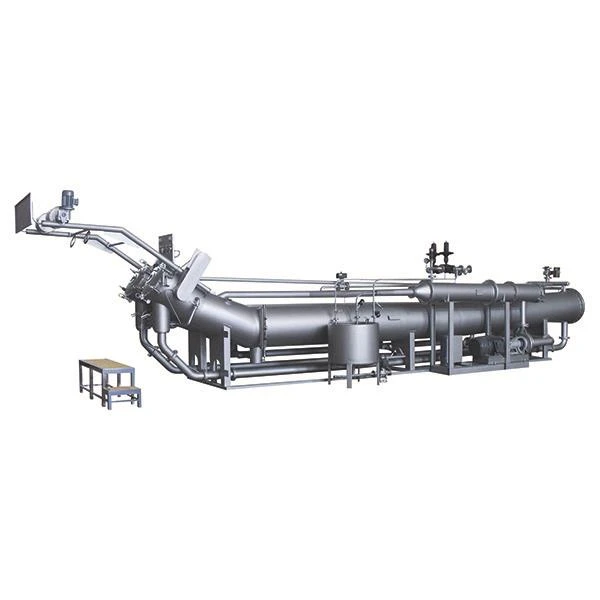
Another point: a lot of people worry about dye waste with semi-continuous jet runs, but that's not the case if you set it up right. The HTHP Double Liquid Flow Loose Dyeing Machine uses a dual liquor system where you can separate the rinse water from the dye liquor, so you reuse 70-80% of the dye, which cuts costs and water use. For continuous lines, dye waste is usually lower, but for small to medium runs, semi-continuous jets actually waste less than batch jets, because you're not heating up and cooling down the machine every single batch-you can keep it at a steady temperature all shift long.
Now, let's get real about the limitations here, because no machine is perfect. If you need to run fabric for 24 hours straight, with zero stops, full continuous dyeing is better. Jets work best for runs up to 1,000 meters, so if you're doing orders for retail brands that need 50,000 meters of a single shade, a continuous line is more efficient. But if you're doing a mix of short runs (1,000 to 5,000 meters) of delicate fabrics, or you just can't afford the upfront cost of a big continuous line, a semi-continuous overflow jet setup is a great middle ground. I've had plants that bought one of our jet machines for semi-continuous runs, and it's replaced both their old batch jets and a small continuous line-they save on labor, space, and energy, while keeping their fabric quality high.
Wait, let's share a quick example to make this concrete. Last year, a client in Portugal made stretch yoga pants fabric. They were using a standard overflow jet for batch runs, which took 4 hours per load, had 2 hours of downtime between batches, and 5% of their fabric was being ruined from stretching during dyeing. They bought our High Pressure Rapid Jet Dyeing Machine, set it up with an automatic fabric feeder, and switched to semi-continuous runs. Now their run time per 1,000 meters is 2.5 hours, downtime between loads is 10 minutes, and fabric waste dropped to less than 1%. They're also able to meet their brand's requirement of 0 shade variation across 10,000 meter rolls, which they couldn't do with batch runs. That's the kind of result that makes this question worth asking.
So to circle back to the original question: Can an overflow jet dyeing machine be used for continuous dyeing? The short answer is no, it can't do full, unbroken 24/7 continuous dyeing like a dedicated continuous line. But modern specialized jet machines from our lineup can do semi-continuous dyeing that delivers almost all the benefits of continuous processing-higher throughput, lower downtime, better shade consistency-while keeping the low-tension, delicate fabric processing that makes jets ideal for knits, stretch fabrics, and loose structures. The key is picking the right model for your needs: if you're working with delicate synthetics or knits, go for the High Temp Flexible Jet Dyeing Machine; if you need rapid cycle times for uniform runs, the High Pressure Rapid Jet Dyeing Machine is perfect; for loose fabric, the HTHP Double Liquid Flow Loose Dyeing Machine will save you on waste.
At the end of the day, the biggest thing I tell customers is that you don't have to choose between batch and continuous. Jet dyeing tech has evolved enough that you can have a system that fits your specific fabric, production volume, and quality needs, instead of forcing your fabric into a one-size-fits-all process. If you're tired of the downtime of batch jets or the fabric damage of continuous lines, it's worth taking a closer look at these specialized jet models to see if semi-continuous processing is right for your plant.
If you're ready to talk through your specific production needs, we can help you figure out which machine will work best for your fabric types, run lengths, and throughput goals. There's no one-size-fits-all answer, but we've helped dozens of plants make the switch from batch to semi-continuous, and we can do the same for you.


