


If you've ever walked through a textile factory floor, you've likely noticed the rhythmic hum of large, stainless steel machines moving fabric in soft, continuous loops. For anyone in the dyeing industry, that sound is familiar-and those machines are almost certainly high pressure jet dyeing systems, the workhorses that turn raw fabric into colored, finished goods. I've spent the last decade as a supplier of these machines, and one question comes up at every industry trade show, every client meeting, every late-night troubleshooting call: How do these machines control temperature so precisely during dyeing? Temperature is the backbone of successful jet dyeing-too low, and dyes won't bond evenly; too high, and delicate fibers (like silk, wool, or even lightweight synthetic blends) will stretch, fade, or even disintegrate. Let me break down how our systems, and quality high pressure jet dyeing machines broadly, keep temperature in check, because it's not just a heater and a thermostat-it's a carefully calibrated, multi-layered process that separates consistent, high-quality dye jobs from costly failures.
First, let's start with why high pressure is tied to temperature control in the first place. Water boils at 100°C (212°F) at sea level, but to effectively dye most synthetic fibers (polyester, nylon, acrylic) and even thick cotton blends, you need temperatures of 120–140°C (248–284°F) to get dyes to penetrate the fiber core safely. If you tried to reach that temperature at atmospheric pressure, the water would turn to steam long before you hit 100°C, leaving you with little to no liquid to carry the dye through the fabric. That's why high pressure is non-negotiable-and that's why our high temperature high pressure dyeing machine is built to lock in pressure as temperature rises, creating a closed, controlled environment where liquid water stays in its liquid state far above its normal boiling point. This is the foundation of all reliable jet dyeing, and it's the first line of defense for temperature stability: the sealed pressure vessel itself. No air can escape, no steam can leak, so the pressure and temperature rise in tandem, per basic gas laws-when pressure increases, the boiling point of water increases, so you get the liquid heat you need without steam interference. That's why investing in a quality, pressure-rated vessel is non-negotiable; a poorly sealed or thin-walled machine will suffer pressure drops, which lead to inconsistent temperature, which leads to uneven dyeing.
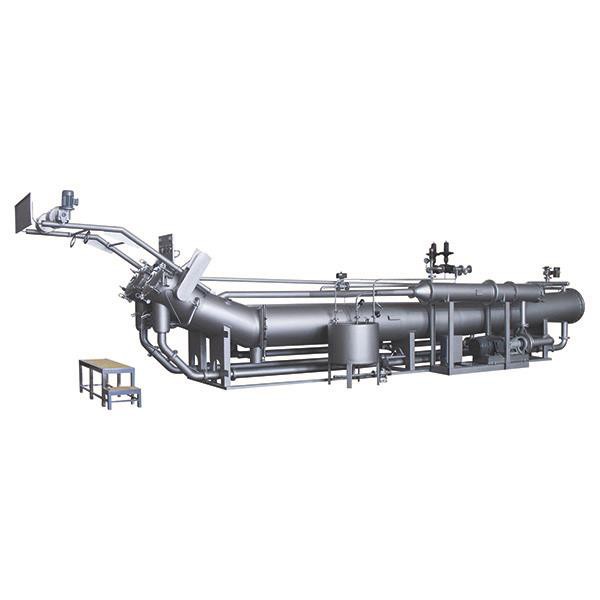

But the pressure vessel alone isn't enough. Once you've established the high pressure environment, you need a way to heat the dye liquor (the mix of water, dye, and chemicals) evenly, not just the surrounding metal. That's where the heating system comes in. Most modern jet dyeing systems use indirect heating, meaning the dye liquor never comes into direct contact with the heating element, which prevents local overheating of dye or fabric and reduces the risk of scaling (mineral build-up from hard water that clogs lines or damages fabric). Our machines use a shell-and-tube heat exchanger, which is a series of small tubes heated by steam or thermal oil, and the dye liquor flows around those tubes. The key here is that the flow is continuous, not static-so every drop of dye liquor gets an equal amount of heat exposure, no hot spots forming where fabric could over-dye or burn. For example, our TH-VT High Temperature Dyeing Machine uses a variable flow heat exchanger that adjusts its output based on real-time temperature readings, so if the liquor is 0.5°C below the target, it cranks up the heating slightly, and if it's 0.5°C over, it reduces it-no sudden spikes or drops. That precision is what lets dyers get uniform color across hundreds of yards of fabric, even for delicate items like chiffon or mercerized cotton.
Next, temperature control relies on a constant, monitored flow of dye liquor through the jet system. Jet dyeing works by pumping the liquor at high velocity through a nozzle, which carries the fabric loop through the machine without needing to squeeze it (unlike older winch dyeing methods, which could stretch fabric). That high-velocity flow does two key things for temperature: first, it prevents stratification-where hot water rises to the top of the machine and cold water sinks, creating temperature gradients. Because the liquor is constantly moving at 10–15 meters per second, every part of the system is mixed evenly, so the temperature at the nozzle inlet is exactly the same as the temperature at the outlet. Second, the flow helps with cooling as well as heating. When a dye cycle is done and you need to lower the temperature to rinse or remove the fabric, you don't just turn off the heater and wait-you pump in cold water at a controlled rate, and the jet flow circulates it evenly throughout the machine, so you don't get rapid temperature changes that would shock the fabric or cause dye to bleed unevenly. Our Overflow Jet Dyeing Machine takes this a step further with a gentle overflow system that maintains flow even for very lightweight, fragile fabrics, so temperature consistency stays high even when working with materials that can tear under too much pressure.
Of course, all of this is useless without a sophisticated control system to tie it all together. Modern high pressure jet dyeing machines are run by programmable logic controllers (PLCs) paired with touchscreen interfaces that let dyers set exact temperature profiles for each fabric type. For example, a standard polyester dye cycle might start with a slow ramp-up from room temperature to 60°C over 20 minutes, then hold steady at 60°C for 10 minutes to let the fabric absorb moisture, then ramp up to 130°C over 30 minutes, hold for 45 minutes to let the dye bond, then slowly cool back to 80°C over 25 minutes. The PLC doesn't just follow these steps blindly-it adjusts based on real-time temperature readings from multiple sensors placed around the machine: at the heater, at the jet nozzle, at the fabric exit, and even in the drain line. If one sensor detects a 1°C deviation, the PLC will adjust the heat exchanger, the flow rate, or the pressure within seconds to correct it. This is a huge improvement over older machines that only had a single thermostat, which would miss small fluctuations and lead to inconsistent dye jobs. Our HTHP Rapid Dyeing Machine has an advanced PLC with data logging, so dyers can save their custom temperature profiles and repeat them exactly every time, reducing waste from bad batches and making it easy to switch between fabric orders.
I also want to talk about something that's often overlooked in temperature control: pressure-temperature synchronization. Because we're working at high pressure, the machine's pressure control system isn't separate from its temperature system-they're linked. If the temperature starts to rise too fast, the pressure control valve will open slightly to release a tiny amount of gas, which prevents pressure spikes that could damage fabric or throw off the temperature. Conversely, if pressure drops (which can happen if there's a leak or the pump is running slow), the temperature will automatically lower a little to keep everything balanced, because at lower pressure, the boiling point of water drops. This is why it's critical to have a machine where the pressure and temperature systems are integrated, not siloed. Our HTHP Dyeing Machine is designed with this sync built in, so you don't have to manually adjust two separate systems-one touchscreen handles all pressure-temperature coordination, reducing operator error and making the process faster.
I've seen firsthand what happens when temperature control fails. A few years back, a small textile mill in the Northeast came to us with a problem: they were using an older, off-brand jet dyeing machine, and every third batch of their cotton-poly blend had streaky color. When we inspected their machine, we found that their temperature sensor was placed near the top of the pressure vessel, so it was reading a temperature that was 2°C higher than the actual temperature where the fabric was moving. Their PLC was setting the heat based on that wrong reading, so the fabric at the bottom of the vessel was being dyed at a lower temperature, leading to uneven absorption. After they upgraded to our system, with sensors placed along the jet path and integrated pressure-temperature control, their streak rate dropped to less than 1%, and their dye waste went down by 12% that year. That's the impact of solid temperature control-it's not just about making a pretty color, it's about saving money, reducing waste, and keeping production on schedule.
Now, I know that every dyer has different needs. Some work with tiny batches of high-end silk, others with bulk yards of polyester for sportswear. That's why our range of high pressure jet dyeing machines is built to adapt to those needs, with temperature control systems that can be customized for specific cycle lengths, fabric weights, and dye types. Whether you need a compact system for a small operation or a high-volume machine for a large mill, the core temperature control principle remains the same: sealed pressure, even heating, consistent flow, and integrated automation.
If you're in the market for a high pressure jet dyeing machine, temperature control should be your top priority-don't just look for a machine that can reach high temperatures, look for one that can hold them consistently, adjust to small changes, and integrate seamlessly with your production process. We've spent 15 years refining our temperature control systems, and we're constantly updating them with new sensor technology and automation to make dyeing easier, more consistent, and more efficient.
If you're ready to upgrade your dyeing process or learn more about how our machines can help you achieve perfect temperature control, we're here to help. Whether you have questions about pressure-temperature sync, heat exchanger design, or custom cycle profiles, our team of experienced engineers and textile specialists can walk you through every step. Reach out to start a conversation about your specific needs, and let's find the right high pressure jet dyeing solution for your operation.


