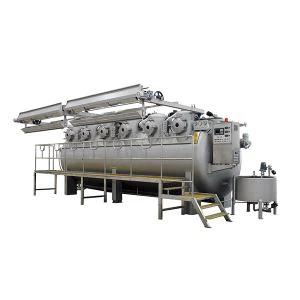
As a supplier of the HTHP Rapid Dyeing Machine, I often receive inquiries from customers about the machine's compatibility with natural fibers. This blog post aims to explore the feasibility of using the HTHP Rapid Dyeing Machine for dyeing natural fibers, shedding light on its technical capabilities, advantages, and potential challenges.
Understanding Natural Fibers
Natural fibers are derived from plants, animals, or minerals. Common examples of plant-based natural fibers include cotton, linen (from flax), and hemp, while animal-based fibers encompass wool, silk, and cashmere. These fibers are known for their comfort, breathability, and natural aesthetics, making them highly desirable in the textile industry. However, they also present unique characteristics that need to be considered during the dyeing process.


Technical Capabilities of the HTHP Rapid Dyeing Machine
The HTHP (High Temperature High Pressure) Rapid Dyeing Machine is a state-of-the-art textile dyeing equipment designed to provide efficient and high-quality dyeing solutions. It operates under high temperature and pressure conditions, which allows for faster dye penetration and fixation, resulting in shorter dyeing cycles and improved color fastness.
The machine is equipped with advanced control systems that enable precise regulation of temperature, pressure, and dyeing time, ensuring consistent and reproducible dyeing results. Additionally, it features a high-speed circulation system that promotes uniform dye distribution and reduces the risk of color streaks and uneven dyeing.
Advantages of Using the HTHP Rapid Dyeing Machine for Natural Fibers
- Faster Dyeing Cycles: The high temperature and pressure environment of the HTHP Rapid Dyeing Machine accelerate the dyeing process, significantly reducing the time required to achieve the desired color. This not only increases production efficiency but also reduces energy consumption and water usage.
- Improved Color Fastness: The intense dyeing conditions ensure better dye fixation on natural fibers, resulting in superior color fastness. This means that the dyed fibers are less likely to fade or bleed during washing or exposure to sunlight, maintaining their vibrant colors for a longer period.
- Uniform Dyeing: The high-speed circulation system of the machine ensures uniform dye distribution throughout the fabric, eliminating color variations and streaks. This is particularly important for natural fibers, which can be prone to uneven dyeing due to their irregular surface and structure.
- Versatility: The HTHP Rapid Dyeing Machine can be used with a wide range of dyes, including reactive, direct, acid, and disperse dyes, making it suitable for dyeing different types of natural fibers. This versatility allows textile manufacturers to produce a diverse range of colored fabrics to meet market demands.
Challenges and Considerations
While the HTHP Rapid Dyeing Machine offers numerous advantages for dyeing natural fibers, there are also some challenges and considerations that need to be addressed.
- Fiber Damage: The high temperature and pressure conditions of the dyeing process can potentially cause damage to natural fibers, especially delicate fibers such as silk and cashmere. To minimize fiber damage, it is important to carefully select the appropriate dyeing parameters and use gentle dyeing techniques.
- Dye Selection: Different natural fibers have different chemical compositions and dyeing properties, which require the use of specific dyes. It is crucial to choose dyes that are compatible with the type of natural fiber being dyed to ensure optimal dyeing results and color fastness.
- Environmental Impact: The dyeing process can have a significant environmental impact, particularly in terms of water pollution and energy consumption. As a responsible supplier, we are committed to developing and promoting environmentally friendly dyeing solutions, such as the use of low-impact dyes and water-saving technologies.
Case Studies
To illustrate the effectiveness of the HTHP Rapid Dyeing Machine for dyeing natural fibers, let's take a look at some real-world case studies.
- Cotton Dyeing: A textile manufacturer used the HTHP Rapid Dyeing Machine to dye cotton fabrics with reactive dyes. The machine was able to achieve uniform and vibrant colors in a shorter dyeing cycle compared to traditional dyeing methods. The dyed cotton fabrics also exhibited excellent color fastness, meeting the industry standards.
- Wool Dyeing: Another customer used the HTHP Rapid Dyeing Machine to dye wool yarns with acid dyes. The machine's precise temperature and pressure control ensured consistent dyeing results, and the high-speed circulation system prevented color streaks and uneven dyeing. The dyed wool yarns had a soft hand feel and excellent color fastness.
Conclusion
In conclusion, the HTHP Rapid Dyeing Machine can be effectively used for dyeing natural fibers, offering numerous advantages in terms of speed, color fastness, and uniformity. However, it is important to carefully consider the specific characteristics of the natural fibers and the dyeing process to ensure optimal results.
As a leading supplier of the HTHP Rapid Dyeing Machine, we are dedicated to providing our customers with high-quality dyeing equipment and technical support. Our machines are designed to meet the diverse needs of the textile industry, and we are constantly innovating to improve their performance and efficiency.
If you are interested in learning more about our HTHP Rapid Dyeing Machine or have any questions about dyeing natural fibers, please feel free to contact us. We would be happy to discuss your specific requirements and provide you with a customized solution.
References
- Textile Dyeing Technology, Third Edition, by Dr. Subramanian K.
- Handbook of Natural Fibers, Volume 1: Types, Properties and Factors Affecting Their Use, edited by A. K. Mohanty, M. Misra, and L. T. Drzal.