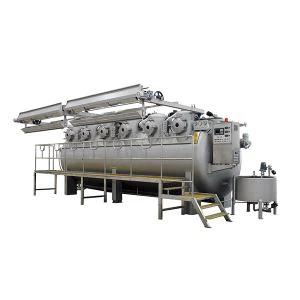
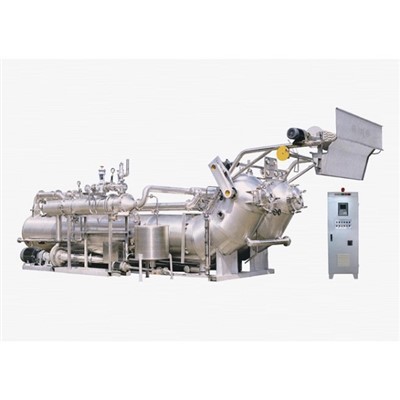
As a supplier of High Temperature Rapid Dyeing Machines, understanding the power consumption of these machines is crucial for both our customers and our business. In this blog, we will delve into the factors that influence the power consumption of High Temperature Rapid Dyeing Machines, explore how to calculate it, and discuss ways to optimize it.
Factors Affecting Power Consumption
The power consumption of a High Temperature Rapid Dyeing Machine is influenced by several key factors. These factors interact with each other and can significantly impact the overall energy usage of the machine.
Machine Size and Capacity
Larger machines with higher capacities generally consume more power. This is because they require more energy to heat the dye bath, circulate the dye, and operate the mechanical components. For example, a large - scale High Temperature Dyeing Machine designed for industrial production will have a higher power rating compared to a smaller machine used for sample dyeing.
Heating System
The heating system is one of the major power - consuming components in a High Temperature Rapid Dyeing Machine. Different heating methods, such as steam heating, electric heating, or gas heating, have different energy efficiencies. Electric heating is often more precise but can be more energy - intensive, while steam heating can be more energy - efficient if the steam is generated from a large - scale boiler system. The power consumption of the heating system depends on the temperature required for the dyeing process, the volume of the dye bath, and the heating rate.
Circulation Pump
The circulation pump is responsible for circulating the dye liquor through the fabric to ensure uniform dyeing. The power consumption of the circulation pump is related to its flow rate and pressure. A higher flow rate and pressure are required for thicker or more densely woven fabrics, which will result in increased power consumption. Additionally, the efficiency of the pump itself also affects power usage. Older or poorly maintained pumps may consume more power to achieve the same flow rate as a newer, more efficient model.
Agitation and Movement Mechanisms
Some High Temperature Rapid Dyeing Machines are equipped with agitation and movement mechanisms to improve dye penetration and distribution. These mechanisms, such as rotating drums or oscillating nozzles, require power to operate. The complexity and frequency of the agitation and movement can impact power consumption. For instance, a machine with a high - speed rotating drum will consume more power than one with a simple oscillating mechanism.
Calculating Power Consumption
To calculate the power consumption of a High Temperature Rapid Dyeing Machine, we need to consider the power ratings of all the individual components and the operating time of the machine.
The power consumption (P) of a machine can be calculated using the formula:
[P=\sum_{i = 1}^{n}P_{i}\times t_{i}]
where (P_{i}) is the power rating of the (i) - th component (such as the heating system, circulation pump, etc.), and (t_{i}) is the operating time of the (i) - th component during a dyeing cycle.
For example, if a High Temperature Rapid Dyeing Machine has a heating system with a power rating of 50 kW, a circulation pump with a power rating of 10 kW, and an agitation mechanism with a power rating of 5 kW, and the heating system operates for 2 hours, the circulation pump operates for 3 hours, and the agitation mechanism operates for 2.5 hours during a dyeing cycle, the total power consumption of the machine for that cycle is:
[P=(50\times2)+(10\times3)+(5\times2.5)=100 + 30+12.5 = 142.5\space kWh]
It should be noted that this is a simplified calculation, and in real - world scenarios, the power consumption may vary due to factors such as start - up and shut - down losses, load variations, and system inefficiencies.
Optimizing Power Consumption
Reducing the power consumption of High Temperature Rapid Dyeing Machines not only helps our customers save on energy costs but also contributes to environmental sustainability. Here are some ways to optimize power consumption:
Energy - Efficient Equipment Selection
When customers are purchasing a High Temperature Rapid Dyeing Machine, they should choose machines with energy - efficient components. For example, look for machines with high - efficiency heating systems, such as those with advanced insulation materials to reduce heat loss. HTHP Jet Dyeing Machine models often incorporate energy - saving features in their design, such as optimized circulation systems and intelligent control systems that can adjust the power consumption according to the dyeing process requirements.
Process Optimization
Optimizing the dyeing process can also lead to significant power savings. This includes accurately controlling the dyeing temperature, reducing the heating and cooling times, and using the appropriate dyeing recipes. For example, pre - heating the dye liquor to a certain temperature before starting the dyeing process can reduce the overall heating time and energy consumption. Additionally, using shorter dyeing cycles without sacrificing the quality of the dyeing can also save power.
Regular Maintenance
Regular maintenance of the High Temperature Rapid Dyeing Machine is essential to ensure its efficient operation. This includes cleaning the heating elements, checking the pump performance, and lubricating the moving parts. A well - maintained machine will consume less power because all the components are operating at their optimal levels. For example, a clean heating element can transfer heat more efficiently, reducing the energy required to reach the desired temperature.
Load Management
Proper load management can also help reduce power consumption. Running the machine at full capacity as much as possible can improve energy efficiency because the fixed power consumption of the machine (such as the power required to start the machine) is spread over a larger amount of fabric. On the other hand, running the machine with a very light load can result in higher power consumption per unit of fabric.


Conclusion
The power consumption of a High Temperature Rapid Dyeing Machine is influenced by multiple factors, including machine size, heating system, circulation pump, and agitation mechanisms. By understanding these factors and implementing measures to optimize power consumption, customers can reduce their energy costs and improve the environmental performance of their dyeing operations.
As a supplier of High Temperature Rapid Dyeing Machines, we are committed to providing our customers with energy - efficient solutions. Our HTHP Dual Flow Fabric Dyeing Machine series is designed with the latest energy - saving technologies to help our customers achieve both high - quality dyeing results and low power consumption.
If you are interested in learning more about our High Temperature Rapid Dyeing Machines or have any questions regarding power consumption and energy efficiency, please feel free to contact us for further discussions and procurement negotiations. We look forward to working with you to meet your dyeing needs.
References
- "Textile Dyeing and Finishing Technology" by X. M. Tao
- "Energy Efficiency in Industrial Processes" published by the International Energy Agency