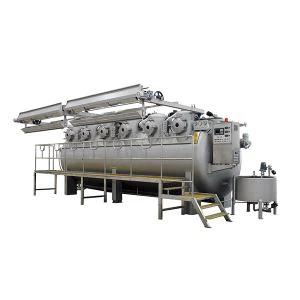
In the textile industry, the quality of dyed fabrics is of utmost importance. Fabric defects can significantly affect the final product's appearance, durability, and market value. As a leading supplier of Rapid Jet Dyeing Machines, we understand the critical role our machines play in handling fabric defects during the dyeing process. In this blog, we will explore how our Rapid Jet Dyeing Machines effectively address various fabric defects, ensuring high - quality dyed fabrics.
Understanding Fabric Defects
Before delving into how our Rapid Jet Dyeing Machines handle fabric defects, it is essential to understand the common types of fabric defects that can occur during the dyeing process. These defects can be broadly classified into two categories: physical defects and dye - related defects.
Physical defects include holes, tears, snags, and uneven fabric tension. These can be caused by improper handling of the fabric before dyeing, mechanical damage during transportation, or issues with the fabric's original manufacturing process. Dye - related defects, on the other hand, include color unevenness, streaks, spots, and poor color fastness. These are often a result of improper dyeing techniques, incorrect dye selection, or issues with the dyeing equipment.
How Rapid Jet Dyeing Machines Detect Fabric Defects
One of the key features of our Rapid Jet Dyeing Machines is their ability to detect fabric defects early in the dyeing process. Our machines are equipped with advanced sensors and monitoring systems that can detect physical and dye - related defects in real - time.
For physical defects, the sensors can detect variations in fabric thickness, tension, and surface smoothness. For example, if there is a hole or a tear in the fabric, the sensor will detect a sudden change in the fabric's thickness or tension, and the machine will automatically stop the dyeing process. This prevents the defective fabric from being further processed, saving time and resources.
In terms of dye - related defects, the monitoring systems can analyze the color distribution on the fabric surface. They use high - resolution cameras and color sensors to measure the color intensity and uniformity at different points on the fabric. If there are any signs of color unevenness, streaks, or spots, the machine will adjust the dyeing parameters in real - time to correct the problem.
Correcting Physical Defects
Once a physical defect is detected, our Rapid Jet Dyeing Machines have several mechanisms to address the issue. For minor defects such as small holes or snags, the machine can use a special stitching or patching mechanism. This mechanism automatically repairs the defect by stitching the fabric together or applying a patch to cover the damaged area.

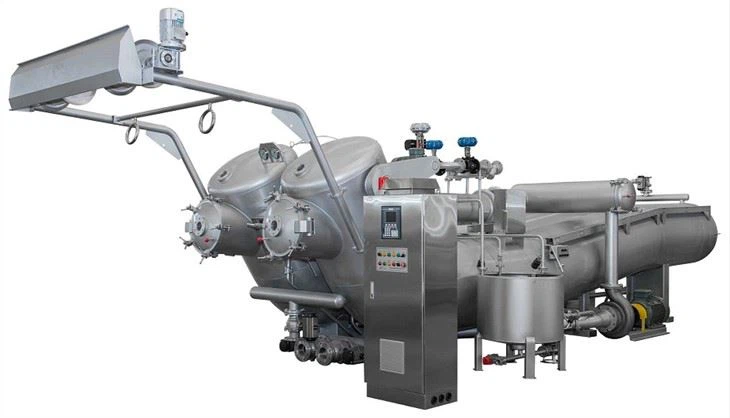
In cases where the defect is more severe, such as a large tear or a significant fabric distortion, the machine will mark the defective area. The operator can then decide whether to remove the defective portion of the fabric or to discard the entire piece. By providing clear information about the defect location and severity, our machines help operators make informed decisions, minimizing waste and maximizing productivity.
Correcting Dye - Related Defects
Dye - related defects are often more challenging to correct than physical defects. However, our Rapid Jet Dyeing Machines are designed with advanced technology to tackle these issues effectively.
Color Unevenness
Color unevenness is one of the most common dye - related defects. It can be caused by factors such as improper dye mixing, uneven fabric movement, or incorrect dyeing temperature. Our machines use a dynamic dyeing system that continuously circulates the dye liquor and ensures uniform dye distribution on the fabric surface.
The system adjusts the flow rate and pressure of the dye liquor according to the fabric type and the dyeing requirements. For example, for thicker fabrics, the machine will increase the flow rate and pressure to ensure that the dye penetrates deeply into the fabric fibers. This helps to eliminate color unevenness and achieve consistent color throughout the fabric.
Streaks and Spots
Streaks and spots can be caused by improper dye application or the presence of impurities in the dye liquor. Our Rapid Jet Dyeing Machines are equipped with a self - cleaning system that continuously filters and purifies the dye liquor. This removes any impurities or particles that could cause streaks or spots on the fabric.
In addition, the machines use a precise dye injection system that ensures accurate and uniform dye application. The dye is injected into the dye liquor at a controlled rate and at specific intervals, preventing the formation of streaks and spots.
Poor Color Fastness
Poor color fastness is another common dye - related defect. It refers to the ability of the fabric to retain its color after washing, rubbing, or exposure to sunlight. Our machines use a combination of high - quality dyes and advanced dyeing techniques to improve color fastness.
The machines can control the dyeing temperature, time, and pH level precisely, ensuring that the dye molecules bond firmly with the fabric fibers. In addition, our machines can apply special finishing treatments after the dyeing process, such as fixing agents and UV protectants, to further enhance the color fastness of the fabric.
The Role of Machine Design in Handling Fabric Defects
The design of our Rapid Jet Dyeing Machines also plays a crucial role in handling fabric defects. The machines are designed with a smooth and gentle fabric handling system to minimize the risk of physical damage to the fabric. The fabric is transported through the machine using a series of rollers and belts that ensure uniform tension and smooth movement.
Moreover, the dyeing chamber is designed to provide a uniform dyeing environment. It has a well - insulated structure that maintains a stable temperature and pressure during the dyeing process. This helps to prevent dye - related defects such as color unevenness and poor color fastness.
Advantages of Our Rapid Jet Dyeing Machines in Handling Fabric Defects
There are several advantages of using our Rapid Jet Dyeing Machines in handling fabric defects. Firstly, the real - time defect detection and correction capabilities of our machines save time and resources. By detecting and correcting defects early in the dyeing process, we can prevent the production of defective products, reducing waste and rework.
Secondly, our machines can handle a wide range of fabric types and dyeing requirements. Whether you are dyeing delicate silk fabrics or heavy - duty denim, our machines can be adjusted to provide the optimal dyeing conditions, minimizing the risk of fabric defects.
Finally, our machines are easy to operate and maintain. They come with user - friendly interfaces and comprehensive manuals, making it easy for operators to understand and use the machines. In addition, our technical support team is always available to provide assistance and training, ensuring that the machines are running at their best performance.
Other Related Dyeing Machines
In addition to our Rapid Jet Dyeing Machines, we also offer a range of other high - quality dyeing machines, such as the HTHP Knit Fabric Dyeing Machine, the Jet Dyeing Machine For Polar Fleece, and the TH - VT High Temperature Dyeing Machine. These machines are also designed to handle fabric defects effectively and provide excellent dyeing results.
Conclusion and Call to Action
In conclusion, our Rapid Jet Dyeing Machines are a reliable solution for handling fabric defects during the dyeing process. With their advanced defect detection, correction capabilities, and user - friendly design, they can help textile manufacturers improve the quality of their dyed fabrics, increase productivity, and reduce costs.
If you are interested in learning more about our Rapid Jet Dyeing Machines or any of our other dyeing equipment, please feel free to contact us. Our sales team is ready to provide you with detailed product information, technical support, and pricing quotes. We look forward to working with you to meet your dyeing needs.
References
- Textile Dyeing Technology Handbook, Third Edition. Edited by John Wiley & Sons.
- Handbook of Textile Finishing. Edited by Woodhead Publishing.
- Advances in Textile Dyeing and Finishing. Published by IntechOpen.