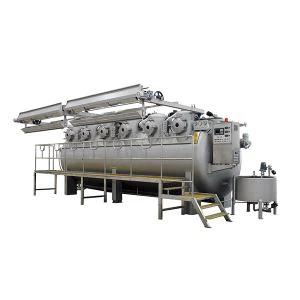
As a supplier of HTHP Soft Flow Dyeing Machines, I understand the critical importance of effectively monitoring the dyeing process. This blog post will delve into the various aspects of monitoring the dyeing process in an HTHP Soft Flow Dyeing Machine, providing you with insights and strategies to ensure high - quality, consistent dyeing results.
1. Understanding the HTHP Soft Flow Dyeing Machine
Before we discuss monitoring, it's essential to have a basic understanding of the HTHP Soft Flow Dyeing Machine. These machines are designed to dye fabrics in a high - temperature, high - pressure environment while using a soft flow of the dye liquor. The soft flow helps to reduce fabric damage and ensure even dye penetration.


The HTHP Soft Flow Fabric Dyeing Machine offers several advantages, such as energy efficiency, reduced water consumption, and the ability to handle a wide range of fabric types. The high - temperature and high - pressure conditions allow for faster dyeing processes and better color fastness.
2. Key Parameters to Monitor
Temperature
Temperature is one of the most crucial parameters in the dyeing process. Different dyes have specific temperature requirements for optimal fixation. In an HTHP Soft Flow Dyeing Machine, the temperature needs to be accurately controlled throughout the process.
- Monitoring Tools: Use high - precision temperature sensors installed at multiple points in the dyeing vessel. These sensors can provide real - time temperature data, which can be displayed on a control panel.
- Temperature Profile: Establish a precise temperature profile for each dyeing recipe. This profile should include the heating rate, holding temperature, and cooling rate. Deviations from the profile can lead to uneven dyeing or poor color fastness.
Pressure
The high - pressure environment in the HTHP Soft Flow Dyeing Machine is necessary for the proper functioning of the dyeing process. Pressure affects the solubility of the dye and the penetration of the dye liquor into the fabric.
- Pressure Sensors: Install reliable pressure sensors to monitor the pressure inside the dyeing vessel. The sensors should be calibrated regularly to ensure accurate readings.
- Pressure Control: Maintain a stable pressure throughout the dyeing process. Sudden pressure changes can cause fabric damage or uneven dyeing.
Flow Rate
The flow rate of the dye liquor is another important parameter. A proper flow rate ensures that the dye liquor is evenly distributed over the fabric, promoting uniform dyeing.
- Flow Meters: Use flow meters to measure the flow rate of the dye liquor. Adjust the flow rate according to the fabric type, dyeing recipe, and machine capacity.
- Flow Pattern: Ensure that the flow pattern of the dye liquor is consistent. Irregular flow patterns can lead to streaks or uneven color distribution on the fabric.
Dye Concentration
Monitoring the dye concentration is essential to achieve the desired color shade. Incorrect dye concentrations can result in color variations between batches.
- Dye Sampling: Take regular samples of the dye liquor during the dyeing process. Analyze these samples using spectrophotometers or other color - measuring devices to determine the dye concentration.
- Dye Addition: Based on the dye concentration analysis, make necessary adjustments to the dye addition. Automated dye dosing systems can be used to ensure accurate and consistent dye addition.
3. Monitoring Systems and Technologies
Real - Time Monitoring Software
Modern HTHP Soft Flow Dyeing Machines are often equipped with real - time monitoring software. This software allows operators to monitor all the key parameters mentioned above from a central control panel.
- Data Logging: The software can log all the process data, including temperature, pressure, flow rate, and dye concentration. This data can be used for quality control, process optimization, and troubleshooting.
- Alarms and Notifications: Set up alarms in the software to alert operators when any parameter goes out of the specified range. This helps to prevent potential problems and ensure the quality of the dyeing process.
Remote Monitoring
Remote monitoring technology enables operators to monitor the dyeing process from a remote location. This is particularly useful for large - scale dyeing facilities or for operators who need to oversee multiple machines.
- Internet Connectivity: Connect the HTHP Soft Flow Dyeing Machine to the internet. This allows operators to access the monitoring data using a web - based interface on a computer or a mobile device.
- Remote Control: Some advanced systems even allow for remote control of the machine. Operators can adjust the parameters, start or stop the process, and receive real - time alerts from anywhere.
4. Quality Control and Process Optimization
Color Measurement
Regularly measure the color of the dyed fabric using color - measuring devices such as spectrophotometers. Compare the measured color with the standard color sample to ensure color accuracy.
- Color Difference Analysis: Calculate the color difference (ΔE) between the dyed fabric and the standard sample. A small ΔE value indicates good color matching.
- Color Correction: If the color difference is outside the acceptable range, make necessary adjustments to the dyeing process, such as adjusting the dye concentration or temperature.
Fabric Inspection
Inspect the dyed fabric for any visible defects, such as streaks, spots, or uneven dyeing. Visual inspection can be complemented by more advanced techniques such as microscopy to detect any internal fabric damage.
- Defect Identification: Identify the root cause of the defects. This could be due to improper parameter control, mechanical issues in the machine, or problems with the dye itself.
- Process Improvement: Based on the defect analysis, make improvements to the dyeing process. This may involve adjusting the machine settings, changing the dyeing recipe, or maintaining the machine more regularly.
5. Maintenance and Calibration
Sensor Calibration
Regular calibration of the temperature sensors, pressure sensors, flow meters, and other monitoring devices is essential to ensure accurate measurements.
- Calibration Schedule: Establish a calibration schedule for each sensor. This schedule should be based on the manufacturer's recommendations and the frequency of use of the machine.
- Calibration Procedures: Follow the proper calibration procedures using certified calibration equipment. Keep records of all calibration activities for quality control purposes.
Machine Maintenance
Proper maintenance of the HTHP Soft Flow Dyeing Machine is crucial for its long - term performance and accurate monitoring.
- Regular Cleaning: Clean the dyeing vessel, pipes, and pumps regularly to prevent the accumulation of dye residues and other contaminants.
- Component Replacement: Replace worn - out components such as seals, gaskets, and valves in a timely manner to ensure the proper functioning of the machine.
6. Conclusion
Monitoring the dyeing process in an HTHP Soft Flow Dyeing Machine is a complex but essential task. By closely monitoring key parameters such as temperature, pressure, flow rate, and dye concentration, and using advanced monitoring systems and technologies, you can ensure high - quality, consistent dyeing results.
At our company, we offer a range of Soft Flow Dyeing Machine For Cotton Twill and Ecofriendly Energy Saving Soft Flow Fabric Dyeing Machine that are designed with state - of - the - art monitoring capabilities. If you are interested in improving your dyeing processes or purchasing a new HTHP Soft Flow Dyeing Machine, we encourage you to contact us for a detailed discussion. Our team of experts can provide you with customized solutions based on your specific needs.
References
- "Textile Dyeing Technology" by A. R. Horrocks and S. C. Anand
- "Handbook of Textile and Industrial Dyeing" edited by M. Clark