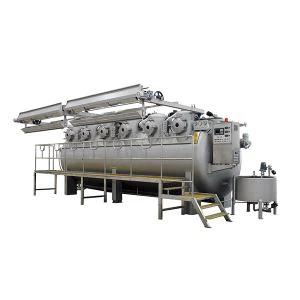
In the textile dyeing industry, the efficiency and quality of dyeing processes are of utmost importance. A Dual Flow Dyeing Machine is a revolutionary piece of equipment that has significantly enhanced these aspects. One of the key features of this machine is its ability to adjust the circulation direction of the dye liquor, which plays a crucial role in achieving uniform dyeing and reducing energy consumption. As a supplier of Dual Flow Dyeing Machines, I am here to delve into the details of how this adjustment is accomplished and its implications for the textile dyeing process.
Understanding the Basics of Dye Liquor Circulation
Before we explore how the circulation direction of the dye liquor is adjusted, it's essential to understand the basic principles of dye liquor circulation in a Dual Flow Dyeing Machine. The dye liquor is a mixture of water, dyes, and chemicals that is used to color the textile materials. In a Dual Flow Dyeing Machine, the dye liquor circulates through the machine in a closed - loop system, continuously coming into contact with the fabric to ensure even dyeing.
The circulation of the dye liquor serves several purposes. Firstly, it helps to distribute the dyes evenly across the fabric surface, preventing color streaks and uneven dyeing. Secondly, it facilitates the transfer of dyes from the liquor to the fabric fibers, which is essential for achieving the desired color intensity. Finally, proper circulation can also help to remove any excess dyes or chemicals from the fabric, improving the overall quality of the dyed product.
Mechanisms for Adjusting the Circulation Direction
There are several mechanisms that a Dual Flow Dyeing Machine employs to adjust the circulation direction of the dye liquor. These mechanisms are designed to be flexible and precise, allowing for customization based on the specific requirements of the dyeing process.
Valve Control
One of the most common methods for adjusting the circulation direction is through the use of valves. Valves are mechanical devices that can open or close to control the flow of fluids. In a Dual Flow Dyeing Machine, a series of valves are strategically placed within the dye liquor circulation system. By opening and closing these valves in a specific sequence, the direction of the dye liquor flow can be altered.
For example, when the valves are set in one configuration, the dye liquor may flow in a clockwise direction through the machine. By changing the valve settings, the flow can be reversed to a counter - clockwise direction. This flexibility allows for different dyeing patterns and can be particularly useful when dealing with complex fabric structures or specific dyeing requirements.
Pump Reversal
Another important mechanism for adjusting the circulation direction is pump reversal. Pumps are responsible for creating the pressure that drives the dye liquor through the circulation system. In a Dual Flow Dyeing Machine, the pumps are designed to be reversible. By reversing the rotation direction of the pump impellers, the flow direction of the dye liquor can be changed.
When the pump rotates in one direction, it pushes the dye liquor through the system in a particular path. Reversing the pump causes the dye liquor to flow in the opposite direction. This method is often used in conjunction with valve control to achieve more precise and efficient circulation direction adjustment.
Programmable Logic Controllers (PLCs)
Modern Dual Flow Dyeing Machines are often equipped with Programmable Logic Controllers (PLCs). These are electronic devices that can be programmed to control various functions of the machine, including the adjustment of the dye liquor circulation direction.
PLCs can store a series of pre - programmed sequences that determine when and how the valves and pumps should be operated to change the circulation direction. This allows for automated and repeatable dyeing processes, reducing the need for manual intervention and ensuring consistent dyeing results. For example, a specific dyeing recipe may require the dye liquor to change circulation direction at certain intervals during the dyeing process. The PLC can be programmed to execute this sequence accurately, providing a high level of control and precision.
Benefits of Adjusting the Circulation Direction
Adjusting the circulation direction of the dye liquor in a Dual Flow Dyeing Machine offers several significant benefits for the textile dyeing process.
Uniform Dyeing
One of the primary benefits is improved dye uniformity. By changing the circulation direction, the dye liquor comes into contact with the fabric from different angles and directions. This helps to ensure that all parts of the fabric are evenly exposed to the dyes, reducing the likelihood of color variations and streaks.
For example, if the dye liquor always flows in the same direction, there may be areas of the fabric that are not thoroughly penetrated by the dyes. By reversing the circulation direction, these areas can be reached, resulting in a more consistent color across the entire fabric surface.
Reduced Energy Consumption
Adjusting the circulation direction can also lead to energy savings. When the dye liquor circulates in a single direction for an extended period, it may create areas of high and low pressure within the system. These pressure differentials can cause the pumps to work harder to maintain the flow, increasing energy consumption.
By periodically changing the circulation direction, the pressure distribution within the system can be balanced, reducing the load on the pumps and lowering energy usage. This not only helps to reduce operating costs but also makes the dyeing process more environmentally friendly.
Enhanced Dye Penetration
Changing the circulation direction can improve dye penetration into the fabric fibers. Different circulation directions can create different flow patterns within the fabric, allowing the dyes to reach deeper into the fiber structure. This is particularly important for thick or densely woven fabrics, where achieving uniform dye penetration can be challenging.
Our Dual Flow Dyeing Machine Offerings
As a supplier of Dual Flow Dyeing Machines, we offer a range of high - quality machines that are designed to provide efficient and precise control over the dye liquor circulation direction. Our machines are equipped with the latest valve control systems, reversible pumps, and advanced PLCs to ensure optimal performance.
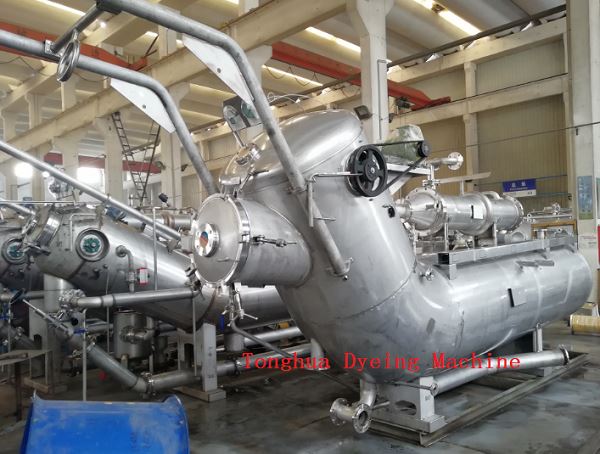

We also offer a variety of models to suit different production requirements. For example, our HTHP Double - ring Environmentally Friendly Dyeing Machine is designed for large - scale production with a focus on environmental sustainability. It features advanced circulation control mechanisms that help to reduce water and energy consumption while maintaining high - quality dyeing results.
Our HTHP Rapid Jet Dyeing Machine is ideal for high - speed dyeing processes. It can quickly adjust the dye liquor circulation direction to meet the fast - paced requirements of modern textile production, providing rapid and efficient dyeing.
For those working with specific fabric types, such as milk silk fabric, our Jet Dyeing Machine For Milk Silk Fabric offers specialized features to ensure gentle and precise dyeing. The adjustable circulation direction allows for careful control of the dyeing process, protecting the delicate fibers of milk silk fabric.
Conclusion and Call to Action
In conclusion, the ability to adjust the circulation direction of the dye liquor in a Dual Flow Dyeing Machine is a crucial feature that offers numerous benefits for the textile dyeing industry. From improved dye uniformity to reduced energy consumption, this technology plays a vital role in enhancing the efficiency and quality of the dyeing process.
If you are in the textile dyeing business and are looking to upgrade your dyeing equipment or improve your dyeing processes, our Dual Flow Dyeing Machines are an excellent choice. We have the expertise and the range of products to meet your specific needs. Whether you are a small - scale artisanal dyer or a large - scale textile manufacturer, our machines can help you achieve better dyeing results.
We invite you to contact us to discuss your requirements and explore how our Dual Flow Dyeing Machines can benefit your business. Our team of experts is ready to provide you with detailed information, technical support, and customized solutions. Let's work together to take your textile dyeing processes to the next level.
References
- Textile Dyeing Technology Handbook, Third Edition. Edited by A. K. M. Nurul Amin. Woodhead Publishing, 2019.
- Principles of Textile Coloration. By M. Lewis. Society of Dyers and Colourists, 2007.
- Handbook of Textile and Industrial Dyeing. Edited by M. Clark. Woodhead Publishing, 2011.