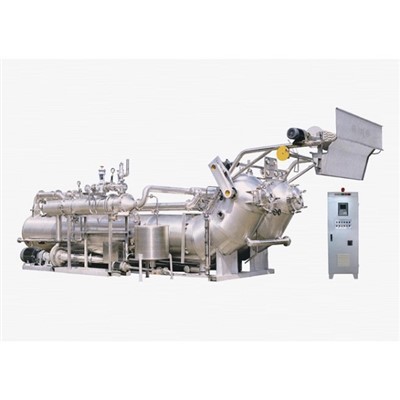
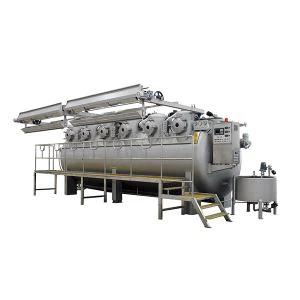
Fabric tension plays a crucial role in the dyeing process, especially when it comes to a Dual Flow Dyeing Machine. As a supplier of Dual Flow Dyeing Machines, I have witnessed firsthand how the right or wrong fabric tension can significantly impact the quality and efficiency of the dyeing operation. In this blog, I will delve into the effects of fabric tension on the dyeing process in a Dual Flow Dyeing Machine.
Impact on Color Uniformity
One of the primary goals in any dyeing process is to achieve uniform color across the fabric. Fabric tension can have a direct influence on this outcome. When the fabric is under too much tension in the Dual Flow Dyeing Machine, it may stretch unevenly. This stretching can cause variations in the fabric's density, which in turn affects how the dye is absorbed. Areas that are more stretched may absorb less dye, resulting in lighter spots, while less - stretched areas may take up more dye, leading to darker patches.
On the other hand, if the fabric tension is too low, the fabric may bunch up or wrinkle inside the machine. These wrinkles can act as barriers, preventing the dye liquor from evenly penetrating the fabric. As a result, the dyed fabric may have streaks or uneven color distribution. To ensure optimal color uniformity, it is essential to maintain a consistent and appropriate level of fabric tension throughout the dyeing process. This allows the dye liquor to flow freely and evenly across the fabric surface, promoting uniform dye absorption.
Influence on Dye Penetration
Dye penetration is another critical aspect of the dyeing process. The Dual Flow Dyeing Machine is designed to provide efficient and thorough dyeing by circulating the dye liquor in two directions. However, fabric tension can either facilitate or hinder this penetration.
When the fabric is under proper tension, it is held in a flat and stable position. This allows the dye liquor to easily penetrate the fabric fibers from both sides, as the Dual Flow Dyeing Machine is designed to operate. The dye molecules can diffuse more effectively into the fabric, resulting in deeper and more consistent dyeing.


Conversely, excessive tension can compress the fabric fibers, reducing the spaces between them. This makes it more difficult for the dye liquor to penetrate the fabric, leading to superficial dyeing. The color may only be present on the surface of the fabric, and it may fade more quickly over time. Insufficient tension, as mentioned earlier, can cause wrinkles and folds, which also impede dye penetration. The dye liquor may not be able to reach all areas of the fabric, resulting in incomplete dyeing.
Effect on Fabric Integrity
The fabric tension in a Dual Flow Dyeing Machine can also have an impact on the integrity of the fabric itself. If the tension is too high, the fabric may be subjected to excessive stress during the dyeing process. This can cause the fabric to tear or break, especially if it is a delicate or lightweight material. Additionally, high - tension can damage the fabric's structure, such as weakening the yarns or altering the fabric's texture.
Low tension, while not as likely to cause physical damage, can still affect the fabric's appearance and performance. As mentioned, wrinkling due to low tension can lead to uneven dyeing, but it can also cause permanent creases in the fabric. These creases may be difficult to remove and can affect the overall quality and usability of the dyed fabric.
Impact on Dyeing Efficiency
Efficiency is a key consideration in any industrial dyeing process. The Dual Flow Dyeing Machine is designed to be a high - throughput and energy - efficient solution. Fabric tension can influence both the speed and the energy consumption of the dyeing process.
When the fabric tension is optimized, the fabric moves smoothly through the machine. This allows for a faster dyeing cycle, as there are no delays caused by fabric bunching or uneven movement. The dye liquor can be circulated more effectively, reducing the time required for the dye to be absorbed by the fabric. As a result, more fabric can be dyed in a shorter period, increasing the overall production output.
In terms of energy consumption, proper fabric tension can also lead to savings. When the fabric moves smoothly, the machine does not have to work as hard to circulate the dye liquor. This reduces the energy required to operate the pumps and other components of the Dual Flow Dyeing Machine. On the other hand, incorrect fabric tension can cause the machine to work inefficiently, leading to higher energy costs and longer dyeing times.
Maintaining Optimal Fabric Tension
As a supplier of Dual Flow Dyeing Machines, we understand the importance of maintaining optimal fabric tension. Our machines are equipped with advanced tension control systems that allow operators to adjust and monitor the fabric tension throughout the dyeing process. These systems use sensors to measure the tension and automatically make adjustments to ensure a consistent and appropriate level of tension.
In addition to the built - in tension control systems, we also provide training and support to our customers on how to set up and operate the machines for optimal fabric tension. We recommend that operators consider factors such as the type of fabric, its weight, and the dyeing recipe when setting the tension. Different fabrics may require different levels of tension to achieve the best results.
Conclusion
In conclusion, fabric tension has a profound effect on the dyeing process in a Dual Flow Dyeing Machine. It impacts color uniformity, dye penetration, fabric integrity, and dyeing efficiency. As a supplier, we are committed to providing our customers with high - quality machines that can help them achieve optimal fabric tension and, in turn, high - quality dyed fabrics.
If you are interested in learning more about our Dual Flow Dyeing Machines or have any questions about the dyeing process, we encourage you to [contact us for procurement and further discussion]. Our team of experts is ready to assist you in finding the best solution for your dyeing needs.
We also offer a range of other dyeing machines, such as the HTHP Knit Fabric Dyeing Machine, the Jet Dyeing Machine For Milk Silk Fabric, and the High - Pressure Rapid Dyeing Machine For Mesh Fabric Dyeing. These machines are designed to meet the specific requirements of different fabric types and dyeing processes.
References
- Lewis, M. (2007). Textile Coloration. Woodhead Publishing.
- Shore, J. (2008). Science of Coloration. Society of Dyers and Colourists.
- Burkinshaw, S. M. (2015). Dyeing and Chemical Technology of Textile Fibres. Elsevier.