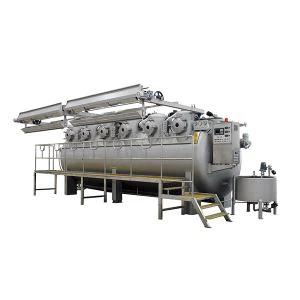
Hey there! As a supplier of High Pressure Rapid Jet Dyeing Machines, I've seen firsthand how different fabric properties can impact the dyeing process. One property that often doesn't get enough attention is fabric elasticity. In this blog, I'm gonna talk about how fabric elasticity affects the dyeing process in a High Pressure Rapid Jet Dyeing Machine.
Understanding Fabric Elasticity
Before we dive into the impact on dyeing, let's quickly understand what fabric elasticity is. Elasticity refers to a fabric's ability to stretch and then return to its original shape. Fabrics with high elasticity can stretch a lot without breaking, while those with low elasticity stretch less. Materials like spandex are known for their high elasticity, while cotton typically has lower elasticity.
How Elasticity Affects the Dyeing Process
1. Flow and Circulation
In a High Pressure Rapid Jet Dyeing Machine, the fabric moves through the dye liquor at high speed. Elastic fabrics can change shape more easily during this movement. When the fabric stretches, it can create uneven flow paths for the dye liquor. This might cause the dye to distribute unevenly on the fabric. For example, if the fabric stretches in some areas more than others, the dye might flow more quickly through the stretched parts, leading to over - dyeing in those spots. On the other hand, areas that don't stretch as much might receive less dye, resulting in lighter colors.
2. Dye Uptake
Elastic fabrics have a different molecular structure compared to non - elastic ones. The stretching and contracting of elastic fabrics can affect how the dye molecules attach to the fabric fibers. When the fabric is stretched, the spaces between the fibers may increase, allowing more dye molecules to penetrate. However, when the fabric returns to its original shape, some of the dye molecules might be squeezed out. This can lead to inconsistent dye uptake across the fabric. For instance, in a garment made of elastic fabric, the dye might be more concentrated in areas that are frequently stretched during the dyeing process.
3. Mechanical Stress
The high - pressure environment in the dyeing machine puts mechanical stress on the fabric. Elastic fabrics are more flexible and can withstand more stretching and bending without damage. But this also means that they are more likely to deform during the dyeing process. If the fabric deforms too much, it can cause problems like creasing. Creases can prevent the dye from reaching all parts of the fabric evenly, leading to color variations. For example, a creased area might have a lighter color because the dye couldn't penetrate properly.
4. Temperature and Pressure Resistance
Elastic fabrics often have different temperature and pressure resistance compared to non - elastic fabrics. In a High Pressure Rapid Jet Dyeing Machine, high temperatures and pressures are used to speed up the dyeing process. Some elastic materials, especially those containing synthetic elastomers, might start to lose their elasticity or even melt at high temperatures. This can not only ruin the fabric but also affect the dyeing process. If the fabric melts or deforms due to high temperatures, it can clog the machine and disrupt the flow of the dye liquor.
Solutions and Considerations for Dyeing Elastic Fabrics
1. Adjusting Dyeing Parameters
To deal with the issues caused by fabric elasticity, we need to adjust the dyeing parameters. For example, we can reduce the speed of the fabric movement in the machine to minimize the stretching and uneven flow of the dye liquor. We can also lower the pressure slightly to reduce the mechanical stress on the elastic fabric. Additionally, we might need to adjust the temperature and dyeing time. A lower temperature and longer dyeing time can help the dye penetrate the fabric more evenly without causing damage to the elastic fibers.
2. Using Specialized Dyes
There are specialized dyes available for elastic fabrics. These dyes are designed to have better affinity for elastic fibers and can adhere to the fabric more evenly. They are also more resistant to the changes in the fabric's shape during the dyeing process. By using these dyes, we can improve the color fastness and uniformity of the dyed elastic fabric.
3. Pre - Treatment
Pre - treating the elastic fabric before dyeing can also help. For example, we can use a softener to make the fabric more flexible and reduce the risk of creasing. We can also use a fixing agent to help the dye molecules attach to the fabric fibers more firmly. Pre - treatment can improve the overall quality of the dyed fabric.


Our High Pressure Rapid Jet Dyeing Machines and Elastic Fabric Dyeing
At our company, we understand the challenges of dyeing elastic fabrics. That's why our High Pressure Rapid Jet Dyeing Machines are designed with features to handle these issues. Our machines allow for precise control of the fabric movement speed, pressure, temperature, and dyeing time. This enables us to customize the dyeing process according to the specific elasticity of the fabric.
We also offer technical support to our customers. Our team of experts can help you choose the right dyeing parameters and dyes for your elastic fabrics. Whether you are dyeing High Temperature Dyeing Machine suitable fabrics, Jet Dyeing Machine For Polar Fleece materials, or High Temperature High Pressure Dyeing Machine - compatible elastic fabrics, we've got you covered.
Why Choose Our Machines for Elastic Fabric Dyeing
- Precision Control: Our machines offer accurate control over all the important dyeing parameters, ensuring even dye distribution on elastic fabrics.
- Versatility: They can handle a wide range of elastic fabrics, from those with low elasticity to highly stretchy materials.
- Technical Support: Our experienced team is always ready to provide you with advice and assistance to optimize the dyeing process.
Contact Us for Your Dyeing Needs
If you're in the business of dyeing elastic fabrics and are looking for a reliable High Pressure Rapid Jet Dyeing Machine, we'd love to hear from you. We can help you find the perfect solution for your specific requirements. Whether you have questions about the machine, need help with dyeing parameters, or want to discuss a custom dyeing project, just reach out to us. We're committed to providing you with the best products and services to ensure the success of your dyeing operations.
References
- Textile Dyeing Handbook, Third Edition. This comprehensive handbook provides in - depth knowledge about the textile dyeing process, including the impact of fabric properties on dyeing.
- Journal of Applied Polymer Science. Many research articles in this journal discuss the interaction between dyes and different types of fabric fibers, including elastic ones.
- International Textile Bulletin. It contains industry - related news and research findings on textile dyeing and finishing, which can be very useful for understanding the latest trends in dyeing elastic fabrics.