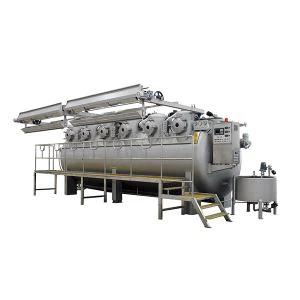
As a supplier of Jet Dyeing Machines, I have witnessed firsthand the crucial role that level sensors play in these advanced textile dyeing systems. The Jet Dyeing Machine is a complex piece of equipment designed to achieve uniform and efficient dyeing of various fabrics. In this blog post, I will explore the significance of level sensors in Jet Dyeing Machines, including their functions, benefits, and impact on the overall dyeing process.
Understanding the Jet Dyeing Machine
Before delving into the role of level sensors, it is essential to understand the basic operation of a Jet Dyeing Machine. These machines use a high - pressure jet of dye liquor to circulate around the fabric, which is typically loaded into a dyeing vessel. The fabric moves continuously through the liquor, ensuring that the dye is evenly distributed across its surface. This process is highly efficient and can produce high - quality dyed fabrics in a relatively short time.
There are different types of Jet Dyeing Machines available in the market, each designed for specific fabric types and dyeing requirements. For example, the High Pressure Jet Dyeing Machine is suitable for heavy - duty dyeing processes, while the High - Pressure Rapid Dyeing Machine For RPET Fabric Suede Fabric is specifically designed for dyeing RPET and suede fabrics at high speeds. The TH - VT High Temperature Dyeing Machine is used for dyeing processes that require high temperatures.
The Role of Level Sensors in Jet Dyeing Machines
1. Maintaining Optimal Liquor Level
One of the primary functions of a level sensor in a Jet Dyeing Machine is to maintain the optimal level of dye liquor in the dyeing vessel. The correct liquor level is crucial for several reasons. Firstly, it ensures that the fabric is fully submerged in the dye liquor, allowing for uniform dye penetration. If the liquor level is too low, parts of the fabric may not come into contact with the dye, resulting in uneven dyeing. On the other hand, if the level is too high, it can lead to excessive use of dye and water, increasing costs and environmental impact.
The level sensor continuously monitors the liquor level and sends signals to the machine's control system. If the level deviates from the set point, the control system can adjust the inflow or outflow of the dye liquor to maintain the correct level. This real - time monitoring and adjustment ensure consistent dyeing quality throughout the process.
2. Preventing Machine Damage
A proper liquor level also helps in preventing damage to the Jet Dyeing Machine. When the liquor level is too low, the pump that circulates the dye liquor may run dry. Running a pump dry can cause overheating and mechanical failure, leading to costly repairs and downtime. The level sensor alerts the operator or the control system when the level reaches a critical low point, allowing them to take corrective action before any damage occurs.
Similarly, if the liquor level is too high, it can cause overflow, which can damage the surrounding equipment and create a safety hazard. The level sensor can detect the high - level condition and trigger an alarm or automatically stop the inflow of the dye liquor to prevent overflow.
3. Controlling Dye and Chemical Dosing
In addition to maintaining the liquor level, level sensors also play a role in controlling the dosing of dyes and chemicals. The amount of dye and chemicals required for the dyeing process depends on the volume of the dye liquor. By accurately measuring the liquor level, the level sensor provides the necessary data for the dosing system to calculate and dispense the correct amount of dyes and chemicals.
This precise dosing is essential for achieving consistent color quality in the dyed fabrics. It also helps in reducing waste by ensuring that only the required amount of dyes and chemicals are used. Incorrect dosing can lead to color variations, poor color fastness, and increased environmental pollution.
4. Improving Overall Process Efficiency
The use of level sensors in Jet Dyeing Machines significantly improves the overall process efficiency. By maintaining the optimal liquor level and controlling dye and chemical dosing, the machine can operate at its maximum capacity with minimal waste. This leads to increased productivity and reduced production costs.
Moreover, the real - time monitoring provided by the level sensors allows for quick identification and resolution of any issues that may arise during the dyeing process. Operators can make timely adjustments, ensuring that the dyeing process runs smoothly and without interruptions.
Benefits of Using Level Sensors in Jet Dyeing Machines
1. Quality Assurance
The ability to maintain a consistent liquor level and control dye dosing directly translates into higher - quality dyed fabrics. Customers demand uniform color and good color fastness in their textiles, and level sensors help in meeting these quality standards. By ensuring that the dyeing process is carried out under optimal conditions, the Jet Dyeing Machine can produce fabrics that meet or exceed customer expectations.
2. Cost Savings
Level sensors contribute to cost savings in several ways. As mentioned earlier, they prevent over - use of dyes, chemicals, and water, reducing raw material costs. They also help in preventing machine damage, which can save on repair and replacement costs. Additionally, the improved process efficiency means that more fabrics can be dyed in less time, increasing the overall output per unit of time and reducing labor costs.
3. Environmental Sustainability
In today's world, environmental sustainability is a key concern for the textile industry. By reducing the use of dyes, chemicals, and water, level sensors help in minimizing the environmental impact of the dyeing process. Less waste is generated, which is beneficial for both the environment and the reputation of the textile manufacturer.
Conclusion
In conclusion, level sensors are an indispensable component of Jet Dyeing Machines. Their role in maintaining optimal liquor levels, preventing machine damage, controlling dye and chemical dosing, and improving process efficiency cannot be overstated. As a Jet Dyeing Machine supplier, I understand the importance of providing our customers with machines that are equipped with high - quality level sensors. These sensors not only enhance the performance of the machines but also contribute to the production of high - quality, cost - effective, and environmentally friendly dyed fabrics.


If you are in the market for a Jet Dyeing Machine or want to upgrade your existing equipment, I encourage you to get in touch for a consultation. We can provide you with detailed information about our products and how the use of advanced level sensors can benefit your dyeing process. You can reach out to us to start a discussion about your specific requirements and explore the possibilities of improving your textile dyeing operations.
References
- Textile Dyeing Technology Handbook.
- Journal of Textile Engineering and Dyeing Science