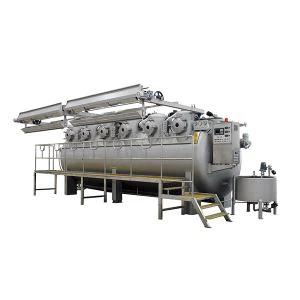
Hey there! As a supplier of HTHP Dual Flow Fabric Dyeing Machines, I often get asked about the ventilation requirements during operation. So, I thought I'd share some insights on this important topic.
First off, let's understand why ventilation is crucial for an HTHP Dual Flow Fabric Dyeing Machine. These machines operate under high temperature and high pressure conditions. During the dyeing process, various chemicals are used, and steam is generated. Without proper ventilation, the accumulated heat, moisture, and chemical fumes can pose several problems.
One of the main issues is the health risk to the operators. Chemical fumes can be harmful if inhaled over a long period. For example, some dyes and auxiliaries may contain volatile organic compounds (VOCs) that can cause respiratory problems, eye irritation, and other health issues. Adequate ventilation helps to remove these fumes from the working area, keeping the operators safe and healthy.


Another problem is the impact on the machine itself. Excessive heat and moisture can cause corrosion and damage to the machine's components. The high humidity can also lead to electrical malfunctions, reducing the machine's lifespan and increasing maintenance costs. Good ventilation helps to maintain a stable environment around the machine, preventing these issues from occurring.
So, what are the actual ventilation requirements? Well, it depends on several factors, such as the size of the machine, the type of dyes and chemicals used, and the operating conditions. Generally, the ventilation system should be able to remove the heat, moisture, and fumes generated during the dyeing process effectively.
A common rule of thumb is to have a ventilation rate of at least 6 - 8 air changes per hour in the dyeing area. This means that the entire volume of air in the room should be replaced 6 - 8 times every hour. To achieve this, you can use a combination of exhaust fans and supply fans.
The exhaust fans should be installed near the machine to capture the fumes and steam directly at the source. They should be sized appropriately to handle the volume of air generated by the machine. For larger HTHP Dual Flow Fabric Dyeing Machines, multiple exhaust fans may be required.
On the other hand, the supply fans are used to bring in fresh air into the room. This helps to maintain a positive pressure inside the room, preventing the fumes from leaking out into other areas. The supply fans should be located in a way that ensures proper air circulation throughout the room.
In addition to the ventilation rate, the quality of the air being exhausted is also important. The exhaust air should be filtered to remove any particulate matter and chemicals before being released into the environment. This not only helps to protect the environment but also ensures compliance with environmental regulations.
Now, let me introduce some of our related products. We have the TH-VA Series High-Pressure Rapid Dyeing Machine, which is designed for high - efficiency dyeing. It has advanced features that make it a great choice for various fabric dyeing applications. If you're dealing with polar fleece, our Jet Dyeing Machine For Polar Fleece is specifically tailored to meet the unique requirements of this fabric. And of course, our HTHP Jet Dyeing Machine offers high - pressure and high - temperature dyeing capabilities with excellent performance.
When setting up the ventilation system for your HTHP Dual Flow Fabric Dyeing Machine, it's also important to consider the layout of the dyeing area. The machine should be placed in a well - ventilated area, away from any obstructions that may block the air flow. There should be enough space around the machine for proper maintenance and access to the ventilation ducts.
Regular maintenance of the ventilation system is also essential. The fans should be checked regularly for proper operation, and the filters should be cleaned or replaced as needed. This ensures that the ventilation system continues to function effectively over time.
In conclusion, proper ventilation is a must - have for the operation of an HTHP Dual Flow Fabric Dyeing Machine. It protects the health of the operators, extends the lifespan of the machine, and helps to comply with environmental regulations. If you're in the market for an HTHP Dual Flow Fabric Dyeing Machine or need advice on ventilation requirements, don't hesitate to reach out. We're here to help you make the right choice for your dyeing needs.
References:
- Textile Dyeing Machinery Handbook
- Occupational Safety and Health Guidelines for Textile Manufacturing
So, if you're interested in our products or have any questions about ventilation requirements for HTHP Dual Flow Fabric Dyeing Machines, feel free to contact us for a purchase negotiation. We look forward to working with you!