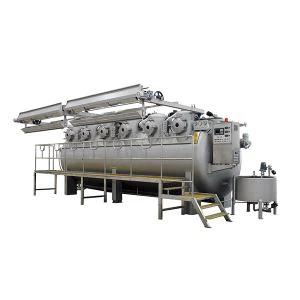
The textile industry has witnessed remarkable advancements over the years, and one of the key innovations in fabric dyeing is the Rapid Jet Fabric Dyeing Machine. As a leading supplier of these cutting - edge machines, I am excited to delve into the working principle of the Rapid Jet Fabric Dyeing Machine.

Basic Components and Their Functions
Before we discuss the working principle, it's essential to understand the main components of a Rapid Jet Fabric Dyeing Machine. These machines typically consist of a dyeing tank, a fabric guide system, a jet nozzle, a circulation pump, and a heating and cooling system.
The dyeing tank is where the fabric and the dye liquor are held. It is designed to withstand high pressures and temperatures, ensuring that the dyeing process occurs under optimal conditions. The fabric guide system is responsible for guiding the fabric through the machine in a continuous loop. This system ensures that the fabric moves smoothly and evenly through the dyeing tank, preventing tangling and uneven dyeing.
The jet nozzle is a crucial component of the machine. It is responsible for injecting the dye liquor onto the fabric at high speed. The high - velocity jet of dye liquor helps to penetrate the fabric fibers, ensuring thorough and uniform dyeing. The circulation pump is used to circulate the dye liquor throughout the system. It maintains a constant flow of dye liquor, ensuring that the dye is evenly distributed in the tank and that the fabric is continuously exposed to fresh dye.
The heating and cooling system is used to control the temperature of the dye liquor. Different dyes require different temperatures for optimal dyeing, and this system allows for precise temperature control throughout the dyeing process.
The Working Process
The working process of the Rapid Jet Fabric Dyeing Machine can be divided into several stages: loading, pre - treatment, dyeing, rinsing, and unloading.
Loading
The first step is to load the fabric into the machine. The fabric is carefully fed into the fabric guide system, which then guides it into the dyeing tank. The amount of fabric loaded into the machine depends on the machine's capacity and the type of fabric being dyed. It is important to ensure that the fabric is evenly distributed in the tank to avoid uneven dyeing.
Pre - treatment
Before the actual dyeing process begins, the fabric may undergo a pre - treatment step. This step involves treating the fabric with chemicals to remove any impurities, such as dirt, oil, or sizing agents. Pre - treatment also helps to improve the fabric's absorbency, allowing the dye to penetrate the fibers more easily. The pre - treatment solution is circulated through the machine using the circulation pump, and the temperature is adjusted according to the requirements of the fabric and the pre - treatment chemicals.
Dyeing
Once the fabric is pre - treated, the dyeing process begins. The dye is first dissolved in a suitable solvent to form a dye liquor. The dye liquor is then pumped into the dyeing tank through the jet nozzle. The jet nozzle sprays the dye liquor onto the fabric at high speed, creating a turbulent flow that helps the dye to penetrate the fabric fibers.
The circulation pump continuously circulates the dye liquor throughout the system, ensuring that the dye is evenly distributed in the tank. The temperature of the dye liquor is carefully controlled during the dyeing process. For most synthetic fabrics, high - temperature dyeing is required to ensure that the dye molecules bond with the fabric fibers. The heating and cooling system adjusts the temperature of the dye liquor according to the dyeing requirements.
During the dyeing process, the fabric moves through the dyeing tank in a continuous loop, constantly being exposed to the dye liquor. The dyeing time depends on the type of fabric, the color of the dye, and the desired shade. Once the desired color is achieved, the dyeing process is stopped.
Rinsing
After the dyeing process is complete, the fabric needs to be rinsed to remove any excess dye and chemicals. Rinsing is typically done in multiple stages, using clean water. The water is circulated through the machine using the circulation pump, and the fabric is continuously rinsed until the water runs clear. This ensures that the final product is free from any residual dye or chemicals.

Unloading
Once the rinsing process is complete, the fabric is unloaded from the machine. The fabric guide system guides the fabric out of the dyeing tank, and it can then be further processed, such as drying or finishing.
Advantages of the Rapid Jet Fabric Dyeing Machine
The Rapid Jet Fabric Dyeing Machine offers several advantages over traditional dyeing methods. Firstly, it provides a high - speed and efficient dyeing process. The high - velocity jet of dye liquor ensures that the dye penetrates the fabric fibers quickly, reducing the dyeing time. This results in higher productivity and lower production costs.
Secondly, the machine offers excellent dyeing uniformity. The continuous circulation of the dye liquor and the even movement of the fabric through the machine ensure that the dye is evenly distributed on the fabric, resulting in a consistent color across the entire fabric surface.
Thirdly, the Rapid Jet Fabric Dyeing Machine is highly versatile. It can be used to dye a wide range of fabrics, including natural fibers such as cotton and silk, as well as synthetic fibers such as polyester and nylon. Different types of dyes can also be used in the machine, allowing for a variety of color options.
Related Products
If you are interested in our Rapid Jet Fabric Dyeing Machine, we also offer a range of related products. For example, we have the Jet Dyeing Machine For Velboa Fabric, which is specifically designed for dyeing velboa fabric. This machine ensures excellent dyeing results for this soft and plush fabric.
We also have the High - Temperature And High - Pressure Dyeing Machine For Microfiber Clean Cloth. This machine is suitable for dyeing microfiber clean cloth, which requires high - temperature and high - pressure conditions for optimal dyeing.
Another product is the High Temp Flexible Jet Dyeing Machine. This machine offers flexibility in dyeing different types of fabrics at high temperatures, making it a great choice for textile manufacturers with diverse dyeing needs.
Contact for Purchase and Negotiation
If you are in the textile industry and are looking for a reliable and efficient fabric dyeing solution, our Rapid Jet Fabric Dyeing Machine is the perfect choice. We are committed to providing high - quality machines and excellent customer service. Whether you are a small - scale textile manufacturer or a large - scale industrial enterprise, we can meet your dyeing requirements.
We invite you to contact us to discuss your specific needs and to negotiate the best purchase terms. Our team of experts will be happy to assist you in selecting the most suitable machine for your business and to provide you with detailed technical information and after - sales support.
References
- Textile Dyeing Technology Handbook, Second Edition, Edited by M. M. Rahman
- Fundamentals of Textile Coloration, by Dr. S. K. Behera