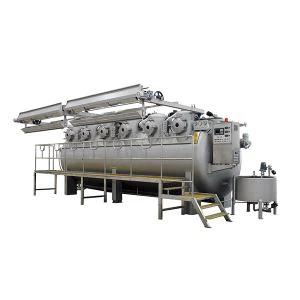
Hey there! As a supplier of HTHP Soft Flow Fabric Dyeing Machine, I often get asked about what kind of dyes are suitable for these machines. Well, let's dive right into it and explore the different types of dyes that work well with HTHP Soft Flow Fabric Dyeing Machines.
First off, let's understand what an HTHP Soft Flow Fabric Dyeing Machine is. It's a high - tech piece of equipment that offers a gentle yet efficient way to dye fabrics. The "HTHP" stands for High Temperature High Pressure, which allows for better dye penetration and fixation. You can learn more about it on our website: HTHP Soft Flow Dyeing Machine. And if you're interested in the broader category, check out Soft Flow Fabric Dyeing Machine.
Reactive Dyes
Reactive dyes are a popular choice for HTHP Soft Flow Fabric Dyeing Machines. These dyes form a chemical bond with the fabric fibers, which results in excellent color fastness. They work great on natural fibers like cotton, linen, and silk, as well as some synthetic fibers.
One of the main advantages of reactive dyes is their wide range of colors. You can achieve bright, vivid shades that are long - lasting. When using reactive dyes in an HTHP Soft Flow Dyeing Machine, the high temperature and pressure help the dye molecules to penetrate deeper into the fibers. This ensures a more even and thorough dyeing process.
However, reactive dyes do require some specific conditions. They usually need an alkaline environment for the reaction to take place. Also, proper washing after dyeing is crucial to remove any unfixed dye. If not washed properly, the unfixed dye can cause color bleeding over time.
Disperse Dyes
Disperse dyes are another top pick, especially when it comes to dyeing synthetic fibers such as polyester. These dyes are insoluble in water, but they can be dispersed in a fine suspension. In an HTHP Soft Flow Dyeing Machine, the high temperature helps the disperse dyes to transfer from the dye bath to the fabric fibers.
Disperse dyes offer excellent color fastness to light and washing. They can produce a wide variety of colors, from pastels to deep, rich tones. The high - pressure environment in the machine ensures that the dye particles are forced into the fibers, resulting in a more intense and uniform color.


But there are some considerations. Disperse dyes may require a carrier or a special dyeing assistant to improve the dyeing process. Also, the dyeing temperature and time need to be carefully controlled to avoid over - dyeing or uneven color distribution.
Acid Dyes
Acid dyes are suitable for dyeing protein - based fibers like wool, silk, and nylon. In an HTHP Soft Flow Dyeing Machine, the acidic conditions in the dye bath help the acid dyes to attach to the fiber molecules.
These dyes are known for their bright and vibrant colors. They offer good color fastness, especially to washing. The high - temperature and high - pressure environment in the machine can enhance the dye uptake, resulting in a more saturated color.
However, acid dyes can be sensitive to pH changes. The pH of the dye bath needs to be carefully adjusted to ensure optimal dyeing results. Also, some acid dyes may require a mordant or a fixing agent to improve the color fastness further.
Vat Dyes
Vat dyes are commonly used for dyeing cotton and other cellulose fibers. These dyes are insoluble in water in their original form, but they can be reduced to a soluble leuco form in an alkaline and reducing environment. In an HTHP Soft Flow Dyeing Machine, the high temperature and pressure can speed up the reduction and oxidation processes.
Vat dyes are famous for their excellent color fastness, especially to light and washing. They can produce deep, rich colors that are very durable. However, the dyeing process with vat dyes is more complex compared to other types of dyes. It involves multiple steps, including reduction, dyeing, and oxidation.
Direct Dyes
Direct dyes are relatively easy to use and are suitable for a variety of fibers, including cotton, rayon, and silk. They can be applied in a simple dye bath without the need for complex chemical reactions. In an HTHP Soft Flow Dyeing Machine, the high temperature and pressure can improve the dye penetration and fixation.
Direct dyes offer a wide range of colors, but their color fastness is generally lower compared to other types of dyes. They may require a fixing agent or a after - treatment to improve the color fastness.
Now, let's talk about some factors to consider when choosing dyes for your HTHP Soft Flow Fabric Dyeing Machine.
Fiber Type
The type of fiber you are dyeing is the most important factor. Different fibers have different chemical and physical properties, which determine the compatibility with different dyes. For example, as mentioned earlier, reactive dyes work well with natural fibers, while disperse dyes are better for synthetic fibers.
Color Requirements
Your color requirements will also play a role in dye selection. If you need bright, vivid colors, reactive dyes or acid dyes may be a good choice. If you want deep, rich colors, vat dyes or disperse dyes could be more suitable.
Color Fastness
The level of color fastness you need depends on the end - use of the dyed fabric. If the fabric will be exposed to sunlight or frequent washing, you'll want to choose dyes with high color fastness, such as disperse dyes or vat dyes.
Cost
Cost is always a consideration. Some dyes, like vat dyes, can be more expensive due to their complex manufacturing process and dyeing requirements. You need to balance the cost with the quality and performance of the dyes.
When choosing the right dyes for your HTHP Soft Flow Fabric Dyeing Machine, it's also a good idea to conduct some small - scale tests. This will help you determine the best dyeing conditions, including temperature, time, and dye concentration.
In conclusion, there are several types of dyes that are suitable for HTHP Soft Flow Fabric Dyeing Machines, each with its own advantages and considerations. Whether you're dyeing natural fibers, synthetic fibers, or a blend, there's a dye out there that can meet your needs.
If you're in the market for an HTHP Soft Flow Fabric Dyeing Machine or have any questions about dye selection, feel free to reach out to us. We're here to help you make the best choices for your dyeing operations. You can also learn more about our Dyeing Machine For Tencel High Temperature Rapid Dyeing Machine.
References
- "Textile Dyeing and Finishing" by Peter E. Townsend
- "Handbook of Textile and Industrial Dyeing" edited by M. Lewis