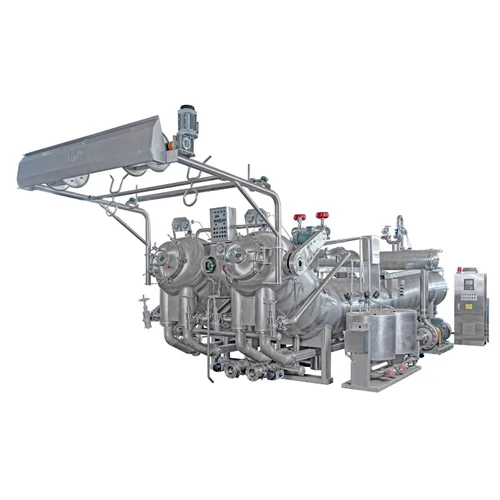
The inspection of the HTHP dyeing machine after cleaning can start from the following aspects:
1. Appearance inspection
Inspect the surface of the equipment
Observe whether the surface of the dyeing machine's casing, control panel, pipes, etc. is clean and tidy, without residual stains, scale or cleaning agents. If necessary, wipe the surface with a clean rag to check whether there is any imperceptible dirt.
Check whether there are scratches, dents or other physical damage on the surface of the equipment. These damages may affect the sealing and safety of the equipment. If found, the relevant parts should be repaired or replaced in time.
Check the sealing parts
Carefully check the sealing parts of the dyeing machine, such as the seal between the dyeing tank cover and the dyeing tank, the seal at the pipe connection, etc. Make sure that the seal is firmly installed without deformation, damage or aging.
You can touch the sealing part gently with your hand to feel whether there is any sign of leakage. If in doubt, you can perform a pressure test to verify whether the sealing performance is good.
2. Internal inspection
Inspect the inside of the dyeing tank
Open the dyeing tank cover and check whether the inside of the dyeing tank is clean. Observe whether there is any residual dye, impurities or scale on the tank wall, cloth guide roller, nozzle and other parts. A flashlight can be used to illuminate the inside of the dye vat so that every corner can be checked more clearly.
Check whether the coating inside the dye vat is intact. If the coating is damaged, it may affect the dyeing effect and the service life of the equipment, and should be repaired or re-coated in time.
Check the piping system
Check the piping system of the dyeing machine, including the water inlet pipe, water outlet pipe, steam pipe, dye circulation pipe, etc. Make sure that there is no blockage, residual dirt or cleaning agent inside the pipe.
Check whether the connection parts of the pipe are firm and there is no leakage. You can shake the pipe gently by hand to check whether the connection is loose. If a problem is found, tighten or replace the seal in time.
3. Functional inspection
Electrical system inspection
Check the electrical system of the dyeing machine, including the control panel, motor, sensor, etc. Make sure that the electrical equipment is not damaged, short-circuited, or leaking.
Turn on the equipment and check whether the indicator lights and display screens on the control panel are working properly. Test whether the functions of each button and switch are normal, such as starting, stopping, heating, cooling, etc.
Mechanical system inspection
Check the mechanical system of the dyeing machine, including pumps, valves, transmission devices, etc. Ensure that the mechanical parts operate flexibly without jamming, abnormal noise, etc.
Test the working performance of the pump and check whether its flow and pressure are normal. Open the valve and check whether the valve opens and closes smoothly and whether the sealing performance is good.
Safety device inspection
Check the safety devices of the dyeing machine, such as safety valves, pressure gauges, thermometers, etc. Ensure that the safety devices work properly and can play a role in time when the equipment has abnormal conditions.
Verify whether the opening pressure of the safety valve meets the requirements and whether the readings of the pressure gauge and thermometer are accurate. If there is a problem with the safety device, it should be repaired or replaced in time.
4. Trial run inspection
No-load trial run
After completing the above inspections, a no-load trial run can be performed. Start the dyeing machine and let it run for a period of time without load to observe whether the operating status of the equipment is normal.
Check whether the temperature, pressure, flow and other parameters of the equipment are within the normal range. Pay attention to the sound during the operation of the equipment to see if there is abnormal noise or vibration.
Load trial run
If the no-load trial run is normal, a load trial run can be performed. Add an appropriate amount of water or simulated dyeing liquid to the dyeing tank and start the equipment for operation.
Observe the running status of the equipment under load, check whether the dye circulation is smooth, and whether the temperature and pressure control are accurate. At the same time, check whether the sealing performance of the equipment is good and there is no leakage.
Through the above inspection steps, you can fully understand the status of the high temperature and high pressure dyeing machine after cleaning, ensure that the equipment is in good working condition before it is put into use, and avoid affecting the dyeing quality and production efficiency due to incomplete cleaning or equipment failure. If problems are found during the inspection, they should be dealt with in time, and professional technicians can be sought for help if necessary.
If you want to know how to inspect the HTHP dyeing machine after cleaning, you can contact Tonghua Dyeing&Finishing Machinery, we will do our best to help you!
https://www.tonghuadyeingmachine.com/