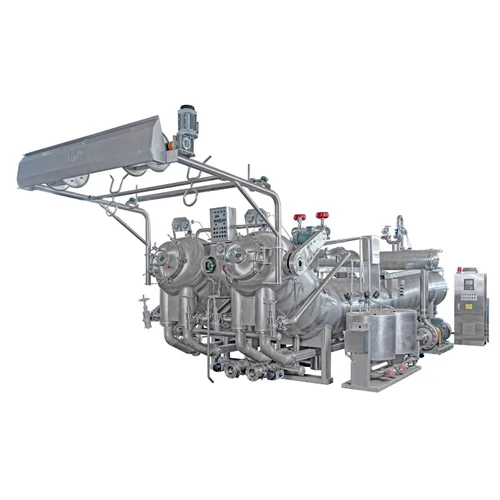
The process of dyeing fabrics involves applying colorants (dyes or pigments) to textile materials-such as fibers, yarns, or finished fabrics-in a way that ensures uniformity, durability (fastness), and desired aesthetic effects. While methods vary by fiber type and end use, the general dyeing process follows these key stages:
1. Pre-Treatment (Preparation)
Before dyeing, fabrics must be cleaned to remove natural impurities, oils, waxes, or sizing agents that block dye absorption.
* Scouring: Removes oils, fats, and waxes (especially in cotton/wool).
* Bleaching: Whitens fabric and removes natural color (e.g., lignin in cotton).
* Mercerization (for cotton): Improves luster, strength, and dye affinity.
* Heat Setting (for synthetics like polyester): Stabilizes fabric dimensions.
✅ Goal: Achieve a hydrophilic, absorbent, and clean surface for even dyeing.
2. Dye Selection & Recipe Preparation
Choose the right dye based on fiber type:
| Fiber Type | Dye Class |
| Cotton, Linen | Reactive, Direct, Vat |
| Wool, Silk | Acid, Metal-complex |
| Polyester | Disperse |
| Nylon | Acid or Disperse |
| Acrylic | Basic (Cationic) |
A dye bath recipe is prepared with:
* Dye
* Auxiliaries:
Leveling agents (ensure even dyeing)
Dispersing agents (for disperse dyes)
pH buffers (e.g., acetic acid for acid dyes, soda ash for reactive dyes)
3. Dyeing Application (Main Process)
The method depends on equipment and production scale:
A. Exhaust (Batch) Dyeing – Most common for fabrics
* Fabric and dye bath are heated together.
* Dye gradually transfers from liquor → fiber over time.
* Used in jet, soft flow, winch, HTHP machines.
* Ideal for small–medium batches and high-quality solid shades.
B. Continuous Dyeing – High-volume production
1. Padding: Fabric passes through dye solution → squeezed by rollers (pick-up ~60–80%).
2. Drying: Hot air or infrared.
3. Fixation:
* Steam (for reactive/vat dyes)
* High-temp baking (for disperse dyes on polyester – Thermosol process)
4. Washing-off: Remove unfixed dye.
✅ Best for woven fabrics in mass production (e.g., shirting, home textiles).
C. Semi-Continuous Dyeing
* Combines padding with batch steaming or batching (e.g., cold pad batch for reactive dyes).
4. Temperature & Time Control
Critical for dye diffusion and fixation:
* Cotton (reactive dye): 60–80°C for 30–90 min + alkali fixation.
* Polyester (disperse dye): 130°C for 30–60 min in HTHP machine.
* Wool (acid dye): 98–100°C, pH 2–5.
Ramp rates must be controlled to avoid barre (streaks) or unevenness.
5. Aftertreatment (Soaping & Washing-Off)
* Soaping: Treat dyed fabric with hot detergent solution to:
Remove surface/unfixed dye
Improve wash fastness and color clarity
* Rinsing: Cold → warm → cold water to eliminate residues.
* Final treatments (optional):
Softeners (improve hand feel)
Fixing agents (boost wet fastness)
Water/oil repellents
⚠️ Skipping soaping → poor fastness and staining in washing.
6. Drying & Finishing
Fabric is dried (tenter frame, cylinder dryer).
May undergo additional mechanical or chemical finishes (e.g., sanforizing, calendering).
Key Quality Checks
* Color matching (vs. standard under D65, TL84 light sources)
* Fastness tests: Wash, rub (crocking), light, perspiration
* pH & residual chemicals
Environmental Considerations
* Water consumption: 80–150 L/kg fabric (lower in jet/airflow machines).
* Effluent treatment: Essential due to dyes, salts, and auxiliaries.
* Sustainable trends:
Low liquor ratio machines
Digital dosing
Salt-free reactive dyes
Waterless dyeing (e.g., supercritical CO₂ for polyester)