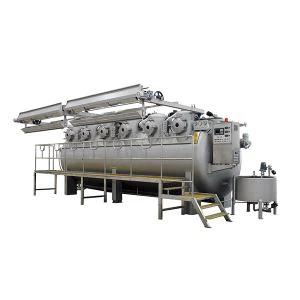
As a seasoned supplier of cloth dyeing machines, I often encounter inquiries about the compatibility of our machines with various fabric types. One question that frequently arises is whether our cloth dyeing machines can be used for velvet fabrics. In this blog post, I will delve into this topic, exploring the characteristics of velvet fabrics, the capabilities of our dyeing machines, and the considerations for dyeing velvet effectively.
Understanding Velvet Fabrics
Velvet is a luxurious and highly sought-after fabric known for its soft, plush texture and rich sheen. It is typically made from silk, cotton, or synthetic fibers and is characterized by its dense pile, which gives it a unique appearance and feel. The pile of velvet is created by cutting loops of yarn that are woven into the fabric, resulting in a smooth, even surface with a slight nap.
Due to its delicate nature and unique structure, velvet requires special care and attention during the dyeing process. The pile can easily become flattened or damaged if not handled properly, which can affect the fabric's appearance and quality. Additionally, the dyeing process must be carefully controlled to ensure that the color is evenly distributed throughout the fabric and that the pile retains its softness and luster.
Capabilities of Our Cloth Dyeing Machines
At our company, we offer a range of advanced cloth dyeing machines that are designed to meet the diverse needs of our customers. Our machines are equipped with state-of-the-art technology and features that allow for precise control of the dyeing process, ensuring consistent and high-quality results.
One of our most popular machines is the Ultra Low Bath Ratio Energy Saving Dyeing Machine. This machine is designed to minimize the amount of water and energy used during the dyeing process, making it an environmentally friendly and cost-effective option. It also features a soft flow system that gently circulates the dye liquor around the fabric, ensuring even dye penetration and minimizing the risk of damage to the pile.


Another machine that is well-suited for dyeing velvet fabrics is the High Temperature Low Tension Evenflow Dyeing Machine. This machine is capable of operating at high temperatures, which is necessary for achieving deep and vibrant colors in velvet fabrics. It also features a low tension system that helps to prevent the pile from becoming flattened or damaged during the dyeing process.
Finally, our HTHP Soft Flow Dyeing Machine is a versatile machine that can be used for dyeing a wide range of fabrics, including velvet. It features a high-pressure system that allows for fast and efficient dyeing, as well as a soft flow system that ensures even dye distribution and minimizes the risk of damage to the fabric.
Considerations for Dyeing Velvet Fabrics
While our cloth dyeing machines are capable of dyeing velvet fabrics, there are several considerations that must be taken into account to ensure successful results. These include:
- Fabric Preparation: Before dyeing velvet fabrics, it is important to prepare them properly to ensure that the dye adheres evenly to the fabric. This may involve pre-washing the fabric to remove any dirt, oils, or sizing agents that may be present. It is also important to ensure that the fabric is completely dry before dyeing.
- Dye Selection: The type of dye used for dyeing velvet fabrics is crucial for achieving the desired color and quality. Acid dyes are commonly used for dyeing silk velvet, while reactive dyes are often used for dyeing cotton and synthetic velvet. It is important to choose a dye that is specifically formulated for the type of fabric being dyed and to follow the manufacturer's instructions carefully.
- Dyeing Process: The dyeing process for velvet fabrics must be carefully controlled to ensure that the color is evenly distributed throughout the fabric and that the pile retains its softness and luster. This may involve adjusting the temperature, pH, and dye concentration of the dye liquor, as well as the duration and intensity of the dyeing process. It is also important to use a gentle agitation method to prevent the pile from becoming flattened or damaged.
- Finishing: After dyeing, velvet fabrics may require additional finishing treatments to enhance their appearance and durability. This may include steaming, pressing, or brushing the fabric to restore the pile and give it a smooth, even surface. It is also important to apply a suitable finishing agent to protect the fabric from fading, staining, and wear.
Conclusion
In conclusion, our cloth dyeing machines can be used for dyeing velvet fabrics, but it is important to take into account the unique characteristics of velvet and to follow the appropriate dyeing procedures to ensure successful results. By using our advanced machines and following the guidelines outlined in this blog post, you can achieve high-quality, consistent dyeing results for your velvet fabrics.
If you are interested in learning more about our cloth dyeing machines or would like to discuss your specific dyeing requirements, please do not hesitate to contact us. Our team of experts is always available to provide you with the information and support you need to make an informed decision. We look forward to hearing from you and working with you to achieve your dyeing goals.
References
- "Velvet Fabric: History, Types, and Care." The Spruce Crafts, https://www.thesprucecrafts.com/velvet-fabric-4122940.
- "Dyeing Velvet Fabrics." Textile Learner, https://textilelearner.net/dyeing-velvet-fabrics/.
- "Cloth Dyeing Machines: Types, Working Principles, and Applications." Engineering Learn, https://www.engineeringlearn.com/cloth-dyeing-machines-types-working-principles-and-applications/.