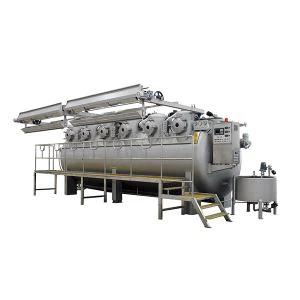
Hey there! As a supplier of HTHP Jet Dyeing Machines, I often get asked if these machines can be used for dyeing woven fabrics. Well, let's dive right into it and explore this topic in detail.
First off, let's understand what an HTHP Jet Dyeing Machine is. HTHP stands for High Temperature High Pressure. This type of dyeing machine is a powerful tool in the textile industry. It uses high - temperature and high - pressure conditions to ensure efficient and even dyeing of fabrics. The "jet" in its name refers to the way it circulates the dye liquid through the fabric. A high - speed jet of dye liquor is forced through the fabric, which helps in better penetration of the dye into the fibers.
Now, when it comes to woven fabrics, they are made by interlacing two or more sets of yarns at right angles to each other. Some common examples of woven fabrics include cotton, linen, silk, and polyester blends. These fabrics have different properties such as fiber type, density, and thickness, which play a crucial role in determining whether an HTHP Jet Dyeing Machine is suitable for them.
One of the main advantages of using an HTHP Jet Dyeing Machine for dyeing woven fabrics is its ability to handle high - temperature dyeing processes. Many dyes, especially those used for synthetic fibers like polyester, require high temperatures to set properly. The HTHP Jet Dyeing Machine can easily reach and maintain these high temperatures, ensuring that the dye bonds well with the fibers. This results in vibrant and long - lasting colors on the woven fabrics.
Another benefit is the even distribution of the dye. The jet - type circulation system in the machine ensures that the dye liquor is evenly distributed throughout the fabric. This is particularly important for woven fabrics, as uneven dyeing can lead to color variations and a less appealing final product. With the high - speed jet of dye liquor, the dye can penetrate deep into the interlaced yarns of the woven fabric, giving a uniform color across the entire surface.
The HTHP Jet Dyeing Machine is also quite efficient in terms of water and energy consumption. It uses less water compared to some traditional dyeing methods because the jet system allows for a more concentrated use of the dye liquor. Additionally, the high - pressure operation means that the dyeing process can be completed in a relatively shorter time, which in turn saves energy.
However, it's not all rosy. There are some challenges when using an HTHP Jet Dyeing Machine for woven fabrics. For instance, some delicate woven fabrics like certain types of silk or fine - linen may be damaged by the high - pressure jet of the machine. The force of the jet can cause the yarns in these delicate fabrics to break or fray. Also, some natural fibers may shrink or lose their shape under high - temperature and high - pressure conditions.
To overcome these challenges, we need to make some adjustments. If you're dealing with delicate woven fabrics, you can adjust the pressure and speed of the jet. Lowering the pressure can prevent damage to the fabric while still allowing for sufficient dye penetration. You can also use special dyes and additives that are suitable for low - temperature dyeing processes. This way, you can still use the HTHP Jet Dyeing Machine without harming the delicate fibers.


Let's talk about the different types of woven fabrics and how they fare with the HTHP Jet Dyeing Machine.
1. Cotton Woven Fabrics
Cotton is a very popular natural fiber used in woven fabrics. It can generally withstand the high - temperature and high - pressure conditions of the HTHP Jet Dyeing Machine. Cotton has a high affinity for many types of dyes, and the jet - dyeing process can help in achieving bright and fast colors. However, cotton may shrink slightly during the high - temperature process. To prevent this, a pre - shrinkage treatment can be done before dyeing.
2. Polyester Woven Fabrics
Polyester is a synthetic fiber that is widely used in woven fabrics. It is one of the best candidates for HTHP Jet Dyeing. Polyester dyes at high temperatures, and the high - pressure environment of the machine helps in ensuring a deep and even color. The jet circulation also helps in preventing the formation of dye spots on the fabric. You can find some great equipment options like the High Temperature High Speed Dyeing Machine which are especially suitable for polyester woven fabrics.
3. Blended Woven Fabrics
Blended woven fabrics, which are made by combining different fibers like cotton - polyester blends, also work well with the HTHP Jet Dyeing Machine. The machine can handle the different dyeing requirements of each fiber in the blend. However, it may require some experimentation to find the right dyeing conditions to get a uniform color on both types of fibers.
4. Specialty Woven Fabrics
Some specialty woven fabrics, such as those made from recycled materials like RPET (Recycled Polyethylene Terephthalate), can also be dyed using an HTHP Jet Dyeing Machine. There are High - Pressure Rapid Dyeing Machines For RPET Fabric Suede Fabric that are specifically designed for these types of fabrics. These machines can quickly and efficiently dye the RPET - based woven fabrics while maintaining their quality and environmental benefits.
In conclusion, an HTHP Jet Dyeing Machine can definitely be used for dyeing woven fabrics. It offers many advantages such as efficient dyeing, even color distribution, and energy - water savings. While there are some challenges, especially with delicate fabrics, these can be overcome with proper adjustments and techniques.
If you're in the textile industry and are looking for a reliable and efficient way to dye your woven fabrics, an HTHP Jet Dyeing Machine could be a great option for you. We're here to provide you with the best - in - class machines and support. If you're interested in learning more or starting a purchase, don't hesitate to reach out and let's have a chat about your needs.
References
- Textile Dyeing Handbook, Third Edition - Editors: Horrocks, A. R., Anand, S. C.
- Fundamentals of Textile Coloration - Author: Paul R. measured