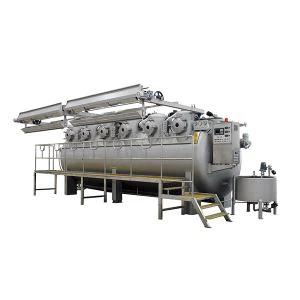
As a supplier of HTHP Rapid Jet Dyeing Machines, I've witnessed firsthand the remarkable efficiency and innovation of these machines in the textile dyeing industry. One of the critical aspects that often concerns our clients is how these machines manage dye residue after the dyeing process. In this blog, I'll delve into the methods and mechanisms employed by HTHP Rapid Jet Dyeing Machines to handle dye residue effectively.


Understanding the Dyeing Process and Residue Formation
Before we explore how the HTHP Rapid Jet Dyeing Machine deals with dye residue, it's essential to understand the dyeing process and how residue forms. In the high - temperature high - pressure (HTHP) rapid jet dyeing process, the fabric is immersed in a dye bath, and the dye is transferred from the bath to the fabric through a combination of heat, pressure, and agitation. During this process, not all of the dye is absorbed by the fabric. Some of it remains in the dye bath, and a small amount may adhere to the inner surfaces of the dyeing machine, such as the dyeing chamber, pipes, and nozzles.
The presence of dye residue can have several negative impacts. It can lead to inconsistent dyeing results in subsequent batches, contaminate the environment if not properly disposed of, and reduce the efficiency and lifespan of the dyeing machine. Therefore, effective management of dye residue is crucial for the success of the dyeing operation.
Built - in Filtration Systems
One of the primary ways that HTHP Rapid Jet Dyeing Machines handle dye residue is through built - in filtration systems. These systems are designed to separate the solid dye particles from the liquid dye bath. As the dye bath circulates through the machine during and after the dyeing process, it passes through a series of filters. These filters can be made of various materials, such as stainless steel mesh or synthetic fibers, and are designed to trap different sizes of dye particles.
The filters are usually installed at strategic points in the dyeing machine, such as at the inlet and outlet of the dyeing chamber and in the circulation pipes. By removing the solid dye particles from the dye bath, the filtration system helps to keep the dye bath clean and reduce the amount of dye residue that remains in the machine. Additionally, the filtered dye particles can be collected and disposed of separately, which makes it easier to manage the waste.
The filtration systems in HTHP Rapid Jet Dyeing Machines are often designed to be easily removable and cleanable. This allows operators to maintain the efficiency of the filters and ensure that they continue to function effectively over time. Regular cleaning and replacement of the filters are necessary to prevent clogging and ensure optimal performance.
Automatic Cleaning Cycles
In addition to filtration systems, HTHP Rapid Jet Dyeing Machines are equipped with automatic cleaning cycles. After each dyeing batch is completed, the machine can be programmed to initiate a cleaning cycle. During this cycle, a cleaning solution is circulated through the machine to remove any remaining dye residue from the inner surfaces of the dyeing chamber, pipes, and nozzles.
The cleaning solution is typically a mixture of water and a specialized cleaning agent. The cleaning agent is designed to break down the dye molecules and make them easier to remove. The cleaning cycle usually involves multiple stages, including pre - rinsing, main cleaning, and post - rinsing. Each stage is carefully controlled in terms of time, temperature, and the flow rate of the cleaning solution to ensure thorough cleaning.
The automatic cleaning cycles not only help to remove dye residue but also prevent the build - up of deposits on the inner surfaces of the machine. This can improve the heat transfer efficiency of the machine, reduce the risk of corrosion, and extend the lifespan of the equipment.
Recycling and Reuse of Dye Baths
Another innovative approach to handling dye residue is the recycling and reuse of dye baths. HTHP Rapid Jet Dyeing Machines are designed to be able to analyze the remaining dye concentration in the dye bath after each dyeing process. If the dye concentration is still relatively high, the dye bath can be reused for subsequent dyeing batches. This not only reduces the amount of dye residue but also saves on dye costs and reduces water consumption.
To ensure the quality of the reused dye bath, the machine may be equipped with a dye concentration monitoring system. This system can measure the concentration of different dyes in the dye bath and adjust the amount of additional dye and chemicals needed for the next dyeing batch. By recycling and reusing the dye bath, the HTHP Rapid Jet Dyeing Machine helps to minimize waste and make the dyeing process more sustainable.
Chemical Treatment of Dye Residue
In some cases, the dye residue that is collected from the filtration system or the cleaning process may still contain a significant amount of dye. To further reduce the environmental impact of this waste, chemical treatment methods can be used. There are several chemical treatment options available, such as oxidation, reduction, and precipitation.
Oxidation methods involve the use of oxidizing agents, such as hydrogen peroxide or ozone, to break down the dye molecules into smaller, less toxic compounds. Reduction methods, on the other hand, use reducing agents to convert the dye molecules into a more stable form. Precipitation methods involve adding chemicals to the dye residue to cause the dye molecules to precipitate out of the solution, making them easier to separate and dispose of.
Some HTHP Rapid Jet Dyeing Machines can be integrated with chemical treatment systems to perform these processes on - site. This allows for more efficient management of dye residue and reduces the need for off - site waste treatment.
Importance of Regular Maintenance
While HTHP Rapid Jet Dyeing Machines are equipped with advanced features for handling dye residue, regular maintenance is still essential. Operators should follow the manufacturer's recommended maintenance schedule, which includes tasks such as checking and cleaning the filtration system, inspecting the pipes and nozzles for blockages, and testing the performance of the automatic cleaning cycles.
Regular maintenance not only ensures the effective handling of dye residue but also helps to prevent breakdowns and extend the lifespan of the machine. It is also important to train operators on the proper use and maintenance of the dyeing machine to ensure that they can operate it safely and efficiently.
Conclusion
HTHP Rapid Jet Dyeing Machines offer a comprehensive solution for handling dye residue after the dyeing process. Through built - in filtration systems, automatic cleaning cycles, recycling and reuse of dye baths, and chemical treatment of dye residue, these machines help to minimize waste, improve dyeing quality, and reduce the environmental impact of the dyeing operation.
If you are in the textile dyeing industry and are looking for a reliable and efficient dyeing machine that can effectively handle dye residue, our HTHP Rapid Jet Dyeing Machines are an excellent choice. We also offer other high - quality dyeing machines, such as the HTHP Jet Dyeing Machine, TH - VT High Temperature Dyeing Machine, and HTHP Long Tube Rapid Fabric Dyeing Machine.
We are committed to providing our customers with the best products and services. If you are interested in learning more about our dyeing machines or would like to discuss your specific dyeing needs, please feel free to contact us for a procurement discussion. Our team of experts is ready to assist you in finding the perfect solution for your business.
References
- Textile Dyeing Technology Handbook, published by a leading textile industry research institution.
- Technical manuals of HTHP Rapid Jet Dyeing Machines.