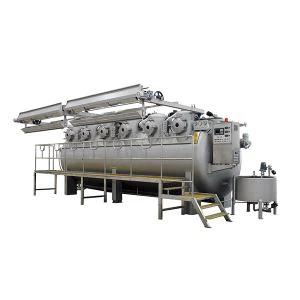
Measuring the dyeing uniformity in a Jet Dyeing Machine is crucial for ensuring high - quality dyed products. As a Jet Dyeing Machine supplier, we understand the significance of this process and are committed to providing solutions that help our customers achieve optimal dyeing results.
Understanding the Importance of Dyeing Uniformity
Dyeing uniformity refers to the consistent distribution of dye throughout the fabric being dyed. Inconsistent dyeing can lead to color variations, streaks, and uneven shades, which are unacceptable in the textile industry. Uniform dyeing not only enhances the aesthetic appeal of the fabric but also improves its marketability. Customers expect products with a consistent color appearance, and any deviation can result in product rejection and loss of business.
Factors Affecting Dyeing Uniformity in Jet Dyeing Machines
Several factors can influence the dyeing uniformity in Jet Dyeing Machines. These include:
Machine Design and Configuration
The design of the Jet Dyeing Machine plays a vital role in achieving uniform dyeing. Machines with proper circulation systems ensure that the dye liquor is evenly distributed around the fabric. For example, our HTHP Double - ring Environmentally Friendly Dyeing Machine is designed with a double - ring circulation system that promotes better dye distribution. The double - ring design allows for more efficient movement of the dye liquor, reducing the chances of color variations.
Fabric Characteristics
Different fabrics have different dyeing properties. Factors such as fabric type (e.g., cotton, polyester, silk), weave structure, and fabric density can affect how the dye is absorbed. For instance, a tightly woven fabric may require a longer dyeing time and a more powerful circulation system to ensure that the dye penetrates evenly. Our HTHP Rapid Jet Dyeing Machine is capable of handling a wide range of fabric types and can be adjusted to meet the specific dyeing requirements of each fabric.
Dyeing Process Parameters
The dyeing process parameters, including temperature, time, pH level, and dye concentration, also have a significant impact on dyeing uniformity. Incorrect settings can lead to uneven dye uptake. For example, if the temperature is too low, the dye may not dissolve properly, resulting in patchy dyeing. On the other hand, if the dye concentration is too high, it may cause over - dyeing in some areas. Our High Temperature Dyeing Machine allows for precise control of these parameters, enabling users to achieve consistent dyeing results.


Methods for Measuring Dyeing Uniformity
There are several methods available for measuring dyeing uniformity in Jet Dyeing Machines.
Visual Inspection
Visual inspection is the simplest and most commonly used method. After the dyeing process, the fabric is carefully examined for color variations, streaks, and uneven shades. However, this method is subjective and may not be suitable for detecting minor differences in color. To ensure a more accurate assessment, multiple inspectors can be involved, and they can use standardized color charts for comparison.
Color Measurement Instruments
Color measurement instruments, such as spectrophotometers and colorimeters, provide a more objective way of measuring dyeing uniformity. These instruments measure the reflectance or transmittance of light from the fabric and convert it into color values. By taking multiple measurements at different points on the fabric, it is possible to calculate the color difference (ΔE) between these points. A lower ΔE value indicates better dyeing uniformity.
Chemical Analysis
Chemical analysis can be used to determine the distribution of dye molecules within the fabric. Techniques such as chromatography can separate the dye components and provide information about their concentration at different locations in the fabric. This method is more complex and time - consuming but can provide detailed information about the dyeing process.
Implementing Quality Control Measures
To ensure consistent dyeing uniformity, it is essential to implement quality control measures throughout the dyeing process.
Pre - dyeing Inspection
Before starting the dyeing process, the fabric should be inspected for any defects or impurities that may affect dyeing. Any damaged or contaminated areas should be removed or treated appropriately.
Process Monitoring
During the dyeing process, it is important to monitor the process parameters continuously. This can be done using sensors and control systems. Any deviations from the set parameters should be corrected immediately to prevent uneven dyeing.
Post - dyeing Testing
After the dyeing process is complete, the dyed fabric should be tested for dyeing uniformity using the methods mentioned above. If any non - uniformities are detected, the dyeing process should be adjusted accordingly for future batches.
Conclusion
Measuring the dyeing uniformity in a Jet Dyeing Machine is a complex but essential process for the textile industry. As a Jet Dyeing Machine supplier, we offer a range of high - quality machines, such as the HTHP Double - ring Environmentally Friendly Dyeing Machine, HTHP Rapid Jet Dyeing Machine, and High Temperature Dyeing Machine, that are designed to promote uniform dyeing. By understanding the factors affecting dyeing uniformity and implementing appropriate measurement and quality control methods, our customers can achieve excellent dyeing results and produce high - quality textile products.
If you are interested in improving the dyeing uniformity in your textile production and are looking for reliable Jet Dyeing Machines, we encourage you to contact us for more information and to discuss your specific requirements. Our team of experts is ready to assist you in finding the best solutions for your business.
References
- Textile Dyeing Handbook, edited by some experts in the textile field.
- Journal of Textile Science and Technology, various issues related to dyeing processes.