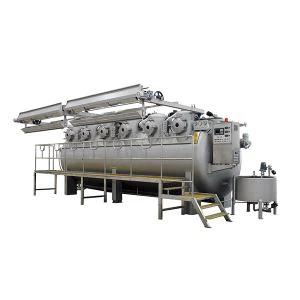
In the textile industry, the HTHP (High Temperature High Pressure) Fabric Soft Flow Dyeing Machine stands as a cornerstone of modern fabric dyeing technology. As a leading supplier of this advanced equipment, I am often asked about the heating system of the HTHP Fabric Soft Flow Dyeing Machine. In this blog, I will delve into the details of its heating system, exploring its components, working principles, and advantages.
Components of the Heating System
The heating system of the HTHP Fabric Soft Flow Dyeing Machine is a complex and precisely engineered setup. It mainly consists of a heat source, heat exchanger, temperature control device, and piping system.
Heat Source
The heat source is the heart of the heating system. There are several options available, each with its own characteristics. One common heat source is steam. Steam offers high heat transfer efficiency and can quickly raise the temperature of the dyeing liquor. It is widely used in large - scale dyeing operations due to its ability to provide a large amount of heat energy. Another option is an electric heater. Electric heaters are more suitable for smaller dyeing machines or applications where steam is not readily available. They are easy to control and can provide precise temperature regulation.
Heat Exchanger
The heat exchanger plays a crucial role in transferring heat from the heat source to the dyeing liquor. It is designed to maximize the contact area between the hot medium (steam or heated fluid from the electric heater) and the dyeing liquor, ensuring efficient heat transfer. Plate - type heat exchangers are commonly used in HTHP Fabric Soft Flow Dyeing Machines. They have a large heat transfer area in a relatively small volume, which helps to reduce the size of the heating system and improve energy efficiency.
Temperature Control Device
Accurate temperature control is essential in fabric dyeing to ensure consistent color quality. The temperature control device in the heating system monitors the temperature of the dyeing liquor and adjusts the heat input accordingly. It typically consists of a temperature sensor, a controller, and an actuator. The temperature sensor measures the actual temperature of the dyeing liquor, and the controller compares this value with the set temperature. If there is a difference, the controller sends a signal to the actuator, which adjusts the flow of steam or the power of the electric heater to bring the temperature back to the set value.
Piping System
The piping system connects all the components of the heating system, allowing the flow of the heat - transfer medium (steam or heated fluid) and the dyeing liquor. It is designed to minimize heat loss and ensure a smooth and efficient flow. The pipes are usually insulated to reduce energy waste, and they are made of materials that can withstand high temperatures and pressures, such as stainless steel.
Working Principles of the Heating System
The working process of the heating system can be divided into several steps.
Initial Heating
When the dyeing process starts, the heat source begins to generate heat. If steam is used as the heat source, it is supplied from a steam boiler. The steam enters the heat exchanger, where it transfers its heat to the dyeing liquor. The temperature of the dyeing liquor gradually rises. If an electric heater is used, the electric current passes through the heating element, which heats up and transfers the heat to the surrounding fluid, which then heats the dyeing liquor.
Temperature Maintenance
Once the dyeing liquor reaches the set temperature, the temperature control device takes over to maintain the temperature. The temperature sensor continuously monitors the temperature of the dyeing liquor. If the temperature starts to drop, the controller increases the heat input by allowing more steam to enter the heat exchanger or increasing the power of the electric heater. Conversely, if the temperature rises above the set value, the controller reduces the heat input.
Heat Recovery
In some advanced HTHP Fabric Soft Flow Dyeing Machines, a heat recovery system is incorporated. After the dyeing process is completed, the hot dyeing liquor still contains a significant amount of heat energy. The heat recovery system captures this heat and uses it to pre - heat the incoming cold water or the next batch of dyeing liquor. This not only reduces energy consumption but also shortens the heating time for subsequent dyeing processes.
Advantages of the Heating System
Energy Efficiency
The heating system of the HTHP Fabric Soft Flow Dyeing Machine is designed to be highly energy - efficient. The use of heat exchangers with high heat transfer coefficients and the incorporation of heat recovery systems help to minimize energy waste. For example, the plate - type heat exchangers can transfer heat more effectively than traditional shell - and - tube heat exchangers, reducing the amount of energy required to heat the dyeing liquor.
Precise Temperature Control
Accurate temperature control is crucial for achieving consistent dyeing results. The advanced temperature control device in the heating system ensures that the temperature of the dyeing liquor remains stable throughout the dyeing process. This helps to prevent color variations and improve the quality of the dyed fabrics.
High - Temperature and High - Pressure Resistance
As the name suggests, the HTHP Fabric Soft Flow Dyeing Machine operates under high - temperature and high - pressure conditions. The heating system is designed to withstand these harsh environments. The materials used in the components, such as the pipes and the heat exchanger, are carefully selected to ensure their durability and reliability under high temperatures and pressures.


Applications and Related Products
The HTHP Fabric Soft Flow Dyeing Machine with its efficient heating system is widely used in various textile applications. It can be used for dyeing different types of fabrics, including natural fibers like cotton and silk, as well as synthetic fibers like polyester and nylon.
If you are interested in other types of dyeing machines, we also offer a range of related products. For acetate dyeing, our Overflow Jet Dyeing Machine For Acetate Dyeing is a great choice. It is specifically designed to meet the requirements of acetate fabric dyeing. Our High - Temperature And High - Pressure Jet Dyeing Machine is suitable for high - speed and high - quality dyeing of various fabrics. And for those who need a winch - type dyeing machine, our High Temperature High Pressure Winch Dyeing Machine provides a reliable solution.
Conclusion and Call to Action
In conclusion, the heating system of the HTHP Fabric Soft Flow Dyeing Machine is a sophisticated and essential part of the dyeing process. Its efficient operation ensures high - quality dyeing results while minimizing energy consumption. If you are in the textile industry and looking for a reliable and advanced dyeing machine, our HTHP Fabric Soft Flow Dyeing Machine with its excellent heating system is the ideal choice. We are committed to providing high - quality products and professional after - sales service. If you have any questions or are interested in purchasing our products, please feel free to contact us for more information and to start a procurement negotiation.
References
- Textile Dyeing Technology Handbook, published by [Publisher Name]
- Advanced Heating Systems in Industrial Applications, a research paper by [Author Name]