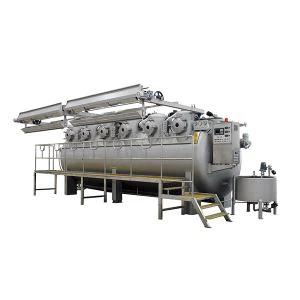
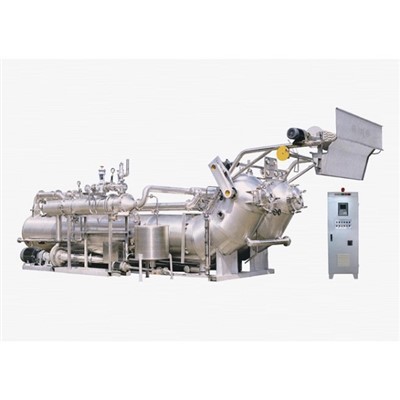
As a supplier of Atmospheric Soft Flow Dyeing Machines, I often encounter inquiries about the chemical - resistance of the parts within these machines. Understanding this aspect is crucial as it directly impacts the machine's performance, lifespan, and the quality of the dyeing process.
Chemical Environment in Atmospheric Soft Flow Dyeing Machines
In an Atmospheric Soft Flow Dyeing Machine, various chemicals are used during the dyeing process. These chemicals include dyes of different types (such as reactive dyes, disperse dyes, and acid dyes), auxiliaries (like leveling agents, fixing agents, and detergents), and pH - adjusting agents (such as acids and alkalis). All these substances create a complex chemical environment that the machine parts are constantly exposed to.
The working conditions are also challenging. The temperatures can range from room temperature to relatively high levels, depending on the type of dye and fabric being processed. Additionally, the mechanical agitation and fluid flow within the machine further increase the stress on the components.
Key Parts and Their Chemical Resistance Requirements
Pump
The pump is a vital part of the Atmospheric Soft Flow Dyeing Machine as it circulates the dye liquor. It is in continuous contact with the chemical - laden dye solution. The pump materials must be highly resistant to corrosion. Metals such as stainless steel (specifically grades like 316L which have good resistance to a wide range of chemicals) are commonly used. However, in some cases where more aggressive chemicals are involved, pumps with polymer - based components may be favored. Polymer materials like polypropylene or polyethylene can resist many acids, alkalis, and organic solvents.
Pipes and Tubing
The pipes and tubing in the machine carry the dye liquor from one part to another. They need to be chemically resistant to prevent leaks and contamination. PVC (Polyvinyl Chloride) pipes are used in some less - corrosive applications due to their relatively low cost and good mechanical properties. But for more demanding chemical environments, PTFE (Polytetrafluoroethylene) tubing is a better choice. PTFE has excellent chemical resistance to almost all types of chemicals, including strong acids, bases, and many organic solvents. It also has a non - stick surface which reduces the deposition of dye and other substances.
Dyeing Vessel
The dyeing vessel is where the actual dyeing process takes place. It is exposed to the full range of chemicals used in the process. Stainless steel is a popular material for the dyeing vessel because of its high strength, durability, and good chemical resistance. For applications involving more aggressive chemicals or special dyes, the vessel may be lined with a protective coating such as a ceramic or a polymer liner.
Nozzles
Nozzles play a key role in distributing the dye liquor evenly over the fabric. They are often made of materials that can withstand the chemical attack and the high - velocity fluid flow. Ceramics are sometimes used for nozzles due to their chemical inertness, high hardness, and resistance to wear. Some plastic materials with good chemical resistance can also be used for nozzles in less - severe applications.
Factors Affecting Chemical Resistance
The chemical resistance of the parts in an Atmospheric Soft Flow Dyeing Machine is affected by several factors.
Chemical Composition
The type of chemicals used in the dyeing process is the most obvious factor. Strong acids and alkalis can cause corrosion of many metals. For example, hydrochloric acid can react with iron - based metals, leading to pitting and eventual failure. Organic solvents can swell or dissolve some polymer materials. Different dyes also have different chemical properties, and some may contain reactive groups that can interact with the machine parts.
Temperature
Higher temperatures generally increase the rate of chemical reactions. As the temperature rises, the chemical attack on the machine parts becomes more severe. For example, the corrosion rate of stainless steel in an acidic solution can increase significantly with an increase in temperature. Therefore, when operating the dyeing machine at high temperatures, it is necessary to choose materials with better heat - and chemical - resistance.
Concentration
The concentration of the chemicals in the dye liquor also affects the chemical resistance of the parts. Higher concentrations of corrosive chemicals can cause faster degradation of the materials. For instance, a highly concentrated alkali solution will corrode a metal surface more quickly than a dilute one.
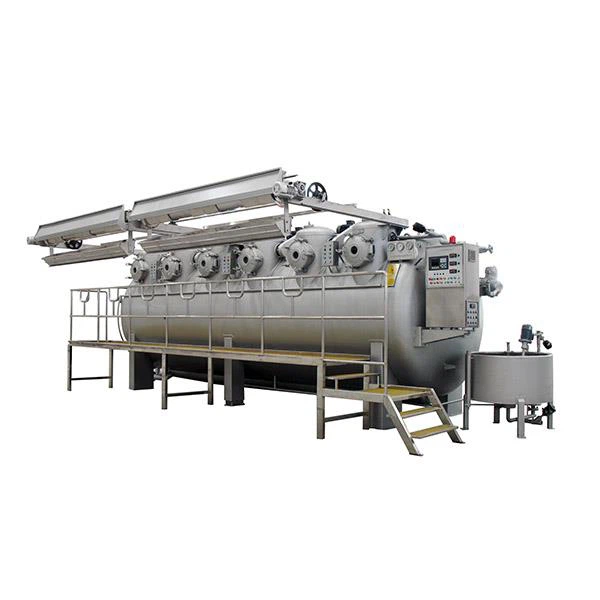

Testing and Ensuring Chemical Resistance
To ensure that the parts in our Atmospheric Soft Flow Dyeing Machines have adequate chemical resistance, we conduct a series of tests.
Laboratory Testing
We perform laboratory - scale tests on sample materials. These tests involve exposing the samples to different chemicals at various temperatures and concentrations for a specific period. We then evaluate the changes in the material's properties, such as weight loss, surface morphology, and mechanical strength. For example, we can use scanning electron microscopy (SEM) to observe the surface changes of the material after chemical exposure.
Field Testing
We also carry out field tests in real - world dyeing environments. We install the parts in our customers' dyeing machines and monitor their performance over an extended period. This allows us to gather practical data on how the parts withstand the actual chemical conditions in the dyeing process.
Importance of Chemical Resistance in Dyeing Quality
The chemical resistance of the machine parts is closely related to the quality of the dyeing process. If the parts are corroded or damaged by the chemicals, they may release contaminants into the dye liquor. These contaminants can cause stains or uneven dyeing on the fabric. Moreover, the malfunction of chemically - damaged parts, such as pumps or nozzles, can lead to improper circulation or distribution of the dye liquor, resulting in poor dyeing quality.
Our Commitment as a Supplier
As a supplier of Atmospheric Soft Flow Dyeing Machines, we are committed to providing machines with parts that have excellent chemical resistance. We use high - quality materials and advanced manufacturing processes to ensure the durability and performance of our machines. Our R & D team is constantly working on improving the chemical resistance of the parts by exploring new materials and surface treatment technologies.
If you are interested in our Cloth Dyeing Machine, Dyeing Machine For Tencel High Temperature Rapid Dyeing Machine, or High - Temperature And High - Pressure Jet Dyeing Machine, we welcome you to contact us for further discussions and procurement negotiations. Our machines are designed to meet the diverse needs of the textile dyeing industry, and we are ready to provide you with the best solutions.
References
- "Textile Dyeing Technology" by X. M. Hu
- "Corrosion and Protection of Materials in Chemical Industries" by J. R. Davis
- "Polymer Materials for Chemical Resistance Applications" by M. S. J. Hashmi