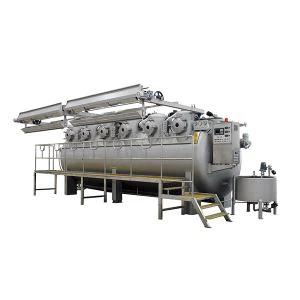
Hey there! As a supplier of HTHP Jet Dyeing Machines, I often get asked about the dyeing speed of these amazing machines. So, let's dive right in and explore what the dyeing speed of an HTHP Jet Dyeing Machine is all about.
First off, what is an HTHP Jet Dyeing Machine? Well, it's a high - tech piece of equipment used in the textile industry for dyeing fabrics. The "HTHP" stands for High Temperature and High Pressure, which are crucial factors in achieving efficient and high - quality dyeing results. The "Jet" part refers to the way the dye liquor is circulated. It uses a jet stream to move the fabric through the dye bath, ensuring even distribution of the dye.


Now, let's talk about dyeing speed. The dyeing speed of an HTHP Jet Dyeing Machine is influenced by several key factors. One of the most important factors is the type of fabric being dyed. Different fabrics have different structures and compositions, which can affect how quickly the dye penetrates them. For example, lightweight and porous fabrics like cotton can usually be dyed faster than heavy and dense fabrics like wool. Cotton has a more open structure that allows the dye to spread more easily, while wool has a complex fiber structure that requires more time for the dye to bond properly.
Another factor that impacts dyeing speed is the type of dye being used. There are various types of dyes available in the market, such as reactive dyes, disperse dyes, and acid dyes. Each type of dye has its own properties and reactivity. Reactive dyes, for instance, are known for their ability to form a chemical bond with the fabric fibers. They usually require a specific temperature and pH range to react effectively, which can affect the overall dyeing speed. Disperse dyes are commonly used for synthetic fibers like polyester. They have different solubility and diffusion rates, which also play a role in how fast the dyeing process can be completed.
The machine's design and specifications also play a significant role in determining the dyeing speed. A well - designed HTHP Jet Dyeing Machine with advanced features can significantly reduce the dyeing time. For example, a machine with a high - power jet pump can circulate the dye liquor more rapidly, ensuring that the fabric is constantly in contact with fresh dye. This helps to speed up the dyeing process by promoting better dye penetration. Additionally, machines with precise temperature and pressure control systems can optimize the dyeing conditions, allowing the dye to react more efficiently with the fabric.
The size of the dye bath and the fabric - to - liquor ratio are also important considerations. A larger dye bath may require more time to heat up and circulate the dye, which can slow down the overall process. On the other hand, an appropriate fabric - to - liquor ratio is crucial for ensuring that the fabric is evenly dyed. If the ratio is too high, the fabric may not have enough contact with the dye, resulting in uneven dyeing. If the ratio is too low, it may waste dye and increase the cost of the dyeing process.
In our product range, we have different models of HTHP Jet Dyeing Machines that offer varying dyeing speeds to meet the diverse needs of our customers. For example, our Rapid Jet Dyeing Machine is specifically designed for high - speed dyeing. It features a powerful jet system and advanced control technology, which can significantly reduce the dyeing time without compromising on the quality of the dyeing results.
Our High - Temperature And High - Pressure Dyeing Machine For Microfiber Clean Cloth is another great option. It is optimized for dyeing microfiber fabrics, which are known for their high absorbency and fine structure. This machine can handle the unique requirements of microfiber fabrics and achieve fast and even dyeing.
The Dual Flow Dyeing Machine is also worth mentioning. It uses a dual - flow system to improve the circulation of the dye liquor, which helps to speed up the dyeing process and ensure more uniform dyeing.
To measure the dyeing speed of an HTHP Jet Dyeing Machine, we usually look at the time it takes to achieve a certain level of color fastness and uniformity on the fabric. This can be determined through a series of tests and quality control measures. For example, we can use colorimeters to measure the color intensity and compare it with the desired color standard. We can also conduct wash - fastness and rub - fastness tests to ensure that the dye has bonded properly with the fabric.
In addition to the factors mentioned above, the operator's skills and experience also play a role in the dyeing speed. A well - trained operator can optimize the machine settings, adjust the dyeing parameters according to the fabric and dye type, and troubleshoot any issues that may arise during the process. This can help to ensure that the dyeing process runs smoothly and efficiently.
So, how can you choose the right HTHP Jet Dyeing Machine with the appropriate dyeing speed for your business? First, you need to consider the type of fabrics you will be dyeing most frequently. If you mainly deal with lightweight and porous fabrics, you may be able to choose a machine with a higher dyeing speed. However, if you work with heavy and complex fabrics, you may need a machine that can provide more precise control over the dyeing process, even if it means a slightly longer dyeing time.
You should also consider your production volume. If you have a high - volume production requirement, a machine with a faster dyeing speed can help you meet your deadlines and increase your productivity. On the other hand, if you have a smaller production volume or need to dye a variety of fabrics, you may prioritize flexibility and quality over speed.
In conclusion, the dyeing speed of an HTHP Jet Dyeing Machine is a complex topic that is influenced by multiple factors. As a supplier, we are committed to providing our customers with high - quality machines that offer optimal dyeing speeds and excellent dyeing results. Whether you are a small - scale textile manufacturer or a large - scale industrial producer, we have the right solution for you.
If you're interested in learning more about our HTHP Jet Dyeing Machines or want to discuss your specific dyeing needs, don't hesitate to reach out to us. We're here to help you make the best choice for your business and ensure that you get the most out of your dyeing process.
References
- Textile Dyeing Technology Handbook
- Journal of Textile Science and Engineering