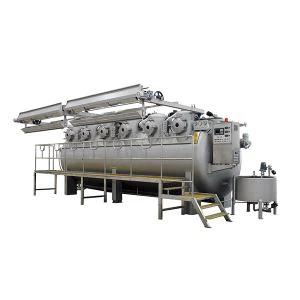
The dyeing speed of a Rapid Jet Fabric Dyeing Machine is a crucial factor that significantly impacts the overall efficiency and productivity of textile dyeing processes. As a supplier of Rapid Jet Fabric Dyeing Machines, I am well - versed in the various aspects related to their dyeing speed and its implications for the textile industry.
Understanding the Concept of Dyeing Speed
Dyeing speed refers to the rate at which a fabric can be dyed within a dyeing machine to achieve the desired color depth and uniformity. It is typically measured in terms of the time taken to complete a full dyeing cycle for a specific quantity and type of fabric. A faster dyeing speed means that more fabric can be dyed in a given period, leading to higher production volumes and potentially lower costs per unit of dyed fabric.
Factors Affecting the Dyeing Speed of Rapid Jet Fabric Dyeing Machines
1. Machine Design and Technology
The design of the Rapid Jet Fabric Dyeing Machine plays a vital role in determining its dyeing speed. Modern machines are equipped with advanced jet technology that ensures efficient circulation of the dye liquor around the fabric. The high - pressure jets in these machines can penetrate the fabric quickly, allowing the dye to be evenly distributed. For example, our TH - VA High - Pressure Rapid Dyeing Machine For Terry Fabric is specifically designed with a powerful jet system that can significantly reduce the dyeing time compared to traditional dyeing methods.
The internal structure of the machine also matters. Machines with well - designed dyeing chambers and circulation channels can minimize the resistance to the flow of the dye liquor, enabling faster and more uniform dyeing. Additionally, the use of high - quality materials in the construction of the machine ensures its durability and efficient operation, which in turn contributes to consistent dyeing speed over time.
2. Fabric Characteristics
Different types of fabrics have different dyeing requirements and rates. Fabrics with a loose structure, such as lightweight cotton or silk, generally absorb dyes more quickly than tightly woven or knitted fabrics. The fiber composition of the fabric also affects the dyeing speed. For instance, natural fibers like cotton and wool may have different dyeing kinetics compared to synthetic fibers such as polyester and nylon.
The weight and thickness of the fabric also play a role. Thicker and heavier fabrics may require more time for the dye to penetrate through the layers, thus slowing down the dyeing process. Our High Temperature and High Pressure Dyeing Machine is capable of handling a wide range of fabric types and weights, thanks to its adjustable temperature and pressure settings, which can be optimized to achieve the best dyeing speed for each specific fabric.
3. Dye Properties
The type of dye used in the dyeing process has a significant impact on the dyeing speed. Reactive dyes, for example, are known for their relatively fast dyeing rates as they form covalent bonds with the fabric fibers. Acid dyes, on the other hand, may have different dyeing kinetics depending on the pH of the dye bath and the type of fiber they are applied to.
The concentration of the dye in the dye liquor also affects the dyeing speed. Higher dye concentrations can potentially lead to faster dyeing, but there is a limit to this as excessive dye concentration can cause uneven dyeing or other quality issues. The solubility of the dye is another important factor. Dyes that are highly soluble in the dye liquor can be more easily transported to the fabric fibers, resulting in faster dyeing.
4. Process Parameters
The process parameters such as temperature, pressure, and circulation rate of the dye liquor have a direct influence on the dyeing speed. Higher temperatures generally increase the diffusion rate of the dye molecules into the fabric fibers, leading to faster dyeing. However, the temperature needs to be carefully controlled as excessive heat can damage the fabric or cause the dye to degrade.


Pressure also plays a role, especially in high - pressure dyeing machines. Higher pressure can force the dye liquor to penetrate the fabric more effectively, reducing the dyeing time. The circulation rate of the dye liquor ensures that fresh dye is continuously supplied to the fabric surface and that the exhausted dye is removed. Our HTHP Jet Dyeing Machine allows for precise control of these process parameters, enabling customers to optimize the dyeing speed according to their specific requirements.
Measuring and Optimizing Dyeing Speed
To measure the dyeing speed of a Rapid Jet Fabric Dyeing Machine, one can conduct time - trials for different fabric types and dyeing recipes. By recording the start and end times of the dyeing process and analyzing the color development of the fabric, it is possible to determine the average dyeing speed.
Optimizing the dyeing speed involves a combination of machine adjustment, fabric pre - treatment, and process parameter optimization. For example, pre - treating the fabric to remove impurities and improve its absorbency can significantly reduce the dyeing time. Adjusting the machine settings such as the jet pressure, circulation rate, and temperature based on the fabric and dye characteristics can also lead to faster and more efficient dyeing.
Implications of Dyeing Speed for the Textile Industry
A high dyeing speed has several benefits for textile manufacturers. Firstly, it increases the production capacity of the dyeing facility. With a faster dyeing machine, manufacturers can meet the increasing market demand for dyed fabrics in a shorter time. This can also give them a competitive edge in the market by enabling them to offer shorter lead times to their customers.
Secondly, faster dyeing speed can lead to cost savings. By reducing the time required for each dyeing cycle, the energy consumption and labor costs associated with the dyeing process can be minimized. Additionally, a higher production volume can result in economies of scale, further reducing the cost per unit of dyed fabric.
However, it is important to note that while speed is important, it should not come at the expense of fabric quality. Maintaining a balance between dyeing speed and color fastness, color uniformity, and fabric integrity is crucial for the long - term success of the textile business.
Conclusion
The dyeing speed of a Rapid Jet Fabric Dyeing Machine is a complex parameter that is influenced by multiple factors including machine design, fabric characteristics, dye properties, and process parameters. As a supplier, we are committed to providing our customers with high - quality dyeing machines that offer optimal dyeing speed without compromising on fabric quality.
If you are in the textile industry and are looking for a reliable and efficient Rapid Jet Fabric Dyeing Machine, we invite you to contact us for further information and to discuss your specific requirements. Our team of experts is ready to assist you in choosing the right machine and optimizing your dyeing process for maximum productivity.
References
- Textile Dyeing Technology Handbook, various authors
- Journal of Textile Science and Engineering, multiple issues related to fabric dyeing processes
- Research papers on high - speed fabric dyeing machines from leading textile research institutions