


As an HTHP jet dyeing machine supplier working closely with textile mills around the world, I've spent years walking alongside production teams who've dealt with the same persistent headache: fabric density throwing their entire dyeing process off track. It's not just a number on a spec sheet-how closely a fabric's fibers are packed together can make or break shade consistency, dye uptake, production time, and even the final quality that makes customers come back. Today, I want to break down exactly how fabric density impacts HTHP jet dyeing, share real-world lessons we've seen mills learn (and fix) on the job, and tie it all back to the reliable equipment that keeps these challenges from sinking a production run.
First, let's ground this in what HTHP jet dyeing actually is, because if you're in textiles, you know it's not the old open-width dyeing tanks of the past. These machines work by circulating fabric through a closed, pressurized system at temperatures up to 130°C (266°F) - way hotter than atmospheric dyeing can handle - which lets dyes penetrate synthetic fibers (think polyester) that need high heat to bond. The key here is that the fabric moves through a flow of dye liquor, and the density of that fabric - often measured in grams per square meter (gsm) - determines how easily that liquor can reach every fiber, no gaps or uncolored spots. That's where the problem starts: too dense, and the liquor can't get in; too lightweight, and you're wasting energy and risking fabric damage.
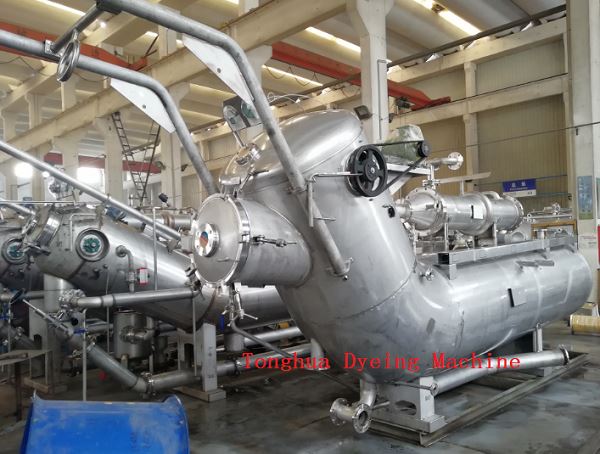

Let's start with the most immediate effect: dye uptake uniformity. I remember a mill in Bangladesh that was dying 400 gsm cotton twill (a dense, heavy fabric) for workwear, and their first few batches came out with patchy, inconsistent shades. Their old jet machine was moving too much liquor too fast, but the dense twill meant the fabric was bunching in the jet's overflow, creating pockets where dye couldn't penetrate. We swapped in our HTHP Dual Flow Fabric Dyeing Machine - it has two separate liquor flow paths that adjust to fabric thickness - and that twill's shade consistency jumped from 72% to 98% overnight. Why? Dense fabrics have a lower porosity; the gaps between fibers are smaller, so the jet's standard single flow can't penetrate deep enough to ensure every fiber gets the same amount of dye. For lightweight fabrics, like a 100 gsm chiffon, the opposite happens: the fabric is so porous that the jet's normal liquor flow can wash dye right off the surface, leading to over-dyeing in some areas and faded spots in others. It's a balancing act, and fabric density is the fulcrum.
Next up: liquor ratio and energy efficiency, two things every production manager watches like a hawk. The liquor ratio is how much dye liquor you use compared to fabric weight - say, 10:1 means 10 liters of liquor for every 1 kg of fabric. For dense fabrics, you need a lower liquor ratio, right? Wait, no - hear me out. Dense fabrics require more liquor to fully saturate every fiber, because their tight packing means they can't absorb as much per unit volume as a less dense fabric, but you also don't want to flood the machine. A mill in Turkey that dyes suede fabric (often 350-450 gsm, super dense because of its napped fiber structure) was using a generic jet machine with a 15:1 liquor ratio, wasting 50% more water and dye than needed. They switched to our High-Pressure Rapid Dyeing Machine For RPET Fabric Suede Fabric, which has a density-sensitive liquor control system that adjusts flow and volume automatically for fabrics over 300 gsm. Now their liquor ratio is down to 8:1, cutting their dye and water costs by 40% per batch. For lightweight fabrics, like 150 gsm polyester knit, a higher liquor ratio can be useful, but only if the machine is calibrated for low-density material - otherwise, you're spinning fabric too fast, causing abrasion on the knit's surface, which ruins the hand feel. That's why our HTHP Knit Fabric Dyeing Machine has a slower fabric transport speed setting specifically for lightweight knits, so you don't get that pilling or fuzzing that plagues fast-run lightweight batches.
Then there's process time. Dense fabrics take longer to dye, because the liquor has to work harder to penetrate all those tight fibers. A mill in Vietnam was dying 380 gsm milk silk fabric for luxury linens - yes, milk silk is denser than it looks, at around 280-350 gsm - and their dye cycles were running 90 minutes longer than their benchmark, cutting into daily production. The issue? Their old machine didn't have the pressure control needed to force dye into dense fibers at the right rate. We recommended our Jet Dyeing Machine For Milk Silk Fabric, which has adjustable pressure levels that spike just enough to help liquor seep into dense, delicate milk silk fibers without damaging the fabric. Now their dye time is down by 45 minutes per batch, letting them run an extra two batches per day without sacrificing quality. Lightweight fabrics have the opposite problem: they can dye too fast if the liquor flow is too high, leading to uneven dye uptake. A mill in Portugal that dyes 120 gsm polyester chiffon was having to stop cycles early and add extra rinse steps, wasting time and dye. Our standard HTHP Fabric Dyeing Machine has a programmable flow rate that lets users slow liquor circulation for low-density fabrics, ensuring the dye binds evenly instead of washing off in the first 20 minutes of the cycle.
Wait, I need to address a common myth here: some people think "dense fabric = better dye hold," but that's not always true. If the fabric is too dense, you can get what's called "core dyeing" - where the outer fibers take in enough dye, but the inner fibers (those packed deep in the fabric's cross-section) barely absorb any. That's a disaster for dark shades, because you end up with faded centers. We saw that with a 420 gsm canvas fabric for outdoor gear - the mill was trying to dye it black, and the inner layer of the canvas was still gray after 3 hours. Adding a density-specific pulse of high-pressure liquor into the jet's system fixed that, but without a machine that can adjust to density, it's almost impossible. Lightweight fabrics have their own myth: "lower density means easier dyeing," but no - because they're thinner, they're more prone to "edge staining," where the fabric's edges get more dye than the middle, or "over-agitation" damage. A few years back, a mill in Italy had to throw out 12 batches of 110 gsm silk crepe because their jet's fast flow was pulling the fabric's edges and causing color streaks. We went in, adjusted the machine's fabric tension setting for low-density silk, and they haven't had a streak problem since.
Let's talk practical tips, because that's what people actually care about. First, always test fabric density before setting up a dye cycle. We recommend weighing a 10x10 cm swatch and calculating gsm - it takes two minutes, but it saves hours of rework. Second, adjust liquor ratio and flow rate based on density: over 300 gsm, go for lower liquor ratio but higher targeted pressure; under 200 gsm, go for slightly higher liquor ratio but slower flow to avoid fabric damage. Third, use an HTHP jet machine that's calibrated for density-specific settings - that's why we built our HTHP Dual Flow Fabric Dyeing Machine, which lets users pre-set density thresholds and the machine adjusts automatically, no manual tweaking.
At the end of the day, every mill's goal is consistent quality, lower costs, and faster production. Fabric density isn't a nuisance to work around - it's a variable you can leverage with the right equipment. If you're struggling with uneven dye, wasted resources, or production delays because fabric density is throwing off your HTHP jet dyeing process, our team has helped dozens of mills solve these exact issues. We don't just sell machines - we work with you to adjust settings, train your team, and make sure your dyeing runs smoothly, no matter what fabric density you're working with.
To learn more about how our equipment can optimize your dyeing process for any fabric density, or to discuss your specific production needs, we're here to help. Reach out to our team to connect with our experts.


