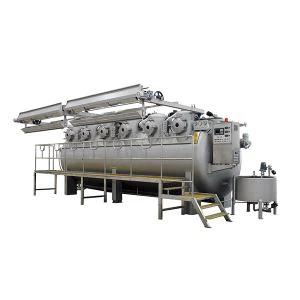
Hey there! As a supplier of Rapid Jet Dyeing Machines, I often get asked about the loading capacity of the fabric in these machines. It's a crucial factor that can significantly impact the efficiency and productivity of your dyeing process. So, let's dive right in and explore what the loading capacity of the fabric in a Rapid Jet Dyeing Machine really means and how it can affect your business.
First off, what exactly is the loading capacity? Well, it refers to the maximum amount of fabric that a dyeing machine can handle in a single batch. This capacity is usually measured in kilograms or meters, depending on the type of fabric and the machine's design. For instance, some machines might be rated to handle 100 kilograms of fabric per batch, while others could manage up to 500 kilograms or more.
The loading capacity is determined by several factors. One of the most important ones is the size of the dyeing chamber. A larger chamber can obviously hold more fabric. But it's not just about the physical space; the machine also needs to be able to circulate the dye evenly throughout the fabric, regardless of how much is loaded. That's where the jet system comes in. The jet in a Rapid Jet Dyeing Machine creates a high - velocity flow of dye liquor, which helps to ensure that every part of the fabric gets dyed uniformly.
Another factor that affects the loading capacity is the type of fabric. Different fabrics have different densities, thicknesses, and porosities. For example, a lightweight, sheer fabric like silk will take up less space and may allow for a higher loading capacity compared to a thick, heavy fabric like denim. Also, fabrics with a lot of bulk, such as fleece, might require more space in the machine to ensure proper dye penetration.
Let's talk about the implications of the loading capacity for your business. If you choose a machine with a low loading capacity, you'll have to run more batches to dye the same amount of fabric. This means more time spent on the dyeing process, increased energy consumption, and potentially higher labor costs. On the other hand, if you go for a machine with a very high loading capacity that you don't actually need, you'll be paying more upfront for the machine and may also face issues with uneven dyeing if you don't load it to its full capacity.
So, how do you determine the right loading capacity for your needs? Start by looking at your production volume. How much fabric do you need to dye on a daily, weekly, or monthly basis? If you're a small - scale operation, a machine with a lower loading capacity might be sufficient. But if you're a large - scale manufacturer, you'll likely need a machine with a higher capacity to keep up with demand.
You also need to consider the variety of fabrics you work with. If you deal with a wide range of fabric types, you might need a machine that can handle different loading requirements. Some of our High Pressure Jet Dyeing Machine models are designed to be versatile, allowing you to adjust the loading capacity based on the fabric you're working with.
Now, let's take a closer look at some of the features of our Rapid Jet Dyeing Machines that contribute to their optimal loading capacity. Our machines are equipped with advanced jet technology that ensures efficient dye circulation, even when the machine is fully loaded. The jet system creates a powerful flow of dye liquor that penetrates deep into the fabric, resulting in consistent coloration.
We also offer a range of models with different chamber sizes to suit various production needs. Whether you're looking for a HTHP Jet Dyeing Machine For Coral Fleece Coral Velvet or a High Temperature High Pressure High Speed Dyeing Machine, we have options that can handle different fabric types and loading capacities.

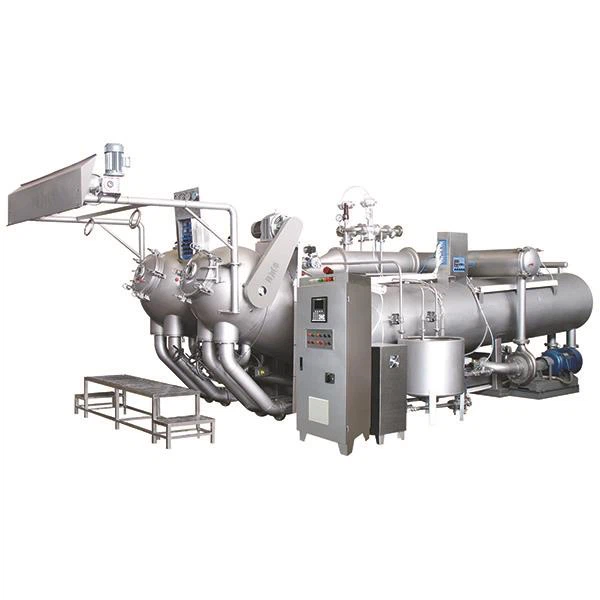
In addition to the physical design of the machine, we've also incorporated smart controls that allow you to monitor and adjust the loading process. You can set the desired loading weight or length of fabric, and the machine will alert you when it's approaching its maximum capacity. This helps to prevent overloading, which can lead to poor dyeing results and potential damage to the machine.
When it comes to maintenance, our machines are designed to be easy to clean and service, even after high - volume dyeing. This ensures that the machine remains in top condition and continues to provide optimal loading capacity over time.
In conclusion, the loading capacity of the fabric in a Rapid Jet Dyeing Machine is a critical factor that can have a big impact on your dyeing operations. By choosing the right machine with the appropriate loading capacity for your needs, you can improve efficiency, reduce costs, and achieve high - quality dyeing results.
If you're interested in learning more about our Rapid Jet Dyeing Machines and how they can meet your specific loading capacity requirements, we'd love to have a chat. Feel free to reach out to us to start a discussion about your dyeing needs and explore the best solutions for your business.
References
- Textile Dyeing Technology Handbook, various authors
- Journal of Textile Engineering, multiple issues covering dyeing machine design and performance