1. bubble:
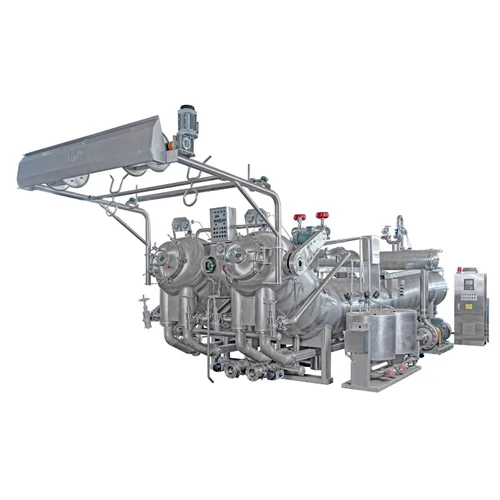
Foam is the most common problem of high temperature and high pressure jet overflow dyeing. In high temperature and high pressure jet overflow dyeing machine, the occurrence of foam is the result of high energy turbulence due to high-speed operation and liquid circulation.
The main factors affecting the formation of foam are the properties and quantities of dyes and auxiliaries. Low foaming agent or solvent pre refining can eliminate the possible fouling caused by foam on fibers. The foaming property of dyes should be considered when selecting dyes, and the dyes with low foaming property should be selected as much as possible. It is best to avoid defoaming agents, which can contaminate the fabric.
2. wrinkle (wrinkle strip)
The crease of polyester fabric dyed on high temperature and high pressure jet overflow dyeing machine is often chicken claw flower, which is due to the long time of folding stacking in the stacking area. If the fabric is folded and the cooling of the fiber passes through the secondary glass temperature, it is most likely to produce permanent crease.
Prevention method: the machine should not overload, which will not cause entanglement problems, and the whole stacking area shall be fully utilized; The turnover speed and moving rate of fabric in the stacking area should be quite high (generally, the maximum turning time acceptable is 2-3min); The heating and cooling rate are not too fast, the latter is more important; When dyeing, the fabric is relaxed and refined, and then the fabric is pre-determined. At the end of the dyeing cycle, it is not allowed to cool the fabric by using the windury tube at the beginning, so the fabric will be greatly impacted by such treatment; The fabric shall be discharged at room temperature; Unless there is special need, do not centrifugal dehydration of fabric, vacuum dehydration can be selected; The highest dyeing temperature was decreased; Use a smoothing agent in dyeing bath or pretreatment.
3. uneven color:
Causes and prevention methods: if the temperature is too fast, the heating time should be determined reasonably; The time of holding is too short, so the time of holding should be determined reasonably; If the circulation speed of cloth is too slow, the pressure of nozzle should be readjusted and the nozzle gap and cone pipe should be re selected to increase the distribution speed; If the dye with a large difference in dyeing rate is selected, the amount of dispersant or dye should be increased properly; The distribution capacity is far beyond the standard capacity, and the distribution capacity is moderate.
4. oligomers:
① The production and harm of oligomers: oligomers are low molecular weight polymers produced during polymerization. In polyester products, most oligomers are ring compounds formed by three ethyl terephthalates. Oligomers can be dissolved in dyeing bath and crystallized from solution at high temperature, and deposited on mechanical or fabric surface during cooling, especially in low liquid flow area. The deposition of oligomers on the exchanger can restrain the liquid flow and reduce the heat exchange efficiency. Oligomers are deposited on the surface of fibers, forming white spots or frosty.
② Elimination of oligomers: the production of oligomers can be greatly reduced by refining the fabric with solvent before dyeing. It can also add oligomer control agent in dyeing, which can increase the solubility of oligomers in dyeing bath or produce a stable oligomer dispersion. In the post-treatment, some auxiliaries are used to clean, and it can also help remove the deposited grease and dye.
5. the coagulation of disperse dyes:
The condensation of dyes can make the fabric produce color points, reduce dye dye dye dye rate and make the friction fastness worse.
Causes and prevention methods: too many electrolytes in the dye bath should be minimized; The improper selection of additives can cause the precipitation of both auxiliaries and dyes. Non-ionic additives can promote the precipitation and condensation of dyes or prevent them from dyeing at high temperature. The additives with good compatibility should be selected; The dyeing time is too long, so the dyeing time should be shortened; If the dye rate is too fast, the dyeing rate should be controlled not too fast; The processing quality of dyes is too poor, so the inspection and analysis of dyestuff in the factory should be done well; The concentration of dyes is too high (the dyes tend to condense at high concentration, but the amount of dispersant can be increased to overcome the condensation in the high concentration commercial dyes), and the amount of dispersant should be increased; The dyeing bath is contaminated, the fabric should be washed before dyeing, and the equipment cleaning and maintenance should be strengthened.
6. tangle:
The bunches can cause downtime, especially when using fully filled equipment and dyeing light and thin fabrics. Although some fully filled equipment is equipped with anti spray and control valves to control the stacking of fabrics, it is impossible to see how the fabric is stacked, so it is still possible to produce entanglement. To reduce entanglement, only by the experience and responsibility of the operator.
7. spots:
The reason: Dye condensation; Oligomers are produced in the dye bath. Prevention methods: see the relevant contents of dye coagulation and oligomer control.
8. hair and scratch:
Causes and prevention methods: if the diameter of nozzle is too small, so that the pressure of nozzle is too large, the nozzle with appropriate diameter shall be selected according to the gram weight of dye to make the spray pressure moderate and not too large; The ratio of the cloth speed to the rotating speed of the guide wheel is out of proportion, so that the two should be matched; When carrying the blank or semi-finished products, it is scratched due to impact. When carrying the blank cloth or semi-finished products, it should be handled with care to prevent the impact from being scratched; When the opening is scratched, manual opening shall be adopted.
9. elongation:
Causes and prevention methods: if the cloth capacity is too low, the distance of cloth transportation will be longer and the tension will increase, the proper capacity should be controlled; The liquid level of dye solution is set too high, so the resistance between water and cloth is increased, and the liquid level should be kept as low as possible.
https://www.tonghuadyeingmachine.com/