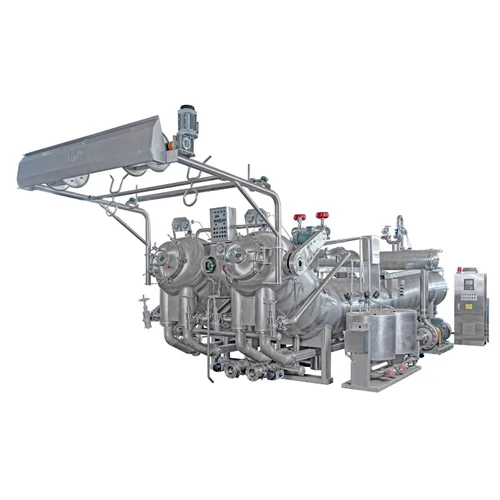
Replacing the seals of high temperature overflow dyeing machines requires careful operation to ensure the normal operation and sealing performance of the equipment. The following are the specific steps:
1. Preparation
Determine the seal model and specifications
Before replacing the seal, you first need to determine the seal model and specifications required for the high temperature overflow dyeing machine. You can obtain accurate seal information by consulting the equipment's instruction manual, consulting the equipment manufacturer or professional technicians, etc.
Make sure that the selected seal matches the equipment's size, working pressure, temperature and other parameters to ensure the sealing effect and safe operation of the equipment.
Prepare replacement tools and materials
According to the type and installation location of the seal, prepare corresponding replacement tools, such as wrenches, screwdrivers, pliers, etc. At the same time, prepare cleaning materials, such as clean rags, detergents, etc., for cleaning the sealing parts.
You can also prepare some sealants or lubricants for use when installing the seal to improve the sealing performance and installation convenience.
Shutdown and safe operation
Before replacing the seal, the high-temperature overflow dyeing machine must be shut down and the equipment must be in a safe state. Turn off the power supply, steam valve, dye valve, etc. of the equipment to release the pressure inside the equipment to prevent accidents during the replacement of seals.
Comply with relevant safety operating procedures and wear necessary personal protective equipment, such as gloves, goggles, etc., to ensure the safety of operators.
2. Remove the old seal
Open the equipment housing or sealing part
According to the installation position of the seal, open the housing or corresponding sealing part of the high-temperature overflow dyeing machine. This may require the removal of some screws, nuts or other fixings, and use appropriate tools to operate, and be careful not to damage other parts of the equipment.
During the disassembly process, the internal structure of the equipment can be observed to understand the installation method of the seal and the condition of the surrounding parts, and prepare for the installation of the new seal.
Carefully remove the old seal
Use tools to carefully remove the old seal to avoid damage to the surface of the sealing part. If the seal is tightly adhered to the surface of the equipment, you can use appropriate tools to pry it gently, but pay attention to the strength to prevent damage to the equipment.
The removed old seals are properly stored for analysis and inspection to understand the cause of the seal damage and provide a reference for future maintenance.
Clean the sealing part
Before installing the new seal, the sealing part must be thoroughly cleaned. Use a detergent and a clean rag to remove dirt, oil, residual dye and other impurities from the sealing part.
Make sure the surface of the sealing part is smooth and clean, without scratches, dents or other damage. If the surface is damaged, repair or replace the relevant parts in time.
3. Install the new seal
Check the quality and integrity of the new seal
Before installing the new seal, carefully check the quality and integrity of the seal. Make sure that the seal has no defects such as deformation, cracks, breakage, smooth surface and accurate size.
You can perform a simple test on the seal, such as soaking it in water and checking whether there are bubbles to ensure the sealing of the seal.
Correctly install the seal
According to the type and installation method of the seal, correctly install the new seal to the sealing part. For different types of seals, the installation method may be different, such as the seal ring can be directly sleeved on the shaft or installed in the sealing groove; the seal can be installed by screws, nuts and other fixings.
During the installation process, make sure that the seal is firmly installed, accurately positioned, and without distortion or deformation. Appropriate tools can be used for auxiliary installation, such as press-in tools, tightening tools, etc.
Apply sealant or lubricant (optional)
As needed, an appropriate amount of sealant or lubricant can be applied to the surface of the seal to improve the sealing performance and installation convenience. The sealant can fill the tiny gaps in the sealing part and enhance the sealing effect; the lubricant can reduce the friction between the seal and the surface of the equipment, making it easier to install and remove.
Select a suitable sealant or lubricant to ensure that it is compatible with the materials of the seal and the equipment and will not cause damage to the equipment. Apply evenly and in appropriate amounts to avoid too much or too little.
4. Inspection and testing after installation
Check the installation
After the installation is completed, carefully check the installation of the seal. Make sure that the seal is firmly installed, accurately positioned, and there is no looseness or displacement. Check whether the surface of the sealing part is flat and whether the seal is in close contact with the surface of the equipment.
You can use a tool to gently pry the seal to check whether it is firmly installed. At the same time, check whether the housing of the equipment or the fixings of the sealing part are installed correctly to ensure the overall structural stability of the equipment.
Conduct a pressure test
Before starting the equipment, a simple pressure test can be performed to check the sealing performance of the seal. You can use a pressure gauge connected to the pressure test point of the equipment, pressurize the equipment, and observe the changes in pressure.
If the pressure can remain stable, it means that the sealing performance is good; if the pressure drops quickly, it means that there is a leak, and you need to recheck the installation of the seal and repair it in time.
Start the equipment and observe the operation
After confirming that the seal is installed correctly and the sealing performance is good, you can start the high-temperature overflow dyeing machine and observe the operation of the equipment. Pay attention to whether there is leakage in the sealing part, whether the operating sound of the equipment is normal, and whether the operation of each component is stable.
After the equipment has been running for a period of time, check the temperature and pressure of the sealing part again to ensure that the seal can function normally under working conditions. If any abnormality is found, the machine should be stopped in time for inspection and processing.
Replacing the seal of the high-temperature overflow dyeing machine requires careful preparation, careful operation, and strict inspection and testing to ensure the sealing performance and safe operation of the equipment. If you are not familiar with the replacement operation of the seal, it is recommended to consult the equipment manufacturer or professional technicians for more detailed guidance and help.
If you want to know how to replace the seals of the high-temperature overflow dyeing machine, you can consult our professional technicians, we will serve you wholeheartedly 24 hours a day!
https://www.tonghuadyeingmachine.com/