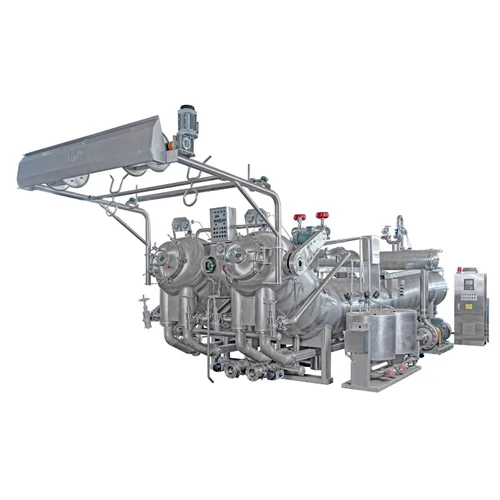
A rapid dyeing machine is a high-efficiency textile dyeing equipment designed to shorten the dyeing cycle significantly (by 30%–50% compared to traditional machines) while ensuring dyeing quality. It is mainly used for mass production of textiles, especially for fabrics and yarns that require fast turnaround. Its core advantage lies in optimizing the dyeing process and enhancing parameter control to accelerate dye dissolution, penetration, and fixation, thereby improving production efficiency.

Core Working Principle
The rapid dyeing machine achieves fast dyeing by breaking through the bottlenecks of traditional dyeing (such as slow heating, long heat preservation time) through three key mechanisms:
Rapid Temperature Control: Equipped with high-power heating and cooling systems, it can raise or lower the temperature at a rate of 8–15°C/min (traditional machines usually 2–5°C/min). This shortens the time required for temperature rise and cooling, which are major parts of the dyeing cycle.
Enhanced Dye Liquor Circulation: Uses high-flow circulating pumps and optimized nozzle/guide structures to increase the flow rate of dye liquor. The faster circulation makes the dye contact and penetrate the fibers more quickly, reducing the time needed for dye diffusion.
High-Efficiency Dye Activation: Adds special auxiliaries or uses ultrasonic/infrared auxiliary technologies to activate dye molecules. This improves the reactivity of dyes and fibers, shortening the heat preservation time required for color fixation.
Key Features and Advantages
Compared with traditional dyeing machines (such as overflow, jet machines), rapid dyeing machines have the following prominent characteristics:
Ultra-Short Dyeing Cycle: A traditional dyeing process takes 2–4 hours, while a rapid dyeing machine can complete it in 1–2 hours, greatly improving production efficiency and reducing order turnaround time.
Energy and Water Saving: Shorter heating and cooling time reduces steam and electricity consumption. Some models also adopt a low bath ratio of 1:4-6, saving water and dye.
Stable Dyeing Quality: Despite the fast speed, precise control of temperature, flow rate, and pH value ensures uniform dyeing and meets color fastness standards (same as traditional machines).
Strong Adaptability: Suitable for most fibers, including cotton, polyester, nylon, and blends. It can be used for both fabric and yarn dyeing, covering a wide range of textile products.
Typical Application Scenarios
Rapid dyeing machines are widely used in textile factories with high production demands and tight delivery schedules:
Mass-Produced Textiles
Such as ordinary clothing fabrics (cotton T-shirt cloth, polyester sportswear fabric), bed linen, and home textile fabrics that require large output and fast supply.
Yarn Dyeing for Knitwear
For yarns used in fast-fashion knitwear (sweaters, scarves), it shortens the yarn dyeing cycle to match the rapid production of knitwear.
Emergency Order Processing
When facing urgent orders (e.g., seasonal clothing, promotional products), it can quickly complete dyeing tasks to meet the delivery deadline.
Key Difference from Traditional Dyeing Machines
To better understand its advantages, here is a brief comparison with traditional dyeing machines:
| Feature | Rapid Dyeing Machine | Traditional Dyeing Machine (e.g., Overflow) |
| Dyeing Cycle | 1–2 hours | 2–4 hours |
| Temperature Rise Rate | 8–15°C/min | 2–5°C/min |
| Liquor Ratio | 1:4-6 | 1:10-15 |
| Energy Consumption | 30%–50% lower | Higher |
| Core Advantage | High efficiency, fast turnaround |
Stable performance, gentle dyeing |
https://www.tonghuadyeingmachine.com/