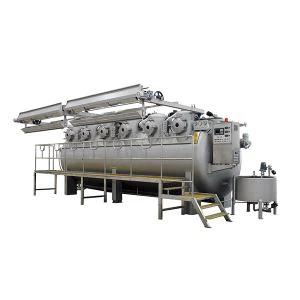
Can HTHP Rapid Dyeing Machine be used for dyeing linen fabrics?
As a supplier of HTHP Rapid Dyeing Machines, I often receive inquiries from customers about the suitability of our machines for various types of fabrics, especially linen. Linen, a natural fiber made from the flax plant, has unique characteristics that pose both challenges and opportunities when it comes to the dyeing process. In this blog post, I will explore whether HTHP Rapid Dyeing Machines can be effectively used for dyeing linen fabrics.
Understanding Linen Fabrics
Linen is known for its strength, breathability, and natural luster. However, it also has some properties that make it different from other fibers. Linen fibers are relatively stiff and have a high absorbency rate. They also have a rough surface, which can affect the dyeing process. The dye molecules need to penetrate the fiber structure evenly to achieve a consistent color, and the rough surface can sometimes cause uneven dye distribution.
How HTHP Rapid Dyeing Machines Work
HTHP stands for High Temperature High Pressure. These machines operate under elevated temperatures and pressures, which can significantly enhance the dyeing process. The high temperature helps to open up the fiber structure, allowing the dye molecules to penetrate more easily. The high pressure ensures that the dye is evenly distributed throughout the fabric.
The rapid dyeing feature of these machines means that the dyeing process can be completed in a shorter time compared to traditional dyeing methods. This not only increases productivity but also reduces energy consumption and water usage.
Advantages of Using HTHP Rapid Dyeing Machines for Linen
- Improved Dye Penetration: The high temperature and pressure in HTHP Rapid Dyeing Machines can effectively open up the stiff linen fibers, allowing the dye to penetrate deeper. This results in better color fastness and more vibrant colors.
- Faster Dyeing Process: The rapid dyeing capability of these machines is a significant advantage when dyeing linen. Linen can be a time - consuming fabric to dye using traditional methods, but HTHP machines can reduce the dyeing time, increasing overall production efficiency.
- Even Dye Distribution: The high - pressure environment in the machine helps to ensure that the dye is evenly distributed across the linen fabric. This reduces the risk of color variations and streaks, which are common problems when dyeing linen.
Challenges and Considerations
- Fiber Damage: The high temperature and pressure in HTHP machines can potentially damage the linen fibers if not properly controlled. Linen is a natural fiber that can be more delicate than synthetic fibers. Therefore, it is crucial to set the appropriate temperature, pressure, and dyeing time to avoid fiber damage.
- Dye Selection: Not all dyes are suitable for linen. Reactive dyes are often recommended for linen as they can form a chemical bond with the fiber, resulting in good color fastness. However, the dyeing process with reactive dyes in an HTHP machine requires careful control of the pH and temperature.
Our HTHP Rapid Dyeing Machine Models
We offer a range of HTHP Rapid Dyeing Machines that are suitable for dyeing linen fabrics. Our HTHP Dual Flow Dyeing Machine is designed with a dual - flow system that ensures even dye distribution and efficient dyeing. The machine is equipped with advanced temperature and pressure control systems, allowing for precise adjustment according to the specific requirements of linen dyeing.
Our High Temperature High Speed Dyeing Machine is another excellent option for linen dyeing. It combines high - speed operation with high - temperature and high - pressure capabilities, enabling rapid and high - quality dyeing of linen fabrics.
For those who are looking for a machine specifically for microfiber clean cloth but can also be used for linen, our High - Temperature And High - Pressure Dyeing Machine For Microfiber Clean Cloth offers a versatile solution. It has a robust construction and advanced control features to handle the unique properties of linen.


Case Studies
We have worked with several textile manufacturers who have successfully used our HTHP Rapid Dyeing Machines for linen dyeing. One of our customers, a medium - sized linen fabric producer, was facing issues with uneven dyeing and long dyeing times using traditional methods. After switching to our HTHP Dual Flow Dyeing Machine, they were able to achieve more consistent colors, reduce the dyeing time by 30%, and increase their overall production capacity.
Conclusion
In conclusion, HTHP Rapid Dyeing Machines can be effectively used for dyeing linen fabrics. They offer several advantages such as improved dye penetration, faster dyeing processes, and even dye distribution. However, it is essential to address the challenges such as fiber damage and proper dye selection.
If you are in the textile industry and are looking for a reliable solution for dyeing linen fabrics, our HTHP Rapid Dyeing Machines are worth considering. We have a team of experts who can provide you with technical support and guidance on the best dyeing processes for your specific needs.
If you are interested in learning more about our HTHP Rapid Dyeing Machines or would like to discuss a potential purchase, please feel free to contact us. We are eager to engage in procurement discussions and help you find the most suitable dyeing solution for your linen fabric production.
References
- "Textile Dyeing and Finishing Technology" by Xungai Wang
- "Natural Fibers: Linen" from the Textile Institute Journal