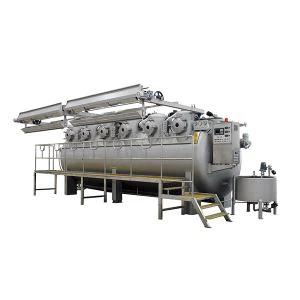
Hey there! As a supplier of High Temperature Overflow Dyeing Machines, I'm super stoked to spill the beans on the technical specs of these bad boys. So, let's dive right in!
1. Temperature and Pressure Capabilities
One of the most crucial aspects of a High Temperature Overflow Dyeing Machine is its ability to handle high temperatures and pressures. These machines are designed to operate at temperatures ranging from 120°C to 140°C, and sometimes even higher, depending on the specific model. The high temperature is essential for achieving proper dye penetration and fixation on various types of fabrics, especially synthetic ones like polyester.
At these elevated temperatures, the pressure inside the dyeing chamber also increases. Most High Temperature Overflow Dyeing Machines can handle pressures up to 3 - 4 bar. This pressure helps to ensure that the dye liquor circulates evenly throughout the fabric, preventing uneven dyeing and ensuring consistent color results.
2. Dye Liquor Circulation System
The dye liquor circulation system is the heart of a High Temperature Overflow Dyeing Machine. It's responsible for moving the dye liquor through the fabric, ensuring that every fiber is evenly coated with the dye. There are two main types of circulation systems commonly used in these machines: overflow and jet.
In an overflow system, the dye liquor is pumped into the top of the dyeing chamber and overflows down through the fabric. This creates a gentle, even flow of dye liquor, which is ideal for delicate fabrics. The overflow system also helps to prevent tangling and knotting of the fabric during the dyeing process.
On the other hand, a jet system uses high - pressure jets to force the dye liquor through the fabric. This system is more suitable for heavier fabrics and can achieve faster dyeing times. However, it requires more energy and can be more aggressive on the fabric, so it's important to choose the right system based on the type of fabric being dyed.
3. Fabric Handling Capacity
Another important specification is the fabric handling capacity of the machine. High Temperature Overflow Dyeing Machines come in a variety of sizes, with fabric capacities ranging from a few kilograms to several hundred kilograms. The capacity you choose depends on the volume of production you need to achieve.
For small - scale dyeing operations, a machine with a capacity of 10 - 50 kg may be sufficient. These machines are more compact and require less space, making them ideal for workshops or small factories. Larger factories, on the other hand, may need machines with capacities of 100 kg or more to meet their production demands.
4. Bath Ratio
The bath ratio is the ratio of the weight of the dye liquor to the weight of the fabric being dyed. A lower bath ratio means less water and dye are used, which is more environmentally friendly and cost - effective. Modern High Temperature Overflow Dyeing Machines are designed to achieve low bath ratios, typically ranging from 1:5 to 1:10.
Some advanced machines, like the Ultra Low Bath Ratio Energy Saving Dyeing Machine, can achieve even lower bath ratios, down to 1:3 or 1:4. This not only reduces the consumption of water and dye but also shortens the dyeing cycle time, increasing overall productivity.
5. Control System
The control system of a High Temperature Overflow Dyeing Machine plays a vital role in ensuring accurate and consistent dyeing results. Most modern machines are equipped with advanced computerized control systems that allow operators to precisely control various parameters such as temperature, pressure, dyeing time, and circulation speed.
These control systems can be programmed to follow specific dyeing recipes, ensuring that the same results are achieved every time. They also provide real - time monitoring of the dyeing process, allowing operators to make adjustments if necessary. Some machines even have remote monitoring capabilities, which means that operators can monitor and control the machine from a distance using a smartphone or computer.
6. Material of Construction
The material of construction of the dyeing chamber and other components is also an important consideration. The dyeing chamber is usually made of high - quality stainless steel, which is resistant to corrosion and can withstand the high temperatures and pressures involved in the dyeing process.
Other components, such as pumps, valves, and pipes, are also made of materials that are compatible with the dye liquor and can withstand the harsh operating conditions. Using high - quality materials ensures the durability and reliability of the machine, reducing maintenance costs and downtime.
7. Energy Efficiency
In today's world, energy efficiency is a top priority for any manufacturing equipment. High Temperature Overflow Dyeing Machines are no exception. Manufacturers are constantly working on improving the energy efficiency of these machines by using advanced insulation materials, more efficient pumps, and optimized control systems.
For example, some machines are equipped with heat recovery systems that capture and reuse the heat from the dye liquor, reducing the energy required to heat the water for the next dyeing cycle. This not only saves energy but also reduces operating costs.
8. Different Models and Their Special Features
We offer a range of different models of High Temperature Overflow Dyeing Machines to meet the diverse needs of our customers.
The High Temperature Low Tension Evenflow Dyeing Machine is designed to minimize the tension on the fabric during the dyeing process. This is especially important for delicate and stretchy fabrics, as it helps to prevent distortion and damage. The even - flow design ensures that the dye liquor is distributed evenly throughout the fabric, resulting in uniform coloration.
The High - Temperature And High - Pressure Jet Dyeing Machine is suitable for heavy - duty dyeing applications. It uses high - pressure jets to force the dye liquor through the fabric, which can achieve faster dyeing times and better penetration on thick and dense fabrics.
Why Choose Our High Temperature Overflow Dyeing Machines
Our machines are designed and manufactured with the latest technology and highest quality standards. We offer a wide range of models to suit different production requirements and fabric types. Our machines are known for their reliability, energy efficiency, and excellent dyeing results.


If you're in the market for a High Temperature Overflow Dyeing Machine, we'd love to have a chat with you. Whether you're a small - scale workshop or a large - scale factory, we can help you find the perfect machine for your needs. Just reach out to us, and we'll be happy to discuss your requirements and provide you with a detailed quote. Let's work together to take your dyeing operations to the next level!
References
- Textile Dyeing Machinery Handbook
- Journal of Textile Engineering and Technology