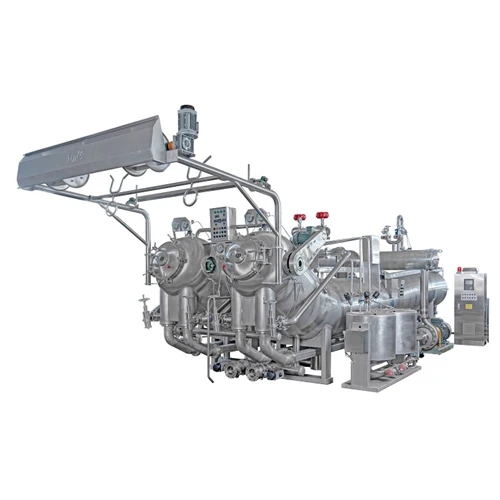
Dyeing machines are essential in the textile industry for applying color to fibers, yarns, fabrics, or garments. They vary based on material form (fiber, yarn, fabric, garment), fabric construction (knit, woven, nonwoven), dye class, processing method, and pressure/temperature requirements. Below is a comprehensive overview of the main types of dyeing machines:
1. Based on Material Form
A. Fiber Dyeing Machines
* Stock Dyeing: For loose fibers before spinning.
* Example: Paddle dyeing machine, jet dyeing for top/combed fibers.
B. Yarn Dyeing Machines
* Package Dyeing Machine: Yarn wound on perforated cones; dyed under pressure.
* Hank Dyeing Machine: Used for skeins/hanks (common for wool, silk, handloom yarns).
* Beam Dyeing Machine: Warp yarns dyed while wound on a beam (used in denim production).
C. Fabric Dyeing Machines
Most common category; includes:
* Jet dyeing machines
* Soft flow dyeing machines
* Winch dyeing machines
* Jigger dyeing machines
* High-temperature high-pressure (HTHP) dyeing machines
* Airflow (gas) dyeing machines
D. Garment Dyeing Machines
* Designed to dye finished garments (e.g., T-shirts, jeans).
* Types: Rotary drum dyeing machines, paddle garment dyeing machines.
2. Based on Operating Pressure & Temperature
A. Atmospheric Dyeing Machines
* Operate at or near 100°C and normal pressure.
* Suitable for natural fibers (cotton, wool, silk) using reactive, direct, or acid dyes.
* Examples:
Winch dyeing machine
Jigger dyeing machine
Garment dyeing rotary machines
B. High-Temperature High-Pressure (HTHP) Dyeing Machines
* Operate up to 130–140°C and pressures of 2–4 bar.
* Required for synthetic fibers like polyester (using disperse dyes).
* Examples:
HTHP Jet dyeing machine
HTHP Soft flow dyeing machine
HTHP Sample dyeing machine
3. Based on Fabric Circulation Method
| Type | Principle | Best For |
| Winch Dyeing Machine | Fabric pulled by a rotating winch through stationary dye liquor | Lightweight woven fabrics, delicate materials |
| Jigger Dyeing Machine | Fabric moves back and forth over two rollers in open-width form | Woven fabrics (cotton, linen) |
| Jet Dyeing Machine | Fabric propelled by high-velocity jet of dye liquor | Knitted fabrics, robust textiles |
| Soft Flow Dyeing Machine | Gentle overflow + mild jet circulation; low tension | Delicate knits, spandex blends, fine fabrics |
| Airflow (Gas) Dyeing Machine | Uses hot air instead of water to transport fabric; ultra-low liquor ratio | Polyester, eco-friendly processing, high-speed dyeing |
4. Specialized & Emerging Types
* Continuous Dyeing Range: For high-volume production (padding → drying → fixation). Not batch-based.
* Digital Dyeing / Inkjet Printing Systems: Technically not "dyeing machines" but used for color application.
* Ultrasonic Dyeing Machines: Use ultrasound to enhance dye penetration (experimental/niche).
* Supercritical CO₂ Dyeing Machines: Waterless dyeing for polyester (eco-innovation, e.g., DyeCoo technology).
5. Batch vs. Continuous vs. Semi-Continuous
* Batch (Exhaustion): Most common; fabric and dye bath interact over time (e.g., jet, winch, HTHP).
* Continuous: Fabric passes through dye → fix → wash in one line (high speed, less flexibility).
* Semi-Continuous: Combines padding with batch steaming/washing.
Choosing the right dyeing machine depends on:
✅ Fiber type
✅ Fabric structure
✅ Desired quality (e.g., no creasing)
✅ Environmental goals (water/energy reduction)
✅ Production scale