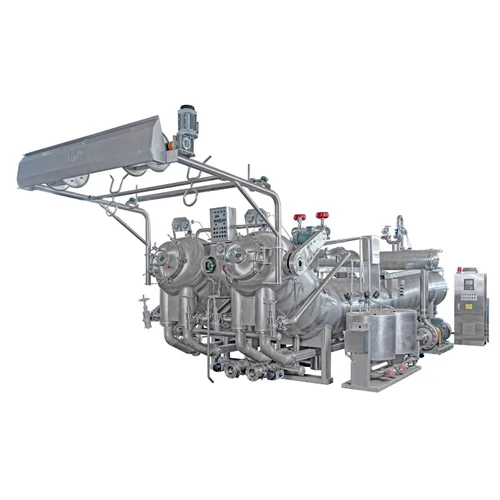
A jet dyeing machine is a widely used type of batch dyeing machine in the textile industry, primarily designed for dyeing knitted and woven fabrics-especially those made from synthetic fibers like polyester, nylon, or blends. It operates by propelling fabric through a closed-loop system using a high-velocity jet of dye liquor, ensuring efficient circulation, uniform dye penetration, and high productivity.
Working Principle
1. Fabric Circulation:
The fabric (usually in rope form) is continuously circulated through the dye bath by a powerful jet nozzle that injects dye liquor at high speed. This creates a "drag" force that pulls the fabric along without mechanical pulling devices.
2. Closed-Loop System:
The fabric moves in a continuous loop:
Dye tank → Jet nozzle → Transport tube → Guiding reel → Back to tank
This cycle repeats throughout the dyeing process.
3. High Temperature & Pressure:
Most modern jet dyeing machines are HTHP (High-Temperature High-Pressure) types, capable of operating at:
* Temperatures up to 130–140°C
* Pressures up to 3–4 bar
This is essential for dyeing polyester with disperse dyes, which require high temperatures for proper diffusion.
4. Liquor Ratio:
Typically operates at liquor ratios of 1:8 to 1:15 (fabric weight : dye liquor volume), though newer models aim for lower ratios to improve sustainability.
Advantages
* High dyeing speed – suitable for mass production
* Excellent dye uniformity due to vigorous circulation
* Effective for synthetic and blended fabrics
* Compact design with automated controls
* Good heat and chemical distribution
Limitations / Challenges
* High mechanical stress on fabric → may cause abrasion, pilling, or distortion (not ideal for very delicate fabrics like fine silk or lightweight spandex knits)
* Higher energy and water consumption compared to airflow or soft-flow machines
* Risk of creasing if fabric speed and liquor flow aren't balanced properly
💡 To address these issues, many manufacturers now offer "soft jet" or "low-tension jet" variants that reduce fabric stress while maintaining efficiency.
Typical Applications
* Polyester knits (T-shirts, sportswear)
* Nylon fabrics (lingerie, swimwear)
* Cotton-polyester blends
* Medium to heavy-weight woven fabrics
Jet vs. Other Dyeing Machines
| Feature | Jet Dyeing Machine | Soft Flow Machine | Winch Machine |
| Fabric stress | High | Low | Very low |
| Best for | Robust knits/synthetics | Delicate knits | Lightweight wovens |
| Liquor ratio | 1:8 – 1:15 | 1:6 – 1:10 | 1:15 – 1:30 |
| Temperature | Up to 140°C (HTHP) | Up to 140°C | ≤100°C (atmospheric) |
| Crease risk | Moderate to high | Very low | Low |
A jet dyeing machine is a high-efficiency, high-throughput workhorse in modern dye houses-ideal for synthetic and blended fabrics where speed and uniformity are priorities. However, for delicate or high-value textiles, gentler alternatives like soft flow or airflow dyeing machines may be preferred.