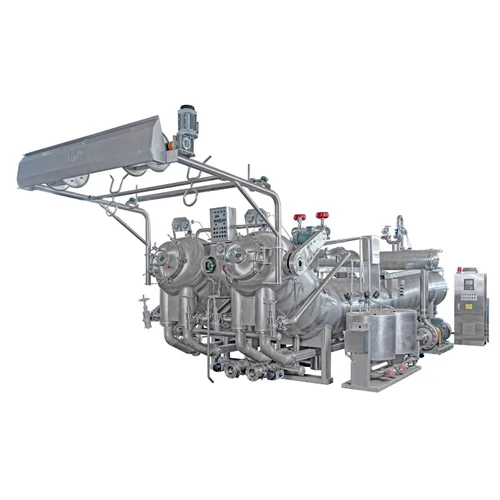
The soft flow dyeing machine and the jet dyeing machine are both widely used in textile wet processing for batch dyeing of fabrics-especially knits-but they differ significantly in fabric handling, mechanical stress, liquor ratio, and suitability for fabric types. Here's a detailed comparison:
| Feature | Jet Dyeing Machine | Soft Flow Dyeing Machine |
| Fabric Propulsion | High-velocity jet of dye liquor pulls fabric forcefully | Gentle overflow + mild jet or winch assist; low-tension circulation |
| Mechanical Stress | High (can cause abrasion, pilling, distortion) | Very low (ideal for delicate fabrics) |
| Liquor Ratio | Typically 1:8 – 1:15 | Lower, often 1:6 – 1:10 (more eco-friendly) |
| Best For | Robust knits, polyester, nylon, medium/heavy fabrics | Delicate knits, spandex/Lycra®, silk, fine cotton, Tencel™, modal |
| Crease Risk | Moderate to high (if not controlled) | Very low |
| Operating Temp/Pressure | HTHP (up to 140°C, 3–4 bar) | Also HTHP-capable |
| Energy/Water Use | Higher | Lower (due to reduced liquor ratio & gentler cycle) |
How They Work
Jet Dyeing Machine
* Uses a powerful hydraulic jet nozzle to inject dye liquor at high speed.
* The momentum of the liquid drags the fabric rope through the transport tube.
* Fabric moves rapidly in a tight loop under tension.
* Excellent for high-speed dyeing of durable fabrics like polyester sportswear.
⚠️ Downside: The force can stretch or damage sensitive fabrics (e.g., lightweight jersey with elastane).
Soft Flow Dyeing Machine
* Combines overflow principle (fabric lifted gently by a slow stream of liquor) with a low-pressure jet or winch for guidance.
* Fabric moves freely and relaxed, with minimal contact and no pulling force.
* Designed to prevent creasing, spirality, and seam breakage.
✅ Ideal for: High-end fashion knits, swimwear, underwear, medical textiles-where appearance and integrity are critical.
Performance Comparison
| Criteria | Jet Machine | Soft Flow Machine |
| Dye Uniformity | Excellent (due to strong circulation) | Excellent (gentle but consistent flow) |
| Fabric Damage Risk | Higher | Very low |
| Production Speed | Faster cycle times | Slightly slower (but safer for premium goods) |
| Water & Chemical Savings | Moderate | Better (lower liquor ratio + less reprocessing) |
| Maintenance | Higher wear on pumps/nozzles | Simpler, less aggressive system |
When to Choose Which?
Choose a Jet Dyeing Machine if:
* You're dyeing heavy-duty polyester, nylon, or cotton-polyester blends
* High throughput is your priority
* Fabrics can withstand mechanical stress
Choose a Soft Flow Dyeing Machine if:
* You work with delicate, lightweight, or elasticized fabrics (e.g., cotton-Lycra, viscose jersey)
* Zero crease and perfect hand feel are required
* You aim for sustainability (lower water/energy use) and premium quality
Pro Tip:
Many modern dyeing facilities use both machines:
* Jet machines for standard sportswear or industrial fabrics
* Soft flow machines for high-value fashion, intimate apparel, or technical textiles
Both are essential tools-but the choice depends entirely on your fabric type, quality standards, and sustainability goals.