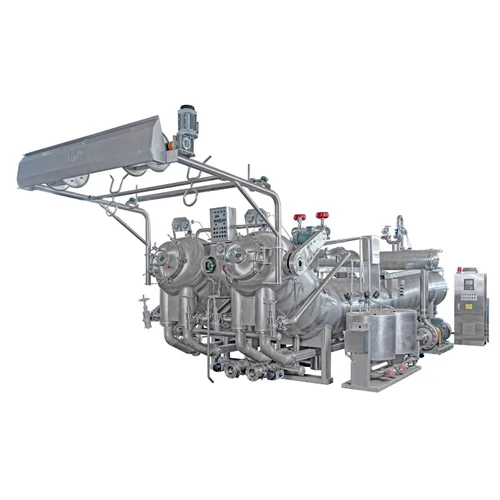
The best way to dye polyester fabric is by using disperse dyes in a High-Temperature High-Pressure (HTHP) exhaust dyeing process, typically at 130–135°C (266–275°F). This method ensures deep, uniform, and wash-fast coloration because polyester is a hydrophobic, synthetic fiber with a tightly packed molecular structure that only opens up at elevated temperatures.
Why This Method Is Best:
* Polyester lacks ionic sites (unlike cotton or wool), so reactive, direct, or acid dyes won't work.
* Disperse dyes are non-ionic, water-insoluble pigments that can diffuse into polyester fibers when heated.
* At ~130°C, polyester's amorphous regions expand, allowing dye molecules to penetrate.
* HTHP dyeing delivers excellent color yield, levelness, and fastness.
Standard Process: HTHP Exhaust Dyeing (Batch Method)
1. Equipment
HTHP Jet or Soft Flow Dyeing Machine (closed system rated for 140°C and 3–4 bar pressure)
2. Key Steps
| Step | Conditions | Purpose |
| Scouring | 80–90°C, alkaline detergent | Remove oils, spin finishes, impurities |
| Dye Bath Setup | Disperse dye + dispersing agent + leveling agent + acetic acid (pH 4.5–5.5) | Ensure stable dispersion & even dyeing |
| Ramping | Heat from 60°C → 130°C at 1–2°C/min | Prevent dye aggregation & barre |
| Dwell (Hold) | 130–135°C for 30–60 minutes | Allow full dye diffusion into fiber |
| Cooling & Rinsing | Cool to 80°C → cold rinse → soaping | Remove surface dye, improve fastness |
Alternative Eco-Friendly Methods
While HTHP is standard, newer sustainable options are emerging:
1. Thermosol (Continuous) Dyeing
* Used for high-volume woven polyester (e.g., fashion fabrics).
* Fabric padded with disperse dye → dried → baked at 180–220°C for 30–60 sec.
* Pros: Fast, low water use.
* Cons: Less suitable for knits; higher energy use.
2. Carrier Method (Atmospheric Dyeing)
* Uses chemical carriers (e.g., benzyl benzoate) to swell polyester at 100°C.
* Avoid if possible: Carriers are often toxic, smelly, and reduce light fastness.
* Mostly obsolete due to environmental and quality concerns.
3. Supercritical CO₂ Dyeing (Waterless)
* Uses CO₂ in supercritical state as dye solvent (no water!).
* Pros: Zero wastewater, high dye uptake, short cycle.
* Cons: Very high equipment cost (e.g., DyeCoo technology); limited industrial adoption.
Important Considerations
* Fabric Construction: Knits → use soft flow machine to avoid damage; wovens → jet or thermosol.
* Blends: For polyester/cotton, use two-bath or one-bath two-step process with disperse + reactive dyes.
* Liquor Ratio: Keep low (1:6–1:10) to improve efficiency and sustainability.
* Dye Selection: Use high-energy disperse dyes for dark shades and better fastness.