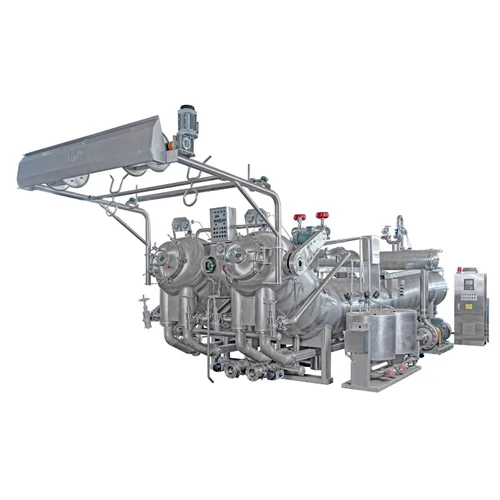
The four main types of textile dyeing are classified based on when in the production process the color is applied. Each method has distinct advantages, applications, and economic implications:
1. Fiber Dyeing (Stock or Top Dyeing)
* When: Dyeing loose fibers before they are spun into yarn.
* Process: Fibers (e.g., cotton, wool, polyester staple) are immersed in dye bath in bulk form.
* Advantages:
Excellent color penetration and fastness.
Ideal for heather/melange effects (e.g., blended gray yarns).
* Common uses: Woolen fabrics, tweeds, melange T-shirts, carpet yarns.
* Machines: Paddle dyeing machines, autoclaves for synthetic fibers.
2. Yarn Dyeing
* When: Dyeing yarn after spinning but before weaving or knitting.
* Forms:
Package dyeing: Yarn wound on perforated cones (most common for synthetics).
Hank dyeing: Yarn in loose skeins (used for wool, silk, handloom).
Beam dyeing: Warp yarns dyed while wound on a beam (e.g., for denim).
* Advantages:
Enables patterned fabrics like stripes, checks, and jacquards.
Better color consistency than fabric dyeing for complex designs.
* Common uses: Denim, dress shirts, upholstery, knitwear with colored patterns.
3. Piece Dyeing (Fabric Dyeing)
* When: Dyeing finished fabric after weaving or knitting.
* Most common method in the textile industry (~80% of all dyeing).
* Advantages:
High flexibility-same greige (undyed) fabric can be dyed in any color based on demand.
Cost-effective for mass production of solid-color fabrics.
* Machines: Jet, soft flow, winch, jigger, HTHP dyeing machines.
* Common uses: Solid-color T-shirts, bed sheets, curtains, sportswear.
4. Garment Dyeing
* When: Dyeing finished garments after sewing and assembly.
* Advantages:
Creates a soft hand feel and vintage/washed look.
Allows small-batch fashion responsiveness (dye after cutting/sewing).
* Challenges:
Risk of uneven dyeing at seams or zippers.
Requires careful material compatibility (all components must accept dye).
* Common uses: Casual wear (e.g., garment-dyed chinos, sweatshirts), military uniforms, fashion collections.
Bonus: Other Dyeing Methods (Not among the "big four" but notable)
* Solution Dyeing (Dope Dyeing): Pigment added to polymer before fiber extrusion (e.g., acrylic, polyester). Extremely high wash fastness-used in outdoor fabrics.
* Digital Printing: Technically not "dyeing," but a surface coloration method.
Understanding these four types helps manufacturers choose the right approach based on design intent, cost, lead time, and sustainability goals. For example:
* Fast fashion → Piece dyeing (quick color changes)
* Premium denim → Yarn dyeing (indigo warp)
* Cozy loungewear → Garment dyeing (soft finish)